
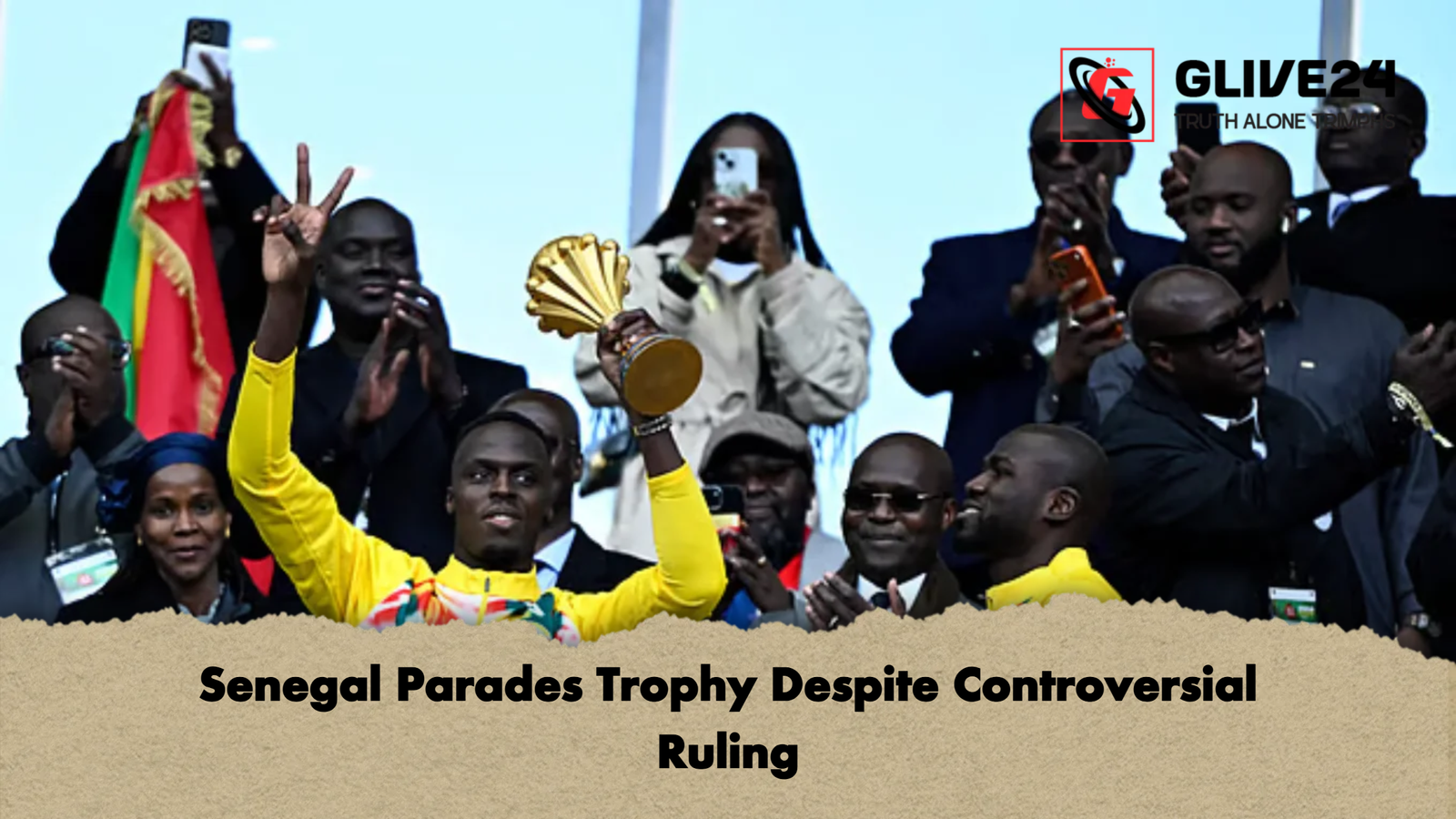
Senegal’s national football team has defiantly displayed the Africa Cup of Nations (AFCON) trophy despite the Confederation of African Football (CAF) revoking their title and warnings from Morocco’s legal team. This bold stance underscores the team’s determination to assert their championship claim.
On Saturday, at Stade de France in Paris, Senegal staged a spectacular parade with the AFCON trophy prior to their friendly against Peru. A concert preceded the match, creating a festive atmosphere for fans. Captain Kalidou Koulibaly led the squad onto the pitch, with goalkeeper Édouard Mendy holding the trophy aloft as the team circled the stadium before placing it in front of the Senegalese Football Federation president, Abdoulaye Fall, in the presidential box.
Following the parade, the Senegalese players wore two star-emblazoned jerseys in honour of their continental triumphs: one representing their first AFCON victory in 2021, and the other for their recent January 2026 win. However, CAF recognises only one official title following its controversial ruling.
Background: CAF Decision and Controversy
| Date | Event | Outcome | Notes |
|---|---|---|---|
| 18 Jan 2026 | AFCON Final: Senegal vs Morocco, Rabat | Senegal initially wins 1-0 | Match interrupted after Senegal protested a referee’s penalty and left the field |
| 17 Mar 2026 | CAF Appeals Board ruling | Morocco awarded 3-0 win | Senegal deemed to have “walked off,” resulting in title revocation |
| 26 Mar 2026 | Trophy parade, Paris | Senegal displays AFCON trophy publicly | Defies CAF ruling and Moroccan legal warnings |
The controversy stems from Senegal leaving the field mid-match in protest of a penalty awarded to Morocco during the final in Rabat on 18 January. Following Morocco’s appeal, CAF’s Appeals Board ruled on 17 March that Senegal had “abandoned” the match, declaring Morocco the 3-0 winner.
In response, Senegal labelled the decision “the most naked administrative theft” and lodged an appeal with the Court of Arbitration for Sport (CAS), simultaneously signalling their intention to publicly showcase the trophy. Moroccan lawyer Mourad Elajouti issued formal notices to stadium authorities and event organisers, warning against public display of the trophy and threatening legal action should Senegal defy CAF’s ruling.
Despite these warnings, Senegal proceeded with the trophy parade and fielded the star-emblazoned jerseys during the 2-0 victory over Peru. Notably, key players Koulibaly, Sadio Mané, and Mendy were rested and did not appear even on the substitutes’ bench, yet the symbolic display emphasised Senegal’s insistence on retaining its championship prestige.
This event highlights a rare intersection of sports, legal authority, and national pride, with Senegal asserting its status against administrative and judicial pressure while connecting directly with supporters. The team’s actions are likely to resonate throughout African football, reflecting both defiance and a celebration of historical achievement.