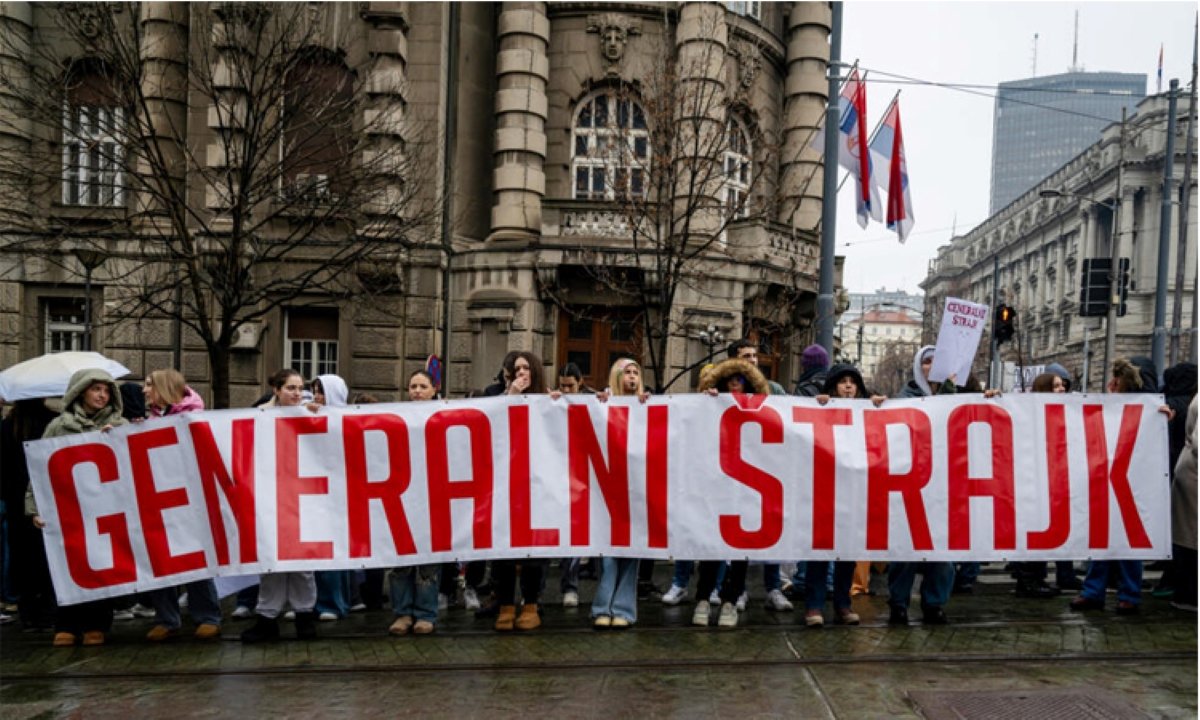
BELGRADE, 7 March 2025 (BSS/AFP) – Student protesters in Serbia have called for a one-day general strike on Friday in an effort to increase pressure on the government, as demonstrations continue over the fatal collapse of a train station roof.
The accident, which took place in November, claimed the lives of fifteen people shortly after the completion of renovation works at Novi Sad station. The tragedy has fuelled long-standing grievances over corruption and alleged negligence in the oversight of construction and infrastructure projects.
“Do not buy anything. Do not go to work. Join us in the streets,” read a widely circulated social media post by the protesters, urging nationwide participation in the strike.
A similar strike organised by demonstrators on 24 January saw businesses close, cinemas shut their doors, and many people abstain from shopping. However, essential services such as electricity generation and public transport remained operational.
Since the accident, the Serbian government has faced mounting pressure, with protests occurring almost daily. The crisis has already led to the resignation of several high-ranking officials, including the prime minister.
University students have taken the lead in the expanding protest movement, blockading campuses for months, while a number of primary and secondary schools across Serbia have also shut down in solidarity.
President Aleksandar Vučić and other government officials have shifted between strategies—at times engaging with student demands and calling for dialogue, while at other times accusing the demonstrators of being influenced by foreign interests.
Over the past few months, thousands have gathered in protests across Serbia, with the movement culminating in a massive demonstration last weekend in the southern city of Niš.
Beyond these large-scale rallies, students have embarked on marches across the country, aiming to spread awareness of their anti-corruption campaign in rural areas traditionally considered strongholds of Vučić’s ruling party.
The next major demonstration is set to take place in the capital, Belgrade, on 15 March.
Background and Context:
The collapse of the Novi Sad train station roof is seen by many as a symbol of deeper systemic issues within Serbia, including concerns over corruption in public infrastructure projects. Critics argue that oversight of construction contracts is often lax, with government-linked companies receiving contracts without proper accountability.
The protest movement, largely student-led, has also revived wider grievances against Vučić’s administration, which has faced criticism for its handling of democratic institutions and media freedoms. With elections looming in 2025, the government’s response to the protests could prove pivotal in shaping Serbia’s political landscape.