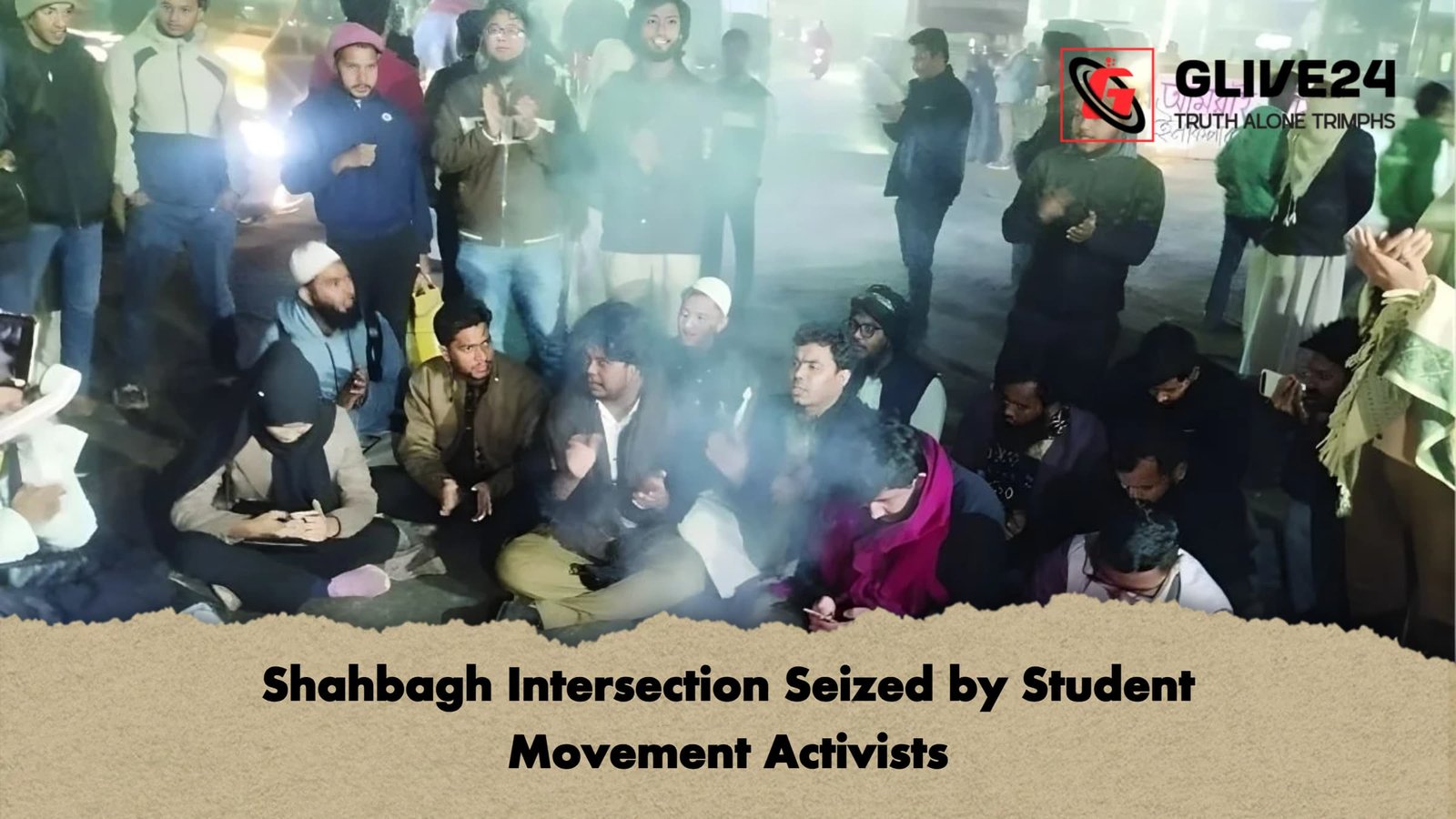
In a dramatic show of solidarity, hundreds of activists from the Anti-Discrimination Student Movement seized control of the Shahbagh intersection in central Dhaka on Saturday night. The blockade, which commenced at approximately 10:30 pm on 3 January, was a direct response to the arrest of Mahdi Hasan, the organisation’s Member Secretary for the Habiganj district. By obstructing this vital transport artery, the student protesters effectively brought the heart of the capital to a standstill, vowing not to move until their comrade was released from police custody.
The atmosphere at Shahbagh was one of intense defiance. Protesters brandished placards and engaged in spirited chanting, with slogans such as “Liberty or Slavery? Liberty, Liberty!” and “Revolution, not Servitude!” echoing across the junction. The demonstrators argued that the arrest of a “July warrior” like Hasan is a betrayal of the movement that reshaped the nation’s political landscape. Many participants expressed a growing concern that loyalists and agents of the previous government still embedded within the police force are actively working to sabotage the transition and harass student leaders.
Analysis of the Shahbagh Blockade
| Event Detail | Observation and Impact |
| Duration | Commenced 10:30 pm; continued into the early hours |
| Strategic Location | Shahbagh (Connecting major hospitals and universities) |
| Crowd Sentiment | High revolutionary fervour; anti-bureaucratic |
| Primary Target | Habiganj Police and the Ministry of Home Affairs |
| Key Demands | Immediate release of Mahdi Hasan; police accountability |
| Current Status | Total vehicular suspension in the immediate vicinity |
The catalyst for this crisis, the detention of Mahdi Hasan in Habiganj, has been framed by activists as a politically motivated act of intimidation. While official reports suggest the arrest was linked to a verbal confrontation between Hasan and local police, the protesters at Shahbagh view the incident as part of a wider pattern of repression. They contend that the administration’s reliance on individuals with deep ties to the former order has resulted in a “counter-revolutionary” environment where student activists are once again being targeted by the state machinery.
As the midnight hour passed, the blockade caused significant logistical challenges for the city, affecting ambulances heading to the nearby Dhaka Medical College Hospital and the BIRDEM General Hospital. Despite the inconvenience to the public, the student leaders maintained that the “sacrifice of a few hours of traffic” was necessary to protect the “sacrifices of the July revolution.” They warned that if Hasan is not released unconditionally, the Shahbagh sit-in would be the precursor to a broader, nationwide programme of civil disobedience.
Law enforcement personnel remained stationed at a distance, observing the crowd but avoiding direct engagement to prevent a further escalation of violence. The standoff highlights the precarious nature of the current political climate, where the youth-led vanguard remains highly suspicious of a bureaucracy they believe is still populated by agents of the previous era.