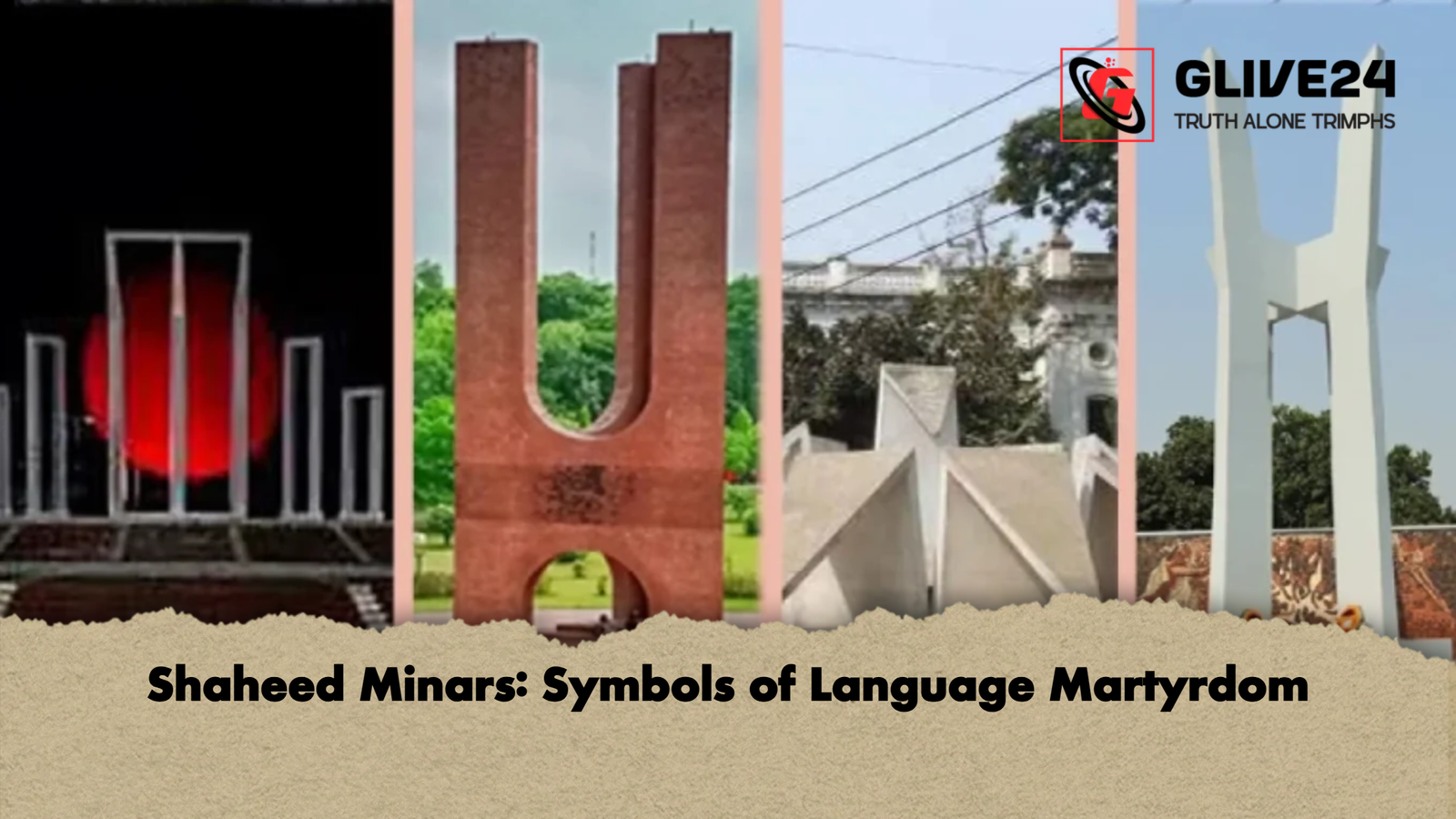
Across Bangladesh, Shaheed Minars stand as solemn and enduring tributes to those who sacrificed their lives during the historic Language Movement of 1952. These monuments, found in nearly every university campus, are not merely architectural structures; they embody linguistic pride, cultural identity, and the spirit of resistance. Each Shaheed Minar carries its own distinct design, symbolism, and historical narrative, reflecting the broader struggle for the recognition of the Bengali language.
Central Shaheed Minar: A Monument Forged in Struggle
The most iconic of all is the Central Shaheed Minar in Dhaka, which becomes the focal point of national remembrance every 21 February. The present structure is the result of a turbulent history marked by destruction and restructuring. The first temporary monument was erected on 23 February 1952 within the premises of Dhaka Medical College by students, based on a design by Badruzzaman Alam and supervised by Engineer Sharafuddin. However, it was demolished just three days later by police and military forces.
Subsequent efforts led to a permanent structure, designed by sculptor Hamidur Rahman with contributions from Novera Ahmed. Officially inaugurated in 1963 by the mother of language martyr Barkat, the monument was again destroyed during the 1971 Liberation War, only to be rebuilt after independence. Its five columns are often interpreted as a mother and her children, symbolising sacrifice and protection.
Jahangirnagar University: The Tallest Tribute
At Jahangirnagar University stands the country’s tallest Shaheed Minar, a striking blend of history and symbolism. The base diameter measures 52 feet, commemorating 1952, while the columns rise to 71 feet, representing 1971. Designed by architect Rabiul Hussain, the structure incorporates eight steps symbolising key the movement years such as 1954, 1962, 1966, and 1969.
Its three chief pillars represent language and culture, struggle and resistance, and independence and sovereignty. Surrounded by lush greenery, the monument inspires reflection and patriotic sentiment among students and visitors alike.
Jagannath University: A Modern Interpretation
The Shaheed Minar at Jagannath University breaks away from conventional designs. Conceptualised by architects Kaiser Ahmed and Rajib Zahir, it features five to bend pillars that lean inward, symbolising unity and collective strength. The abstract expressionist style, coupled with a red sun backdrop, evokes both grief and hope—suggesting the dawn of linguistic freedom emerging from sacrifice.
Bangladesh Agricultural University: Symbol of Rivers
At Bangladesh Agricultural University, the triangular Shaheed Minar stands 52 feet tall and is adorned with three colours representing the nation’s main river—Padma, Meghna, and Jamuna. Initially constructed in 1972 and later renovated in 2018, it reflects both geographical identity and historical memory.
Rajshahi University: A Cultural Epicentre
The Shaheed Minar at University of Rajshahi serves as more than a memorial; it is a vibrant centre of cultural and political engagement. Designed in 1972 by artist Murtaja Baseer, the structure features three chief columns to stand on a raised platform, symbolising unity and resilience.
Every year, barefoot processions and floral tributes mark International Mother Language Day, accompanied by songs, protests, and cultural programmes. The space remains active throughout the year, reinforcing ideals of justice, equality, and democratic values.
Key Shaheed Minars Overview
| Location | Distinct Feature | Height/Scale | Symbolism |
|---|---|---|---|
| Central Shaheed Minar, Dhaka | National monument | many pillars | Sacrifice & language rights |
| Jahangirnagar University | Tallest structure | 71 ft | Freedom & struggle |
| Jagannath University | Curved abstract pillars | changeable | Unity & rebirth |
| Agricultural University | Triangular design | 52 ft | Rivers & identity |
| Rajshahi University | Cultural hub | moderate | Resistance & unity |
In essence, Shaheed Minars are not static memorials but living symbols of a National identity. They remind each generation of the মূল্য of language, the power of collective resistance, and the enduring legacy of those who laid down their lives so that a people could speak in their mother tongue with dignity.