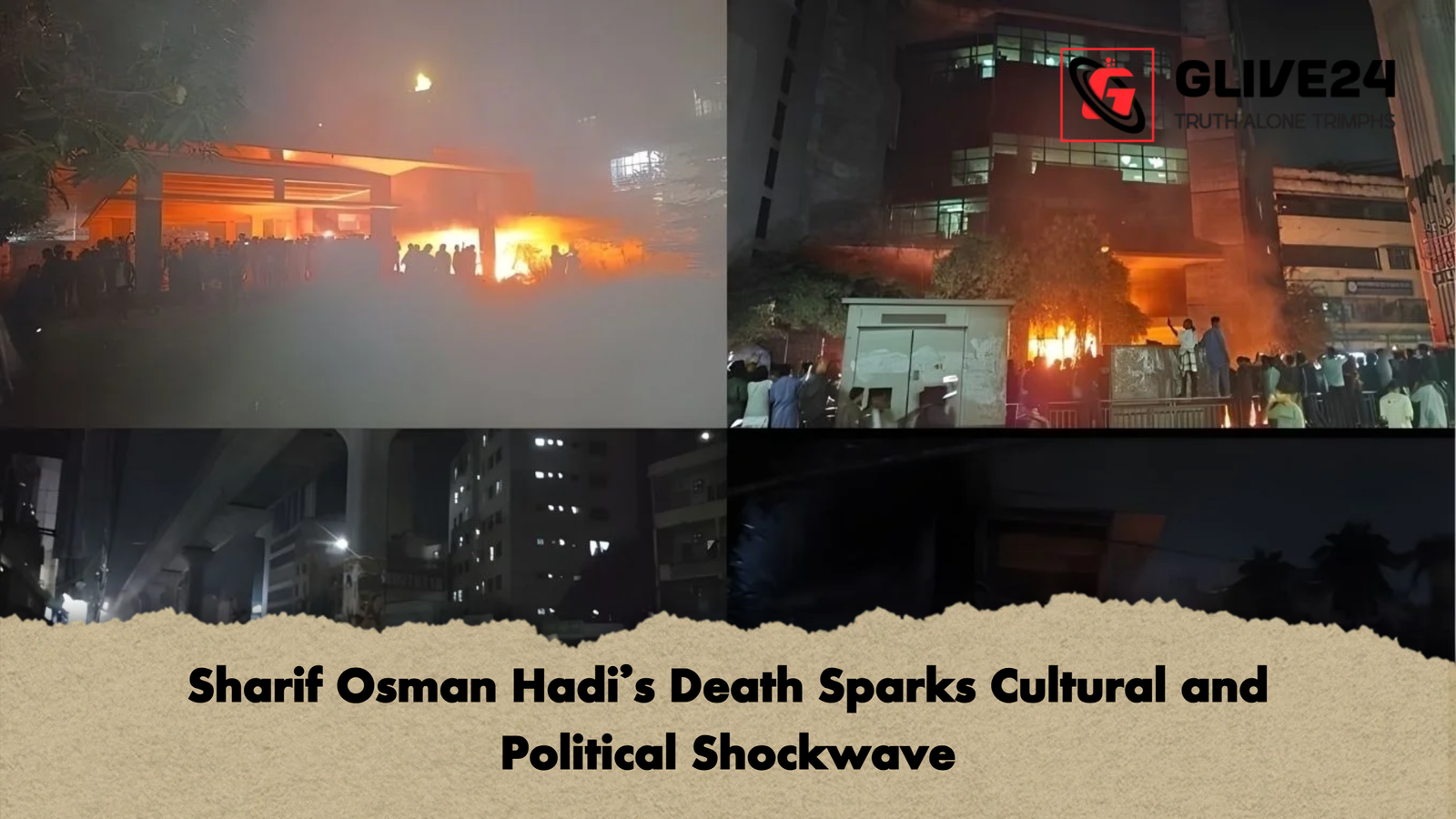
The death of Sharif Osman Hadi has sent tremors far beyond politics, cutting deep into the cultural and emotional fabric of Bangladesh. Known not only as a revolutionary figure but also as a voice of youthful defiance, Hadi’s killing has ignited a wave of collective outrage that has transformed grief into a nationwide uprising.
Hadi rose to prominence during the July Uprising, where his fiery speeches and uncompromising stance against authoritarian control earned him admiration among students and young activists. For many, he represented a new generation unafraid to confront power. His sudden death has therefore been perceived as an attack on that very spirit.
The initial response came from Dhaka’s student community, who gathered spontaneously at Shahbagh and Dhaka University late Thursday night. Their chants echoed long into the darkness, condemning political repression and demanding justice. Leaders of the July movement joined the protests, lending organisational strength and signalling that this was no fleeting outburst.
By midnight, the demonstrations had spilled onto major highways. Protesters blocked strategic routes, paralysing transport and bringing large sections of the capital to a standstill. While the blockades caused immense suffering for commuters and emergency patients, participants argued that disruption was the only language left to force accountability.
As tensions rose, isolated acts of arson broke out, including attacks on prominent media offices. These incidents were widely condemned even within protest circles, yet they highlighted the depth of anger simmering beneath the surface. Firefighters worked through the night to rescue trapped journalists, preventing what could have been a far greater tragedy.
Outside Dhaka, the reaction was equally intense. Chattogram, Rajshahi, Sylhet, Barishal, and Jamalpur all witnessed large demonstrations. In several areas, political offices were vandalised, and roads were set alight. In Hadi’s home district of Jhalakathi, residents staged emotional protests, declaring that his blood would not be forgotten.
What sets this unrest apart is its emotional intensity. Protesters are not merely demanding arrests; they are questioning the direction of the nation itself. Many fear that Hadi’s killing marks a dangerous escalation in political violence, one that threatens freedom of expression and civic activism.
As Friday’s nationwide protests loom, Bangladesh stands at a crossroads. Whether Hadi’s death becomes a catalyst for reform or a symbol of further division will depend on the actions taken in the coming days. For now, his legacy burns brightly in the hearts of those who refuse to let his voice be silenced.