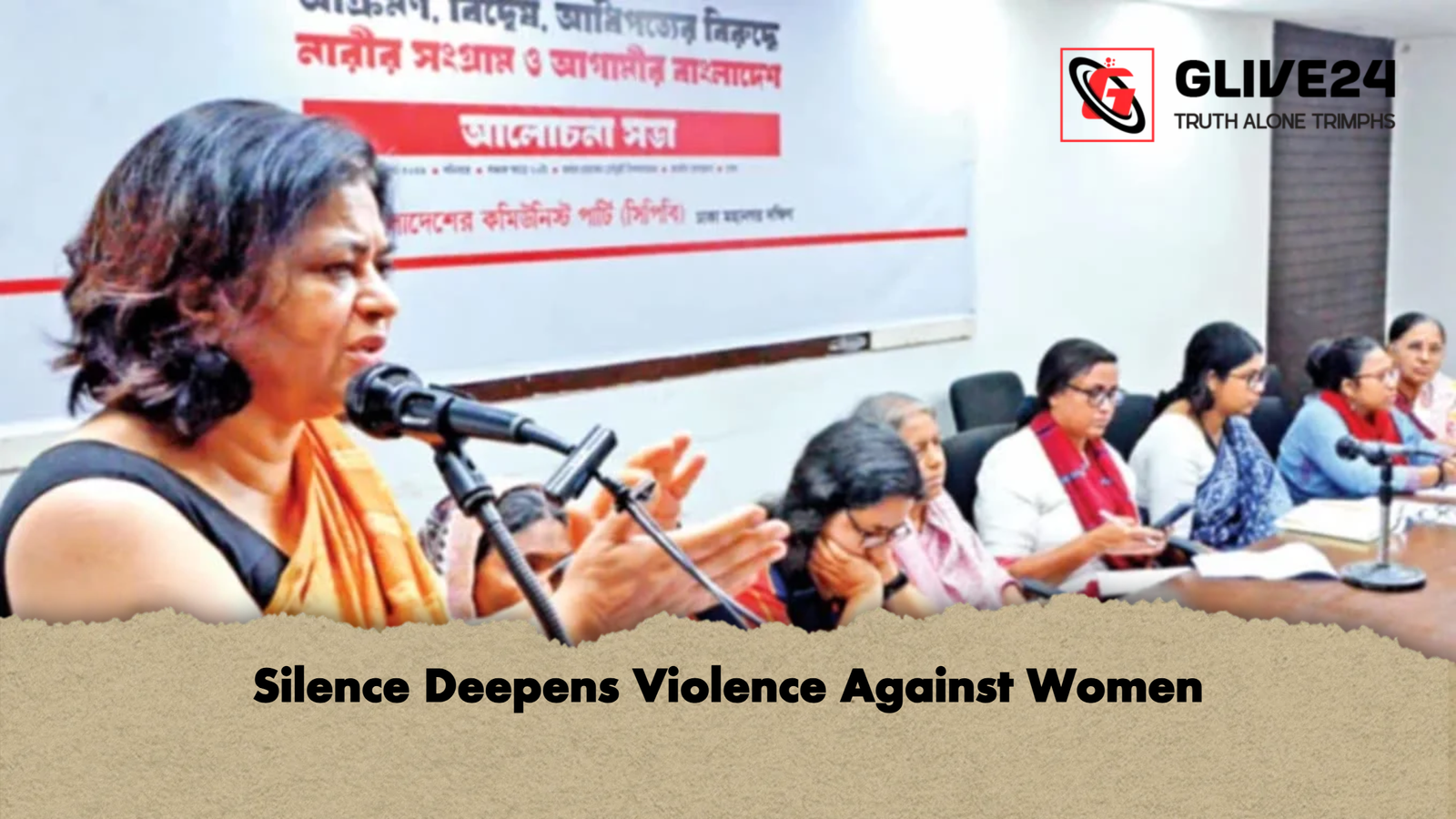
The struggle against gender-based discrimination cannot remain confined to public spaces or workplaces; it must also confront the inequalities embedded within family life. This view was emphasised by prominent lawyer and human rights advocate Sara Hossain, who warned that society’s silence about abuse within households remains one of the most dangerous barriers to achieving gender justice.
Speaking at a discussion marking International Women’s Day at the National Press Club, Hossain said that incidents of discrimination, harassment and violence inside families often go unreported because people are reluctant to speak openly about them. According to her, this silence allows abuse to persist and prevents victims from receiving support or justice.
The discussion was organised by the Communist Party of Bangladesh, Dhaka Metropolitan South unit, under the theme “Women’s Struggle Against Violence, Hatred and Domination, and the Future of Bangladesh.” Participants included academics, activists and political leaders who highlighted the continuing challenges facing women in the country.
The keynote paper was presented by Dipti Dutta, a faculty member of the Oriental Art Department at University of Dhaka. She argued that incidents of violence against women in Bangladesh—including sexual assault, harassment and social hostility—should not be viewed as isolated occurrences. Instead, she stressed the importance of examining the broader social and political structures that enable such abuse.
“The persistence of patriarchal attitudes, combined with weak institutional responses, creates an environment where many forms of violence remain normalised,” Dutta noted. She called for stronger legal enforcement and broader public awareness to challenge these entrenched patterns.
The event, chaired by activist Jolly Talukder, also featured remarks from Professor Dr. Akhtar Banu, activist Lucky Akter, and organiser Mamata Chakraborty.
Hossain further observed that while political landscapes in the country often shift, women continue to face politically motivated hostility and violence. She noted that such incidents have occurred across different political periods, including during the tenure of the Awami League government. “We must reject violence against women regardless of their political affiliation or ideological position,” she said, urging women to speak out more forcefully against injustice.
Lucky Akter raised concerns about proposals from certain extremist groups seeking to reduce women’s working hours. She argued that such initiatives risk undermining women’s economic independence. Instead, she called for equal pay, safe working environments and stronger labour protections for female workers.
Mamata Chakraborty added that a culture of impunity continues to affect many cases involving violence against women. Without consistent legal consequences for perpetrators, she warned, victims often lose faith in the justice system and become reluctant to pursue legal action.
Violence Against Women: Key Indicators
Although exact figures vary by year and reporting method, several studies and human rights organisations have highlighted the scale of the issue in Bangladesh.
| Indicator | Observed Trend |
|---|---|
| Domestic violence | A significant proportion of women report experiencing abuse at some point in their lives |
| Workplace harassment | Surveys indicate many women face verbal, psychological or sexual harassment at work |
| Legal accountability | Many cases face lengthy judicial processes or weak enforcement |
| Social stigma | Victims often hesitate to report abuse due to fear of social repercussions |
Meanwhile, another discussion on women’s rights was held at the Sagar–Runi Auditorium of the Dhaka Reporters Unity, organised by the civic platform Nari Sanghati. The event, titled “Expectations of Transformation: Women’s Citizenship, Dignity and Security,” focused on the broader political and social status of women in Bangladesh.
At the event, former adviser to the interim government Farida Akhter said that although many had expected improvements in women’s status following the political upheaval in July, meaningful changes have yet to materialise in practice.
The discussion, chaired by Shyamoli Shil and moderated by Aparajita Chand, also featured contributions from Tania Ferdousi Rob, senior vice-president of the Jatiya Samajtantrik Dal, as well as academics including Fatema Sultana Shubhra of Jagannath University and researcher Bushra Zaman.
Speakers across both events agreed that breaking the silence surrounding domestic abuse and structural discrimination is essential for meaningful social change. Without open discussion, stronger institutions and collective resistance, they warned, violence against women will remain deeply entrenched in society.