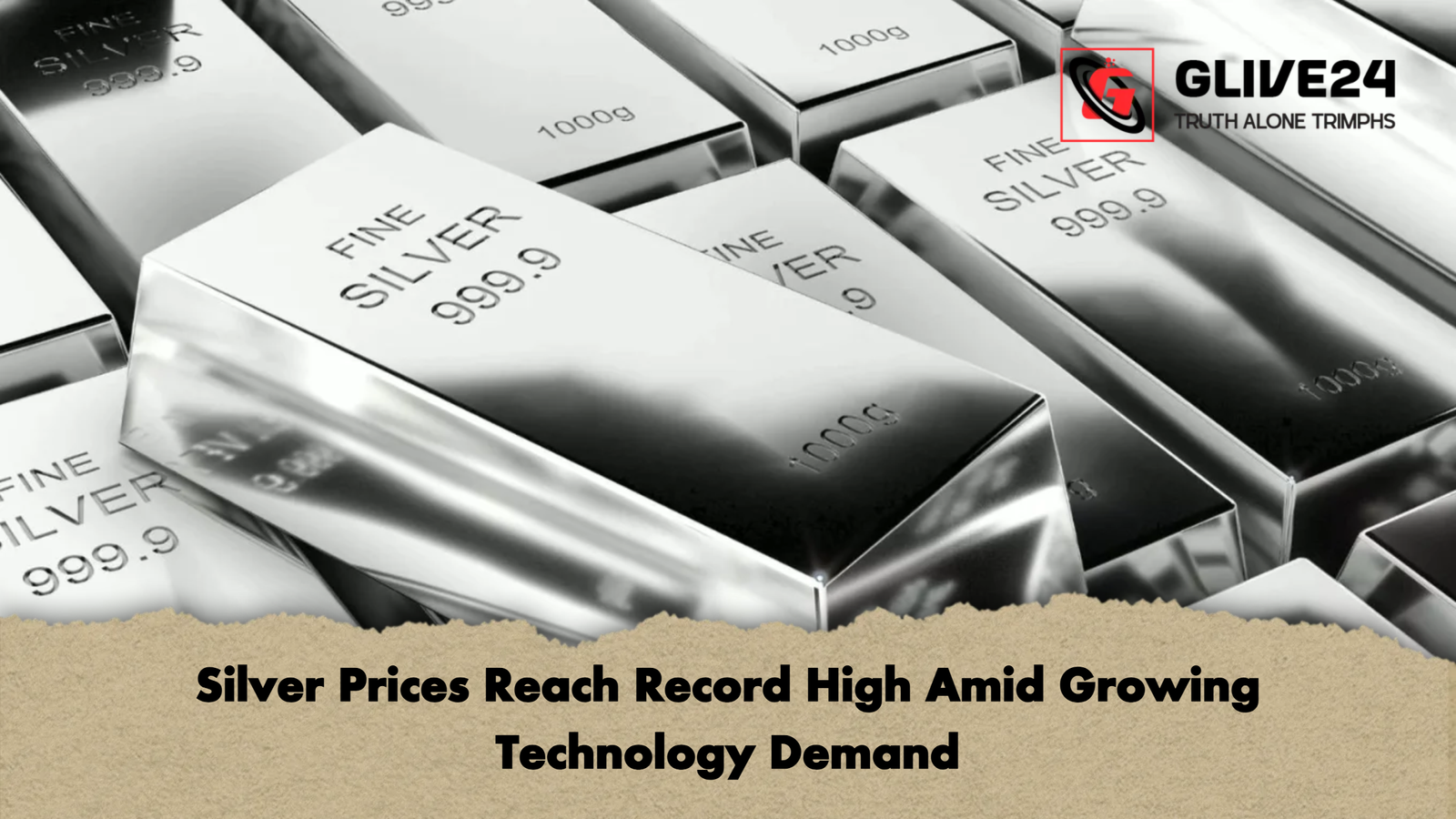
The price of silver has reached unprecedented levels, setting a new record even before the United States Federal Reserve reduced interest rates. The surge is being driven not only by traditional investment demand but also by the increasing utilisation of silver in the technology and industrial sectors.
On 9 December, the spot market price of silver surpassed $60 per ounce for the first time. The spot market, where commodities are traded for immediate delivery, reflects the real-time demand and supply conditions. This rise in silver has been accompanied by an upward trend in gold prices, which reached record levels earlier this year. Analysts attribute these gains to global economic uncertainties and the imposition of trade tariffs by the United States on multiple countries.
Investors traditionally turn to precious metals such as silver and gold when interest rates fall and the US dollar weakens. On 10 December, the Federal Reserve cut the benchmark interest rate by 0.25 percentage points, intensifying this investment trend. Yeo Hi Chua, a faculty member at Nanyang Technological University in Singapore, explained that lower interest rates reduce the relative attractiveness of cash holdings and short-term bonds, prompting businesses and investors to secure wealth in assets like silver.
In recent months, gold has surpassed $4,000 per ounce for the first time, prompting investors to explore relatively lower-priced alternatives such as silver. Christopher Ong, an analyst at OCBC Bank in Singapore, noted that this shift is directly contributing to increased demand for silver. Platinum and palladium prices have also risen significantly this year, further indicating a broad-based surge in precious metal markets.
The industrial demand for silver is another key factor driving prices. According to Cosmos Marinakis of Singapore Management University, silver is not only an investment commodity but also a critical industrial material. Its superior electrical conductivity compared with copper and gold makes it essential in applications ranging from solar panels to electric vehicles.
The growth of the electric vehicle market is expected to boost silver demand further, particularly for battery production. However, increasing the global silver supply is challenging because it is predominantly extracted as a by-product of lead, copper, and gold mining.
Furthermore, potential tariffs on silver imports to the United States under the Trump administration’s trade policies are accelerating demand in the US, which accounts for roughly two-thirds of global silver imports. This combination of industrial requirements, limited supply, and speculative investment is driving prices higher. Industry experts predict that silver will maintain elevated levels in the coming months, reflecting both market and technological pressures.