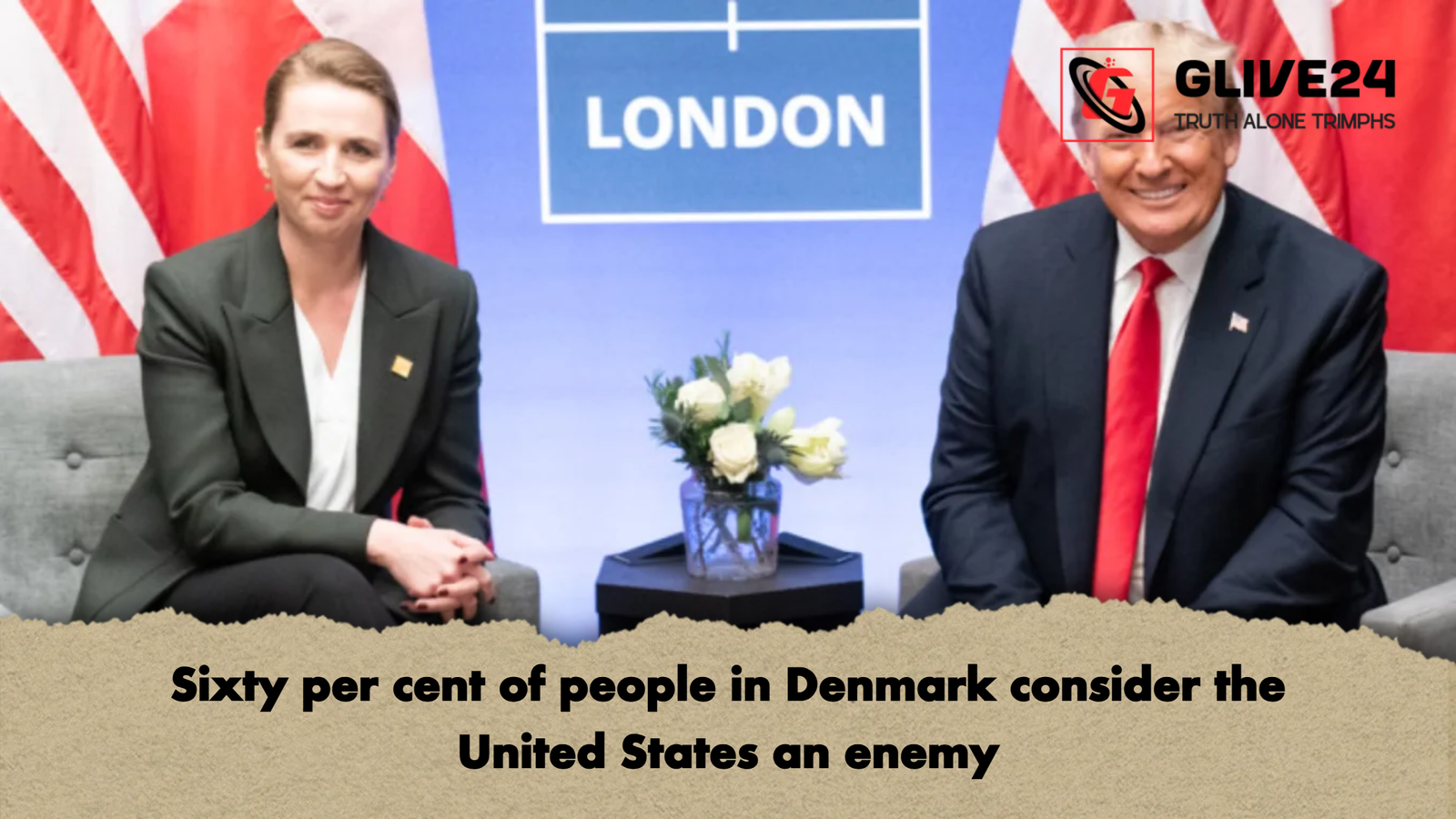
A recent survey has revealed a striking shift in Danish public opinion towards the United States, with 60 per cent of respondents now describing Washington as an ‘enemy’. Only 17 per cent continue to regard the US as an ally, while the remaining 23 per cent remain neutral or undecided, highlighting growing unease in Denmark over recent American policy moves.
Greenland, long considered part of the Kingdom of Denmark, is officially self-governing and recognised as a sovereign territory by Copenhagen. Despite the island’s autonomy and Denmark’s harsh, Arctic climate, relations between the peoples of Denmark and Greenland have historically been warm. However, this relationship was tested when former US President Donald Trump expressed an interest in purchasing Greenland, sparking widespread public outrage in Denmark.
The survey, conducted by the Danish public broadcaster DR and reported by AFP on Tuesday, provides quantitative insight into this diplomatic tension. Respondents were asked whether, in light of recent developments, they viewed the United States as a friend or foe. The results are summarised below:
| Public Opinion on the United States | Percentage of Respondents (%) |
|---|---|
| Enemy | 60 |
| Ally | 17 |
| Neutral / Undecided | 23 |
Traditionally, Denmark and the United States have been close allies, sharing a long-standing partnership as members of the North Atlantic Treaty Organization (NATO). Copenhagen still officially regards Washington as its “closest ally,” reflecting decades of military and strategic cooperation. Yet, the recent episode involving Greenland has placed this perception under strain, revealing underlying public dissatisfaction with American unilateral actions.
Political analysts note that this surge in anti-American sentiment is not solely the result of Trump’s Greenland proposal. It also reflects broader concerns over the United States’ approach to international diplomacy and territorial interests. For many Danes, the idea of a foreign superpower attempting to acquire part of their kingdom touched a sensitive nerve, prompting a reevaluation of Washington’s role as a reliable partner.
The survey results indicate a potential challenge for future diplomatic relations. While official channels maintain close cooperation, public opinion can exert pressure on governments to adopt more cautious or assertive policies in international negotiations. The data suggest that, should similar unilateral moves occur, Danish support for American-led initiatives may weaken.
In summary, the Greenland episode has crystallised a remarkable shift in Danish perceptions of the United States. What was once viewed almost universally as a steadfast ally is now increasingly regarded with suspicion, if not outright hostility. As such, Copenhagen faces the delicate task of balancing NATO commitments and bilateral ties with the realities of its citizens’ changing attitudes.