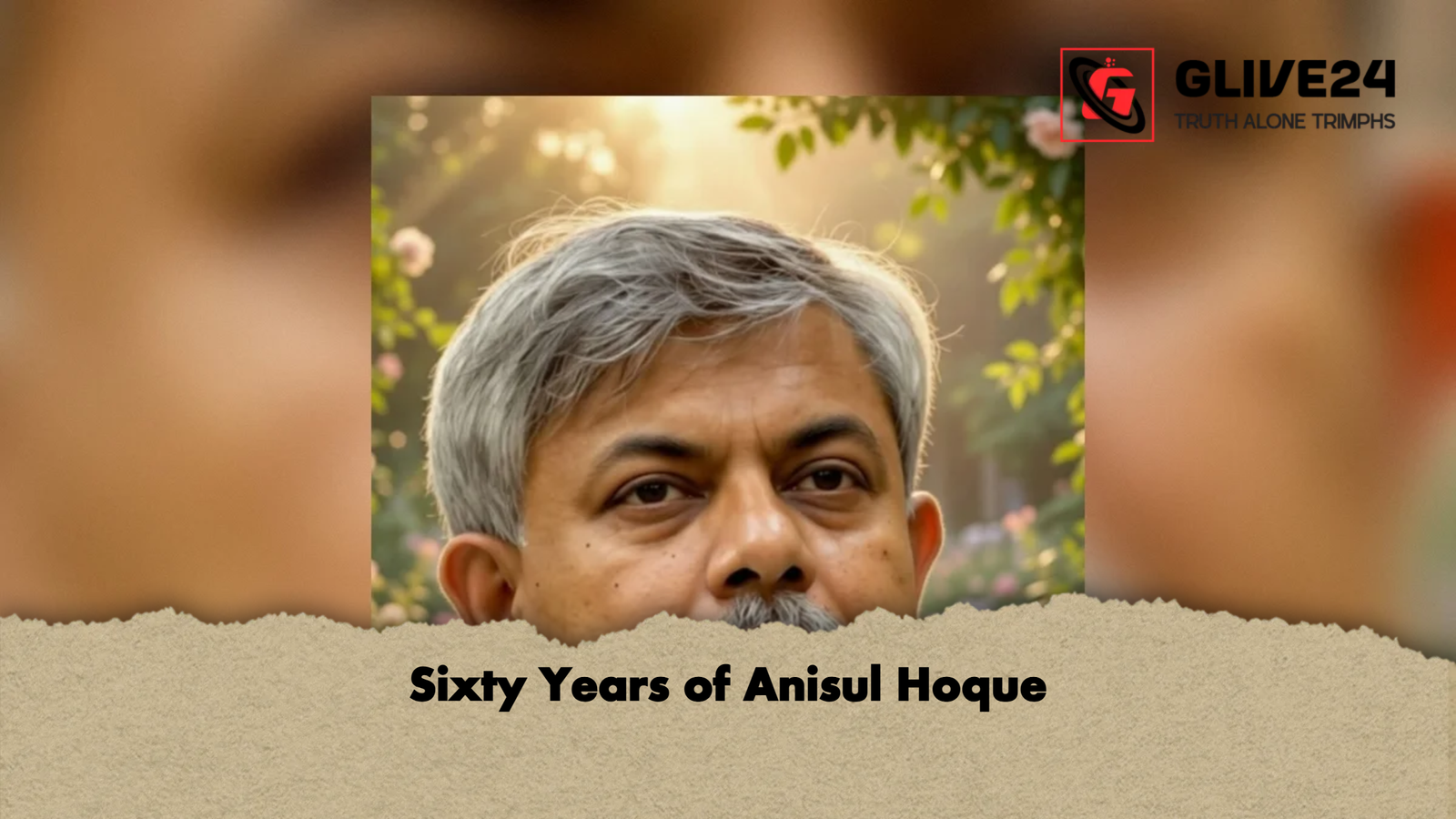
Today marks the 60th birthday of Anisul Hoque—poet, journalist, novelist, short story writer and celebrated prose cartoonist—whose multifaceted creativity has secured him a distinctive place in contemporary Bangla literature. With an unwavering commitment to language, fidelity to history and a profound humanism, he has become one of the most recognisable literary voices of his generation.
Born on 4 March 1965 in Nilphamari, in northern Bangladesh, Hoque spent his formative years amid the landscapes and communities of Rangpur. The ethos of that region—its resilience, humour and quiet struggles—returns repeatedly in his fiction and essays, lending them authenticity and emotional depth.
Table of Contents
Education and Early Career
A brilliant student, Hoque passed his Secondary School Certificate from Rangpur Zilla School in 1981 and his Higher Secondary Certificate from Carmichael College, Rangpur, in 1983, securing positions on the combined merit list in both examinations. He later enrolled in the Department of Civil Engineering at Bangladesh University of Engineering and Technology (BUET), from which he graduated with distinction.
Although he qualified for the Bangladesh Civil Service and joined the government railway department in 1986, the administrative profession could not contain his creative impulse. Within a short time, he turned decisively towards journalism, embracing the pen as his principal vocation.
Journalism and Public Voice
Hoque began his journalistic career in 1987 as an associate editor of the weekly Deshbandhu. He subsequently held significant editorial responsibilities at Purbabhash, Saptahik Khoborer Kagoj and Dainik Bhorer Kagoj. Since 1998, he has been associated with Prothom Alo, Bangladesh’s leading daily newspaper, where his columns, satirical prose cartoons and opinion pieces enjoy enduring popularity.
Literary Contributions
Although he initially gravitated towards poetry during his university years, Hoque ultimately devoted himself more fully to fiction. His oeuvre spans novels, short stories, satire and drama, each bearing his unmistakable narrative voice.
Among his most celebrated works is the Liberation War novel Ma (“Mother”), based on the true story of martyred freedom fighter Azad and his mother. The novel has stirred generations of readers, been translated into several languages, and is widely regarded as a landmark in war literature.
A brief overview of selected works is presented below:
| Genre | Notable Works | Themes |
|---|---|---|
| Novel | Ma; Bir Protik-er Khoje; Nidhuya Pathar; Kheya; Amar Make Kokhono (2023) | Liberation War, memory, identity, maternal sacrifice |
| Short Stories | 51 Borti; Ajkalcar Bhalobasha; Alo-Andhokare Jai; Amar Ekta Dukkho Ache; Ayesha Mangal | Contemporary relationships, social satire, moral dilemmas |
| Television Drama | Nal Piran; Karimon Bewa; Protyaborton; Sanko; Proti Chunia; Chorui Bhati; 51 Borti (mega serial) | Rural life, social change, humour and pathos |
His 2023 novel Amar Make Kokhono, launched at the Ekushey Book Fair, resonated strongly with younger readers, reaffirming his relevance across generations.
Drama, Film and Recognition
Hoque has also distinguished himself as a scriptwriter for film. He penned the story for the popular film Bachelor and contributed to Made in Bangladesh, both of which found favour with younger audiences.
Over the years, he has received numerous accolades, including awards for Best Television Playwright and literary honours from cultural organisations across the country. In 2012, he was awarded the prestigious Bangla Academy Literary Award in recognition of his contribution to fiction—an acknowledgement of his sustained literary excellence.
Anisul Hoque does more than craft stories; he captures the spirit of his time. He retrieves human faces from the folds of history, gives language to pain, and teaches readers to rediscover love and dignity. On his 60th birthday, admirers across Bangladesh celebrate not merely a writer, but a chronicler of collective memory and aspiration—one who continues to write the story of his people with compassion and clarity.