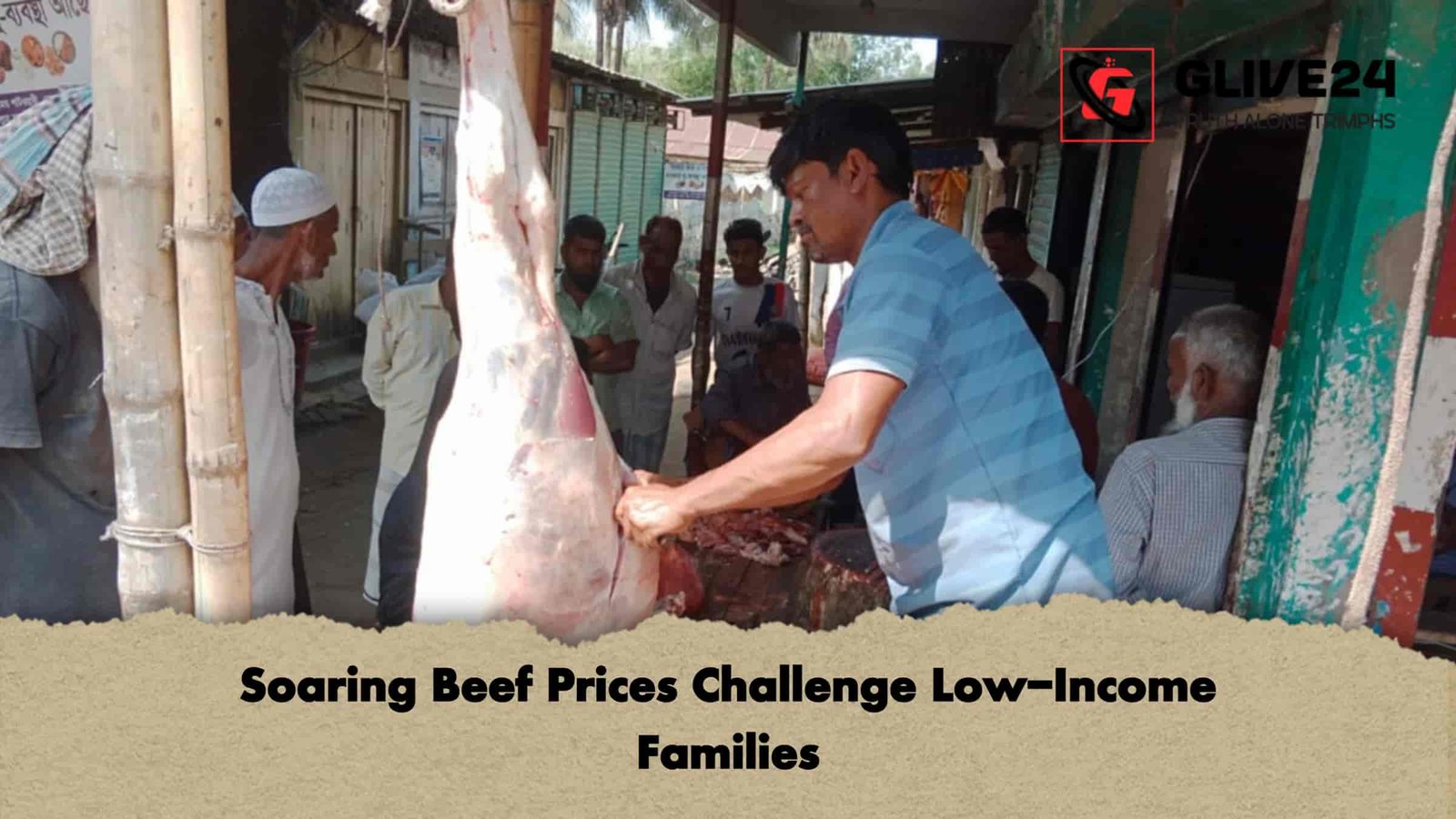
As Eid-ul-Fitr draws near, markets across Moulvibazar, from bustling neighbourhood bazaars to town centres, are witnessing lively trade in cow and buffalo meat. Yet, for many low-income households and daily wage earners, the soaring cost of meat has made it an unaffordable luxury, leaving families unable to serve this traditional festive dish.
Vendors across the region report steady demand for beef and buffalo meat, with prices ranging between 800 and 850 Bangladeshi taka per kilogram. Despite the apparent abundance in markets, those struggling to make ends meet are largely excluded from purchasing even small quantities. Rising prices of everyday essentials, such as rice and pulses, have left little room in household budgets for meat. Many families say they may not afford broiler chicken for several months, let alone cow or buffalo meat.
Daily labourer Samuj Mia expressed his frustration: “I last ate beef during the previous Eid-ul-Adha. A kilogram now costs 800 taka, which makes half a kilo 400 taka. I earn around 400–500 taka daily. After buying rice and lentils, there is nothing left for meat. Eating beef feels like an unattainable dream.”
Another worker, Rafik Mia, added, “During Eid, we get a brief chance to enjoy meat, but for most of the year, people like us rarely have it on our tables.”
Meat seller Belayet Mia explained the changing purchasing patterns: “We sell according to demand. However, prices have increased significantly. Customers who once bought 10–20 kilograms now purchase only 2–3 kilograms. While middle-income families continue to buy moderate amounts, lower-income households buy very little.”
Meat Prices Across Moulvibazar Markets
| Type of Meat | Price per Kilogram (BDT) | Observations |
|---|---|---|
| Cow Meat | 800–850 | Prices vary slightly by vendor |
| Buffalo Meat | 800–850 | Popular for Eid and other festivals |
| Broiler Chicken | 400–450 | Often unaffordable for low-income households |
The rising cost of meat highlights the growing economic pressures faced by the region’s most vulnerable communities. For many families, Eid remains a festival of longing rather than abundance, as financial constraints limit the ability to participate fully in traditional celebrations.