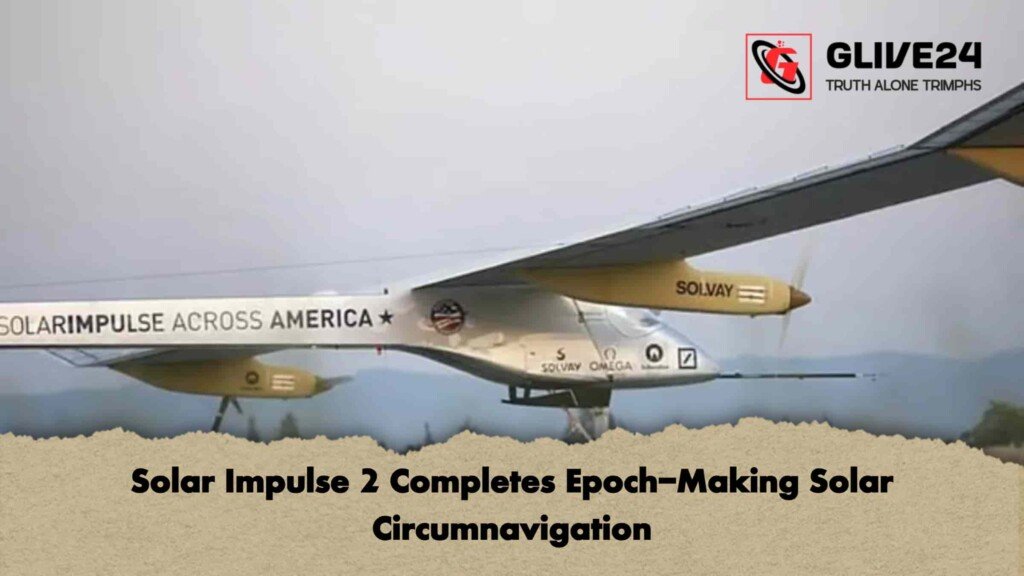
The notion of circumnavigating the globe in an aeroplane without utilizing a single drop of fossil fuel was once viewed as pure fantasy. Yet, through the pioneering application of solar energy, this ambitious vision has been transformed into a landmark achievement. The story of Solar Impulse 2 represents a major breakthrough in aeronautical engineering, signaling a dramatic shift towards a cleaner, more sustainable future for global transport.
In July 2016, the solar-powered aircraft landed gracefully in Abu Dhabi, United Arab Emirates, successfully concluding an extraordinary journey around the world. According to data documented by Reuters and the World Economic Forum, Solar Impulse 2 traversed roughly 40,000 kilometres using nothing but energy harvested directly from the sun. The entire voyage spanned 16 months, during which the aircraft spent approximately 500 hours airborne. The primary objective of the mission was not the immediate commercialization of solar flight, but rather to demonstrate how state-of-the-art engineering, lightweight construction, and clean energy can overcome seemingly insurmountable global challenges.
The journey originally commenced from Abu Dhabi on 9 March 2015. Rather than flying non-stop, the expedition was strategically divided into 16 individual flight legs. The global route exposed the team to severe atmospheric conditions and unpredictable weather patterns, frequently forcing extended ground delays to ensure safe flying conditions. As a direct result of these operational pauses, the comprehensive tour took over a year to complete.
From a structural standpoint, the aircraft is a triumph of clean technology. Covered in more than 17,000 photovoltaic solar cells, its immense wings captured solar radiation throughout the day to power four electric motors. Excess energy collected during daylight hours was stored in advanced onboard batteries, allowing the engines to operate continuously through the night. Despite possessing a wingspan broader than that of a Boeing 747 airliner, the entire airframe weighed no more than an average family motor car. This unique structural balance—combining massive wing area with minimal mass—enabled the plane to remain aloft with minimal power consumption.
Engineered for energy efficiency rather than velocity, the aircraft maintained a top speed of 90 kilometres per hour and achieved a maximum cruising altitude of 9,000 metres. Swiss aviators Bertrand Piccard and André Borschberg alternated piloting duties in the unpressurised, single-seat cockpit. Navigating vast oceanic expanses completely alone required profound psychological discipline and personal stamina alongside complex technical operations.
Key Technical & Operational Parameters
| Parameter / Metric | Project Details |
| Aircraft Name | Solar Impulse 2 |
| Mission Type | Global Circumnavigation |
| Primary Aviators | Bertrand Piccard & André Borschberg |
| Origin & Final Destination | Abu Dhabi, United Arab Emirates |
| Departure Date | 9 March 2015 |
| Arrival Date | July 2016 |
| Total Distance Covered | Circa 40,000 kilometres |
| Cumulative Flight Duration | Circa 500 hours |
| Total Route Segments | 16 flight legs |
| Photovoltaic Cell Count | Exceeding 17,000 cells |
| Propulsion Type | 4 electric motors |
| Maximum Operating Speed | 90 km/h |
| Maximum Flight Altitude | 9,000 metres |
Reflecting on the achievement, Bertrand Piccard highlighted the mental demands of the expedition, remarking that conquering the oceans required as much psychological adaptation as technological innovation. For the team, the mission’s success went far beyond an aeronautical record. It demonstrated how clean technologies can be deployed in daily life to curb global carbon emissions. Piccard noted that the achievement paved the way for regional electric aviation, predicting that passenger aircraft carrying up to 50 people would soon operate short- to medium-haul commercial routes.
The final touchdown in Abu Dhabi marked the beginning of a broader campaign rather than an endpoint. Following the journey, Piccard and Borschberg launched initiatives aimed at promoting renewable technologies globally, offering strategic guidance to national governments, and establishing international bodies dedicated to clean energy solutions. For the two aviators, the global flight was merely the opening chapter in a wider revolution for clean technology.