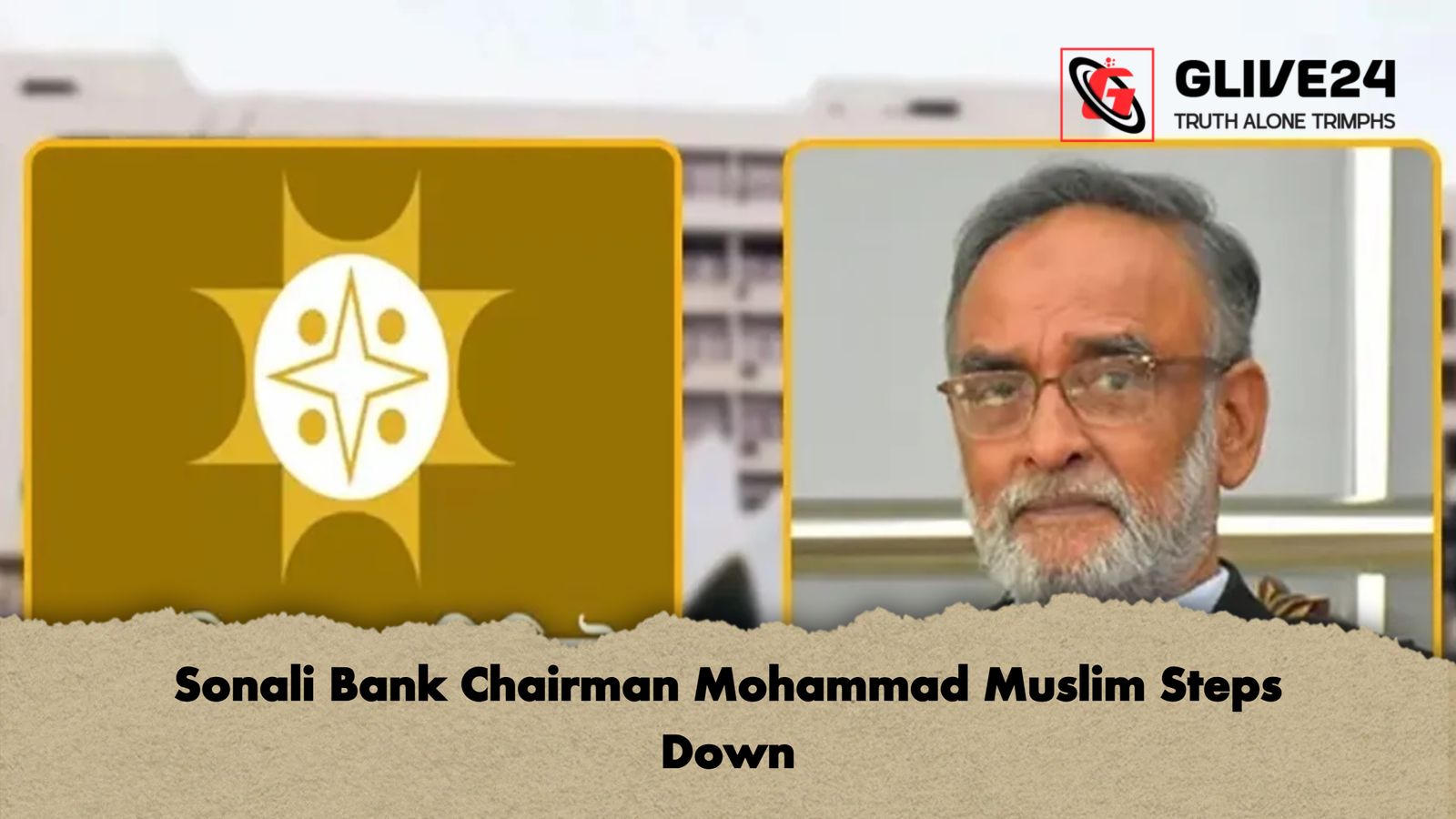
Mohammad Muslim Chowdhury has resigned from his position as chairman of Sonali Bank, citing personal reasons. His departure brings to a close a brief yet high-profile tenure at the helm of Bangladesh’s largest state-owned commercial bank.
On Monday, 2 March, Chowdhury formally submitted his resignation in a letter addressed to the Secretary of the Financial Institutions Division, citing personal circumstances as the primary reason for vacating the post.
Professional Background
Before leading Sonali Bank, Mohammad Muslim Chowdhury served as Comptroller and Auditor General (CAG) of Bangladesh, overseeing the nation’s public accounts and auditing processes. In addition to this role, he had a distinguished tenure as Secretary of the Ministry of Finance, providing him with extensive experience in public financial management, policy oversight, and regulatory compliance.
Chowdhury was appointed as a director of Sonali Bank and shortly thereafter as chairman on 28 August 2024. His appointment came in the aftermath of the student-led public uprising on 5 August 2024, which led to the resignation of the Awami League government. He assumed office at a transitional period for the country’s banking sector, with expectations that he would strengthen governance, regulatory oversight, and institutional accountability in the state-owned lender.
Despite these expectations, Chowdhury opted to step down within months of assuming office. Sources indicate that the resignation was entirely personal and that no allegations of misconduct were involved.
Career Highlights
| Position / Role | Tenure / Notes |
|---|---|
| Comptroller and Auditor General | Oversaw national auditing and public accounts |
| Secretary, Ministry of Finance | Senior government finance official |
| Director, Sonali Bank | Appointed 28 August 2024 |
| Chairman, Sonali Bank | 28 August 2024 – 2 March 2026 |
| Reason for Resignation | Personal reasons |
Chowdhury’s resignation leaves Sonali Bank at a critical juncture. As the largest state-owned commercial bank in Bangladesh, it plays a central role in financing both public and private sector initiatives. The chairman’s position is pivotal in shaping financial policies, guiding institutional strategy, and ensuring operational oversight.
Observers note that his brief tenure reflects the ongoing practice of appointing experienced civil servants to senior leadership positions in state-owned banks, particularly during periods of institutional reform and national transition. The bank’s board of directors is expected to consult with the Financial Institutions Division to recommend a successor in the coming weeks.
Mohammad Muslim Chowdhury’s departure highlights the delicate balance between high-level administrative responsibilities and personal considerations, particularly in times of political and economic transition. Despite his short tenure, his contributions as a seasoned bureaucrat and financial overseer remain significant. His leadership period, though brief, was viewed as a stabilising influence for Sonali Bank during a period of organisational and national change.
As the search for his successor begins, stakeholders will be closely watching for appointments that continue to strengthen governance, accountability, and strategic direction in Bangladesh’s largest state-owned financial institution.