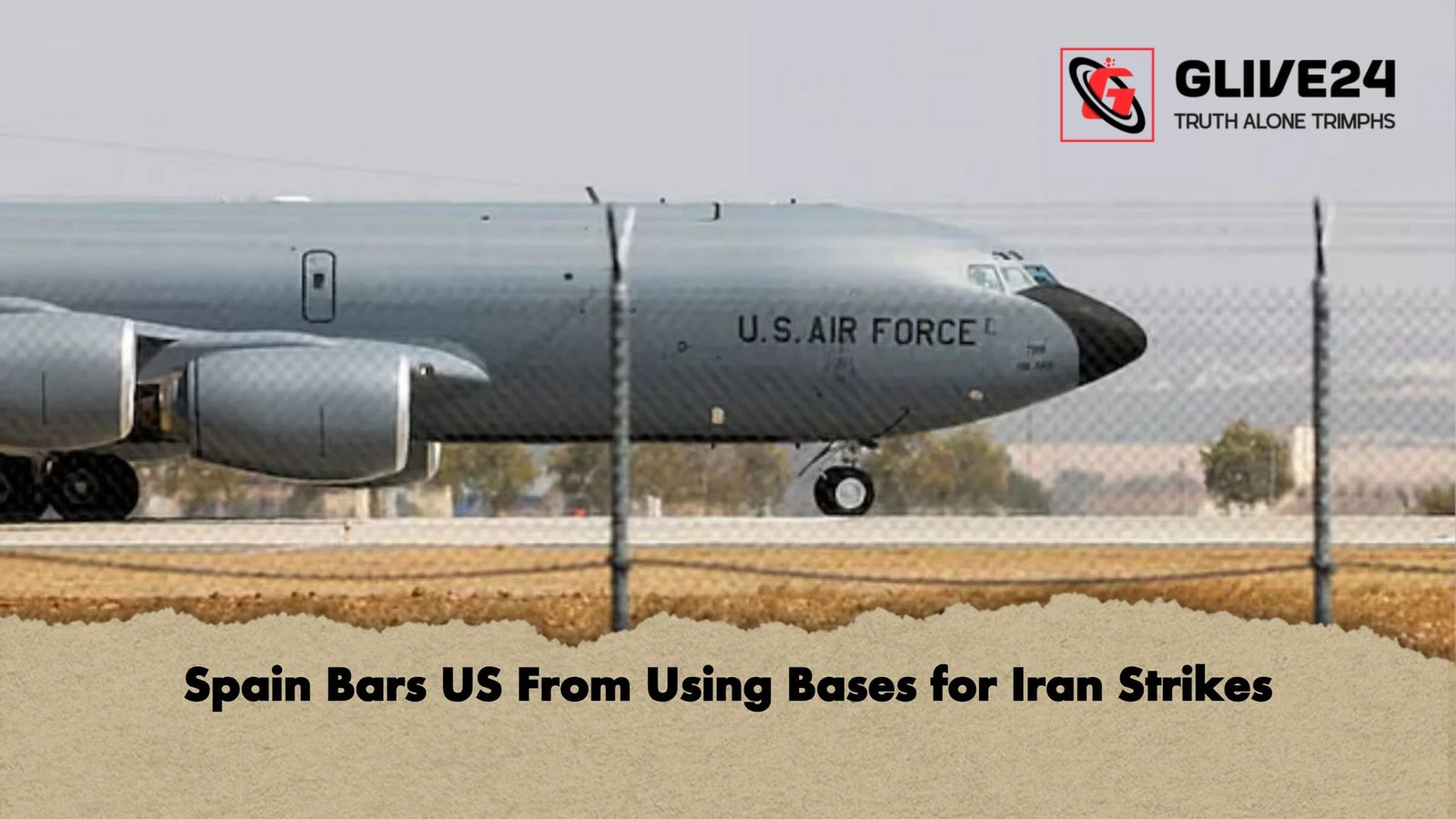
In a significant diplomatic rupture within the NATO alliance, the Spanish government has formally prohibited the United States from utilising military installations on Spanish soil for its ongoing offensive against Iran. The decision, spearheaded by Prime Minister Pedro Sánchez’s administration, marks a stark contrast to the stance of other European allies and introduces a fresh layer of complexity to the logistical operations of the US-led “Operation Epic Fury.”
On Monday, 2 March, data from the flight-tracking portal Flightradar24 revealed a mass exodus of American military aircraft from the Rota and Morón de la Frontera airbases in southern Spain. Approximately 15 aircraft, including seven Boeing KC-135 Stratotankers—crucial for mid-air refuelling—were tracked departing Spanish airspace and relocating to the Ramstein Air Base in Germany.
Sovereignty and International Law
Spanish Foreign Minister José Manuel Albares clarified Madrid’s position during an interview with the broadcaster Telecinco. He emphasised that while the bases are technically “jointly operated,” they remain under Spanish sovereignty. Albares was unequivocal in stating that Spain would not permit its territory to be used for military actions that fall outside the purview of the UN Charter or the specific bilateral defence treaties currently in place with Washington.
“Spain’s bases are not being utilised for this operation,” Albares stated firmly. “We will not authorise any use of these facilities for actions that bypass international law or our sovereign agreements.”
Divergent European Responses
Spain’s refusal highlights a growing schism in Europe regarding the escalation in the Middle East. While Madrid has maintained a principled opposition to the strikes, other allies have wavered. British Prime Minister Sir Keir Starmer, for instance, initially expressed reluctance but ultimately granted the US permission to use UK bases on Sunday, citing the principle of “collective self-defence.”
| Military Facility | Location | Status for Iran Operation | Primary Aircraft Moved |
| Rota Naval Base | Cádiz, Spain | Restricted | KC-135 Stratotankers |
| Morón Air Base | Seville, Spain | Restricted | Transport & Logistics |
| Ramstein Air Base | Germany | Active | Multiple Combat & Support |
| Akrotiri (RAF) | Cyprus | Active | Strike & Surveillance |
Implications for Transatlantic Relations
The withdrawal of 15 aircraft to Germany is a logistical setback for the Pentagon, as the Spanish bases offer a strategic gateway to the Mediterranean and the Middle East. Analysts suggest that this move by the Sánchez government is a calculated attempt to avoid domestic backlash and to position Spain as a mediator rather than a combatant in a war that many in Europe fear will have catastrophic humanitarian consequences.
However, this defiance is expected to strain relations with the Trump administration. With Washington already facing a blockade of the Strait of Hormuz and retaliatory strikes on its Gulf bases, the loss of reliable hubs in the Western Mediterranean could force a more aggressive re-evaluation of US military posture in Europe.