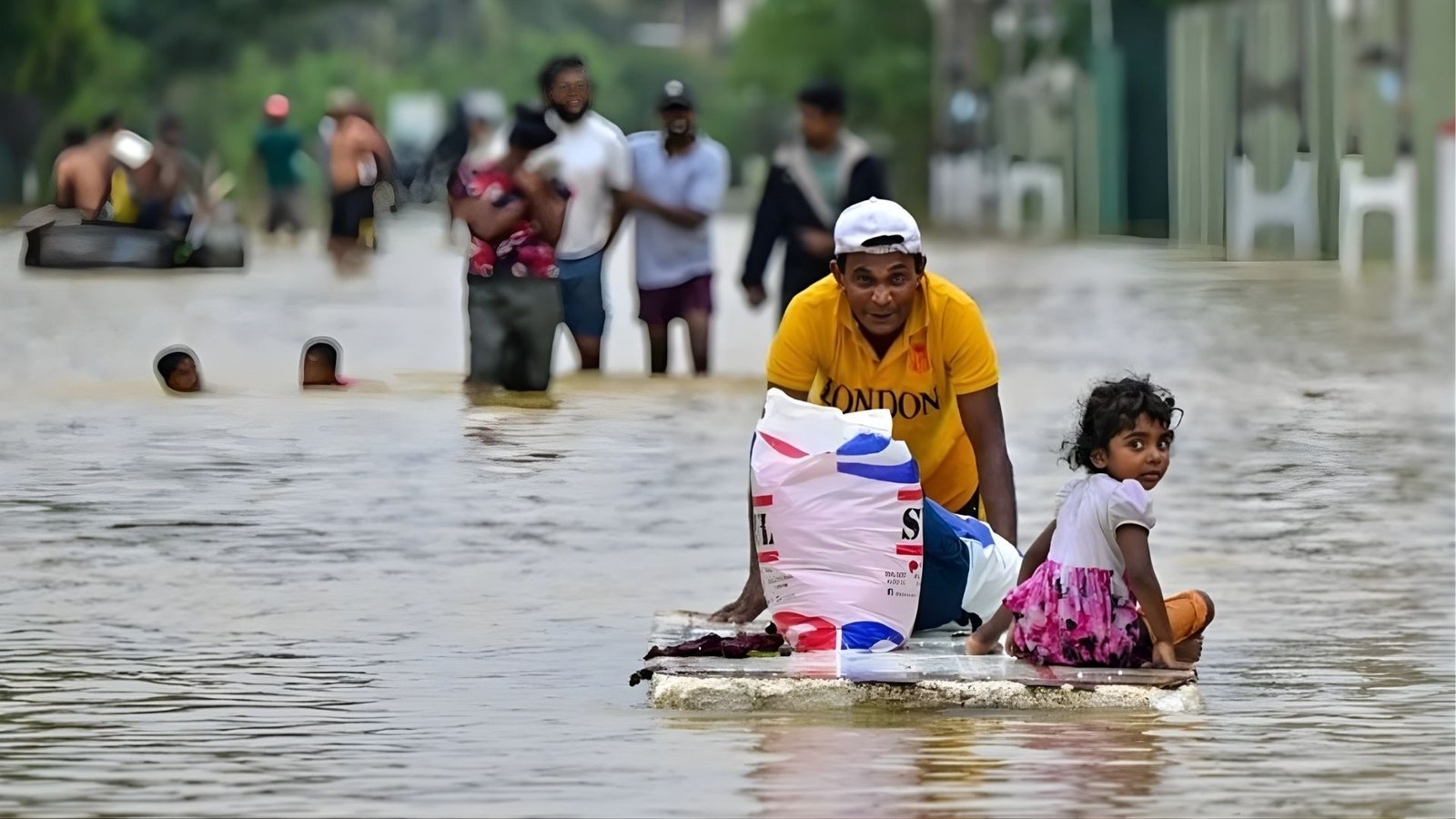
Sri Lanka has been struck by severe flooding and landslides triggered by Cyclone Dituar, with the death toll rising to 153 and 191 people reported missing. In response to the catastrophic situation, President Ranil Wickremesinghe has declared a state of emergency and appealed to the international community for urgent aid.
The disaster comes after a week of relentless rainfall across the island nation in the Indian Ocean. The resulting floods have caused widespread destruction, leaving thousands of families homeless and in need of immediate assistance.
According to the Disaster Management Centre (DMC), over 20,000 homes have been damaged, while approximately 108,000 people have been evacuated to temporary shelters set up by the government. A further 798,000 individuals affected by the flooding require emergency relief, highlighting the scale and urgency of the humanitarian challenge.
Among the fatalities are 11 elderly residents of a care home in Kurunegala district, who drowned when the facility was submerged on Saturday evening. This tragic loss underscores the vulnerability of older citizens and other high-risk groups in the face of natural disasters.
Rescue and relief operations have mobilised personnel from the army, navy, and air force. On Saturday, 69 passengers stranded by rising floodwaters in Anuradhapura district were rescued, including a German tourist. Survivors recounted the tense ordeal: naval personnel used ropes to help them reach the roof of a nearby house to escape the rapidly rising waters.
W.M. Shantha, one of the rescued passengers, said, “We were extremely lucky… part of the roof collapsed while we were on it, and three women fell into the water, but they were helped back up safely.” Plans to use a helicopter for the rescue were cancelled due to high winds that could have lifted the roof, necessitating the use of boats instead.
The Sri Lankan government has emphasised that the scale of the disaster exceeds domestic capabilities, calling on international agencies to provide immediate humanitarian support. Experts warn that without coordinated aid, the already significant losses could increase further as relief operations continue.