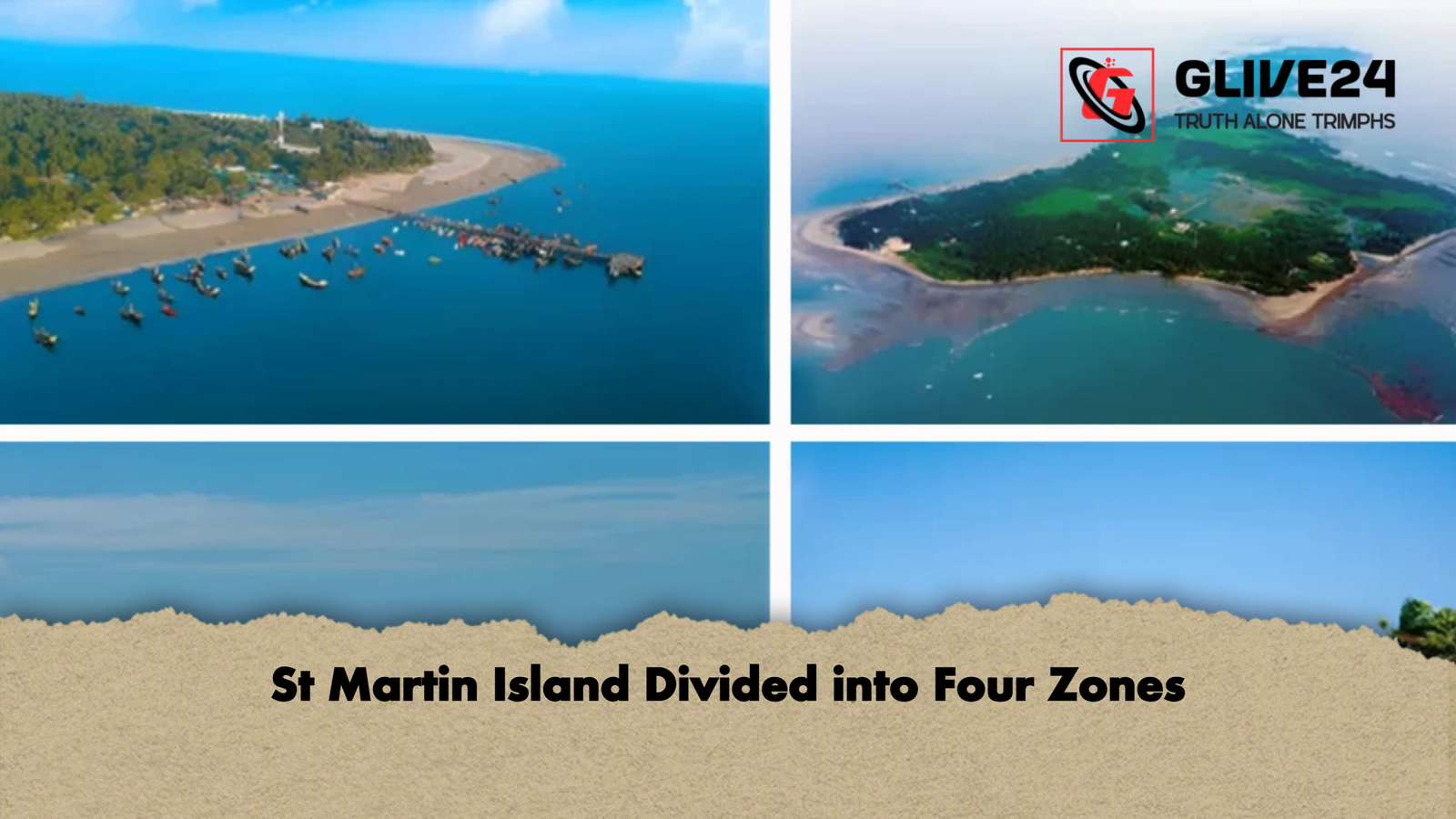
Decades of governmental neglect, unregulated development, and unchecked tourism have pushed Bangladesh’s only coral island, St Martin, to the brink of ecological collapse. Profit-driven infrastructure has been erected at the expense of the island’s natural defences, placing immense pressure on both the local ecosystem and the resident population. In response, a draft master plan proposes dividing St Martin into four distinct management zones to safeguard its fragile environment.
Earlier, the government implemented a nine-month tourist ban on St Martin—from February to October 2025—under the guidance of environmental and forestry advisors. This temporary measure provided the island’s stressed ecosystems a rare opportunity to recover, prompting authorities to draft the current zoning proposals. The plan was presented by the Centre for Environmental and Geographic Information Services (CEGIS), under the Ministry of Water Resources, at a workshop held yesterday at the InterContinental Hotel in Dhaka.
According to the draft, the four proposed zones are as follows:
| Zone Name | Key Features | Tourist Access | Local Resource Use |
|---|---|---|---|
| General Use Zone | Tourism and general economic activity | Day and night | Permitted under regulation |
| Managed Resource Zone | Sea turtle breeding areas | Daytime only | Prohibited |
| Sustainable Use Zone | Bushland, lagoons, mangroves | Daytime only | Government-controlled |
| Restricted Zone | Protected biodiversity areas | No access | No access |
The master plan is structured around four principal objectives: ecosystem restoration, controlled tourism, protection of marine resources and livelihoods, and climate-resilient infrastructure. It also recommends replacing diesel generators with solar power and emphasises rainwater harvesting.
Speaking at the workshop, Adviser Syeda Rizwana Hasan highlighted that St Martin’s biodiversity restoration is a national priority. “Tourism and St Martin are not synonymous,” she said. The February–October 2025 ban has already shown positive environmental effects. She cautioned against prioritising tourism over conservation, noting that allowing 10,000 visitors daily to an island with just 8,000 residents would severely disrupt local life and the environment. Future tourism, she stressed, would be controlled and community-centred, with alternative livelihoods supported through agriculture, fisheries, handicrafts, and limited tourism activities.
Wildlife expert Reza Khan noted that 70 per cent of the island’s coral has been destroyed, and parts of the southeast are disappearing entirely. CEGIS Senior Specialist HM Nurul Islam added that hotel construction has facilitated invasive plant spread, overfishing has threatened lobster populations, and ship anchors have damaged coral.
The United Nations Development Programme (UNDP) in Bangladesh welcomed the plan, affirming support for the island’s biodiversity protection. Officials emphasised that careful, environmentally sensitive development is crucial to ensure St Martin remains a resilient, thriving ecosystem for future generations.