
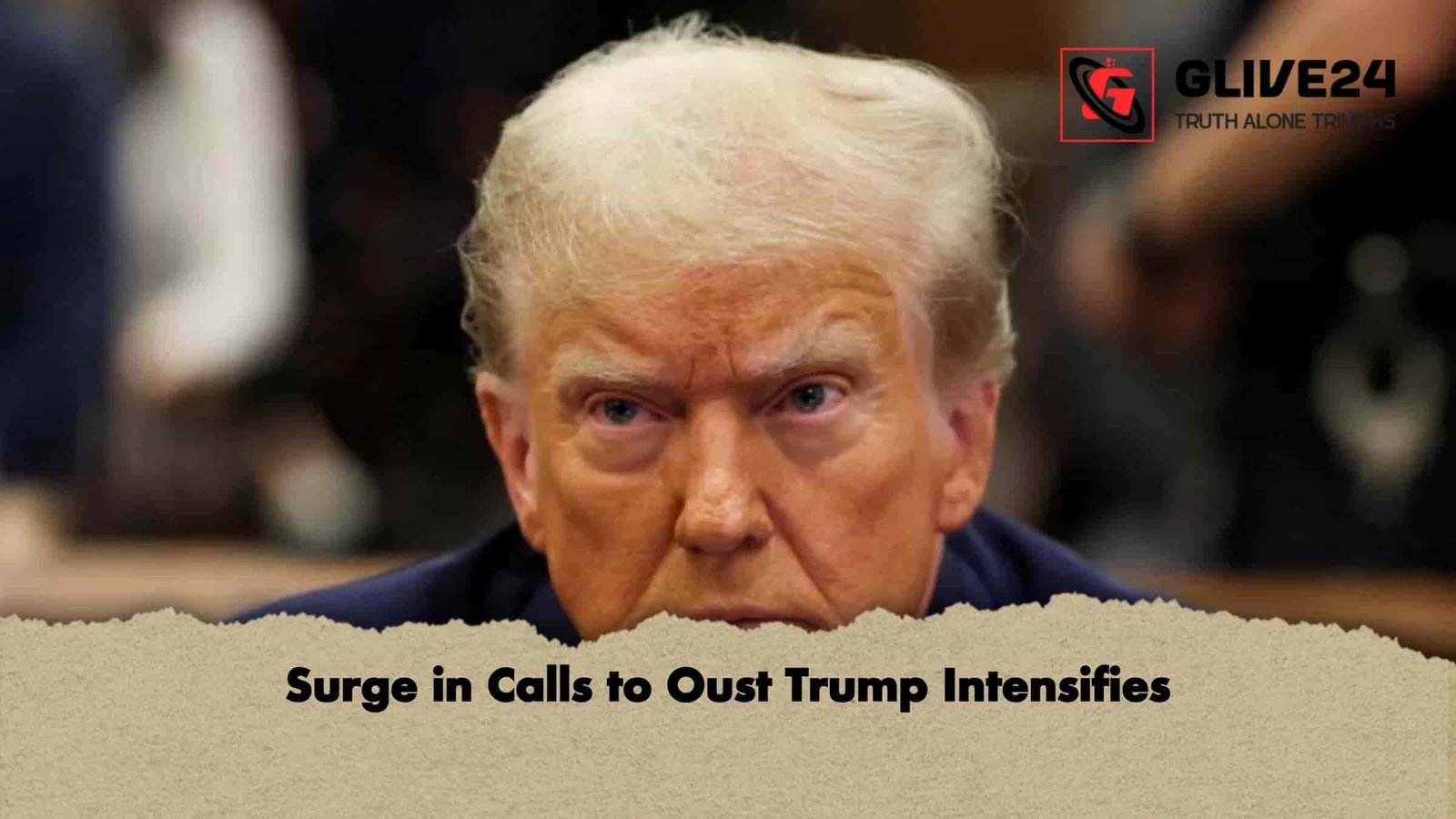
Political unrest in the United States escalated sharply on 7 and 8 April, as prominent leaders and influential organisations openly called for the removal of President from office. The demands have been largely driven by concerns over the president’s recent inflammatory statements and controversial foreign policy decisions.
For the first time in its 117-year history, the venerable civil rights organisation, the National Association for the Advancement of Colored People, has issued a direct condemnation of a sitting president. The organisation described Trump as “unfit, unstable, and reckless” and called for the immediate activation of the Twenty-Fifth Amendment of the U.S. Constitution to relieve him of his duties.
Political figures across the spectrum have voiced similar concerns. Senators and lawmakers cited Trump’s recent confrontational rhetoric towards Iran and comments on military operations as evidence of a potential loss of executive control. Several officials explicitly raised questions about his mental stability, framing it as a matter requiring urgent constitutional attention.
The controversy escalated further following Trump’s high-profile threat to Iran, claiming that the White House could destroy Iranian power facilities within hours. This pronouncement drew sharp criticism from domestic and international observers alike, reinforcing perceptions of recklessness in presidential decision-making.
The following table summarises the principal factors driving the current political debate and the corresponding reactions:
| Issue | Details | Sources |
|---|---|---|
| Calls for removal | Leaders advocate invoking the Twenty-Fifth Amendment to remove Trump | Civil rights organisations, political leaders |
| Questions over mental fitness | Concerns regarding stability due to aggressive and provocative statements | U.S. politicians, media reports |
| Threats regarding Iran | Announced capacity to swiftly destroy Iranian power infrastructure | National and international media |
| International reactions | Criticism over U.S. diplomatic posture and global implications | World news analyses |
These developments highlight a critical facet of the U.S. political system: even strong executive authority is subject to oversight, debate, and, where necessary, constitutional checks. Public discourse and institutional mechanisms exist to question leadership and ensure accountability.
The situation transcends routine political friction. It constitutes a serious test of constitutional safeguards, civil rights, and the balance of powers in the United States. Moreover, the outcome may have significant ramifications for international diplomacy and the global perception of American political stability.