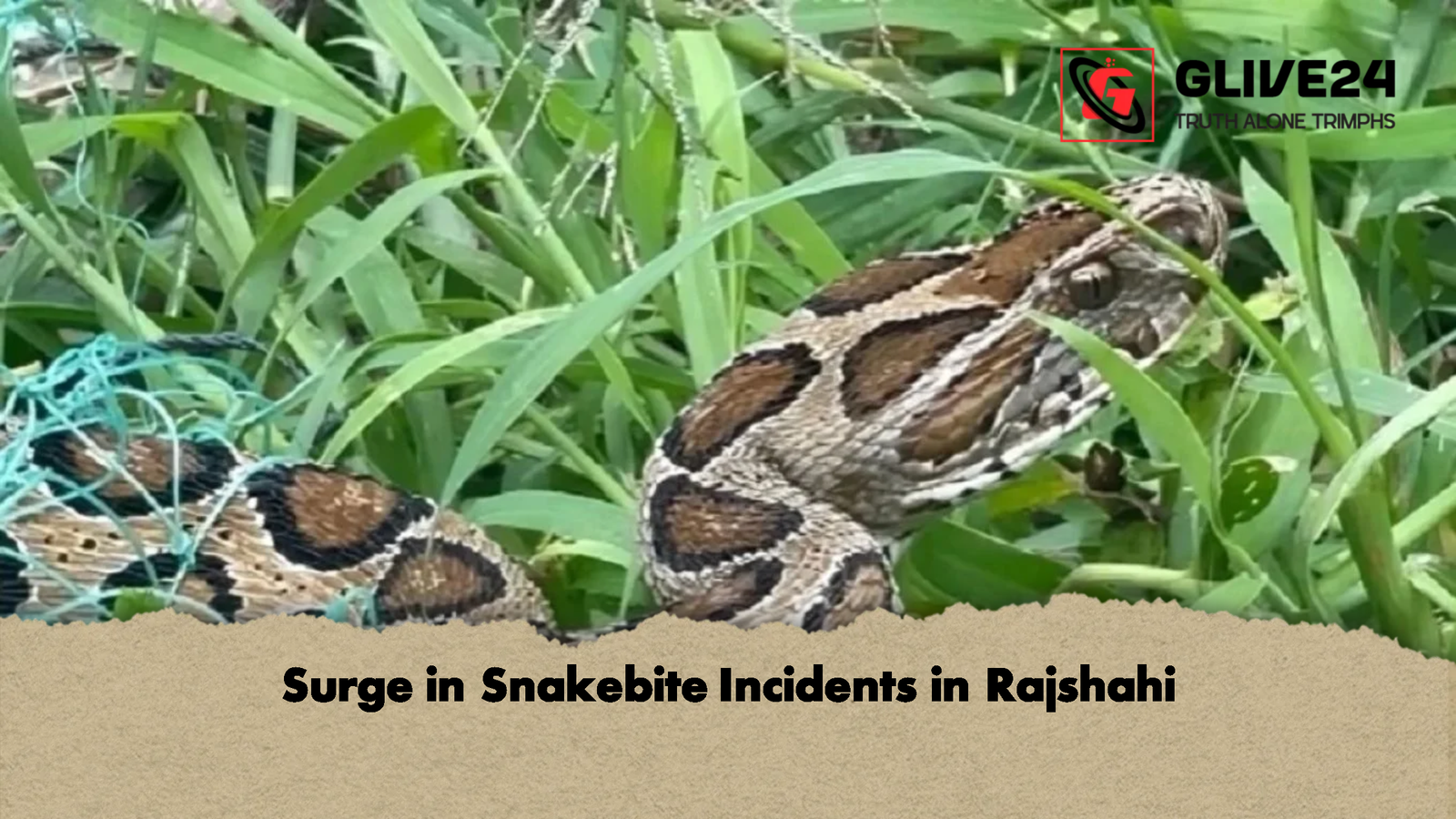
Rajshahi, Bangladesh – Snakebite incidents in the Rajshahi region have seen a concerning increase in recent months. Local residents have reported a rise in snake attacks, particularly in rural and agricultural areas, where individuals work in fields, grasslands, and forested regions.
One such account comes from Hefzul Haque, a local farmer. At Charghat Bazar, he shared his experience: “Brother, didn’t you recognise me? I was bitten on the cheek by a Russell’s viper.” Despite the frightening experience, Hefzul was able to capture the snake, bring it to the hospital, and receive treatment. After three days of care, he fully recovered. He later met Dr. Abu Hena Mostofa Kamal, ICU in-charge at Rajshahi Medical College Hospital, where he discussed the rising snakebite incidents.
Hospital Data and Statistics
According to Rajshahi Medical College Hospital and other local treatment centres, 1,490 snakebite patients were admitted in 2025, with 51 fatalities recorded. This marks an alarming increase compared to the previous year, with 117 more cases and 11 additional deaths.
| Data | 2025 | Change from 2024 |
|---|---|---|
| Patients admitted | 1,490 | +117 |
| Deaths | 51 | +11 |
Factors Contributing to the Increase
Experts have identified several significant factors behind the recent rise in snakebite incidents in the region:
Environmental Changes – Deforestation and the drying up of wetlands and hilly areas have disrupted the natural habitats of snakes, forcing them to venture closer to human settlements.
Increased Human Activity – The expansion of agriculture and encroachment near forested areas have led to more direct encounters between humans and snakes, as both seek space and resources.
Changes in Snake Populations – The numbers of venomous species, such as Russell’s vipers, cobras, and kraits, have increased, leading to a rise in bites.
Delayed First Aid – In rural areas, access to immediate medical care is often delayed, as many villagers are not equipped with the knowledge or resources to treat snakebites promptly.
Dr. Abu Hena Mostofa Kamal, a leading physician at Rajshahi Medical College Hospital, expressed concern, stating, “If the public remains unaware and fails to take preventive measures, the number of snakebite cases could rise further. Each snakebite poses a serious threat, and swift medical intervention is crucial.”
Recommended Preventive Measures
Experts urge the following preventive measures to reduce the incidence of snakebites:
Avoid Snake Habitats: People, especially in rural or forested regions, should avoid areas where snakes are likely to be found.
Follow Weather Advisories: As snakes tend to be more active in certain weather conditions, it is essential to stay informed and heed weather warnings.
Exercise Caution Around Venomous Species: Special care should be taken around venomous snakes such as Russell’s vipers, cobras, and kraits.
Increase Availability of Antivenom: Local authorities and health departments must ensure the availability of antivenom in rural clinics and hospitals. Additionally, awareness campaigns about snakebite prevention and first aid should be conducted in vulnerable areas.