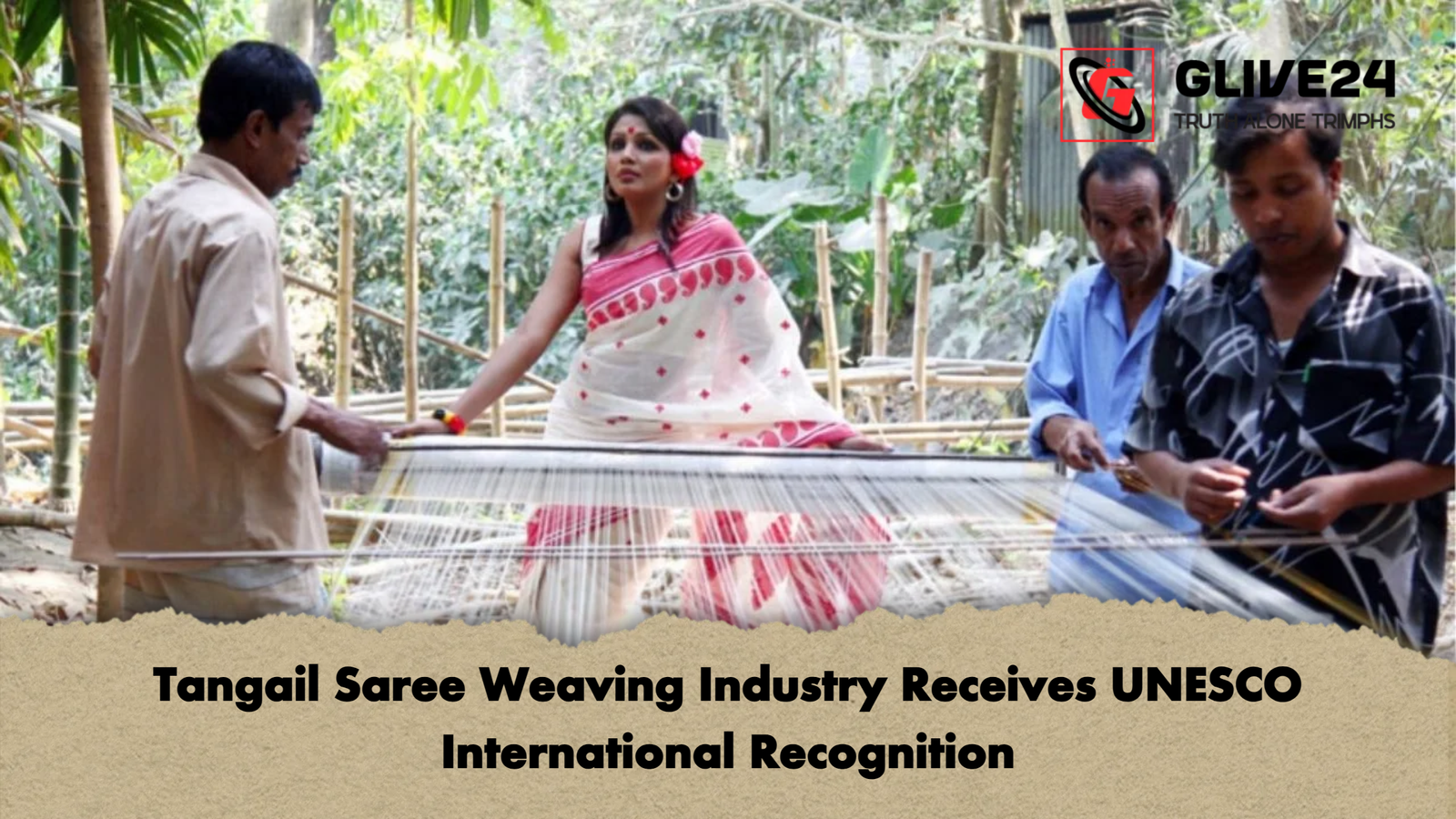
On Tuesday, in New Delhi, India, the 20th session of the Intergovernmental Committee under the 2003 UNESCO Convention for the Safeguarding of Intangible Cultural Heritage officially recognised the Tangail saree weaving industry. This marks Bangladesh’s sixth individual inscription under the Convention and the second registration since Bangladesh was elected as a member of the Committee four years ago.
Leading the Bangladeshi delegation, and serving as the President of the UNESCO General Assembly, Bangladesh’s Permanent Representative Ambassador Khandakar M. Talha described the recognition as “a source of immense national pride.” He emphasised that for over two centuries, the master weavers of Tangail have produced exceptional textile craftsmanship that now enjoys global acknowledgment.
“Tangail sarees are an integral part of every Bangladeshi woman’s daily wardrobe. Their international recognition reflects both the skill of our weavers and the enduring cultural significance of this heritage,” Ambassador Talha noted, dedicating this achievement to Bangladesh’s weavers and women nationwide.
The Ambassador further highlighted that Bangladesh possesses numerous intangible cultural assets that are potentially eligible for UNESCO recognition. Strengthening documentation capacity and developing experienced personnel familiar with the Convention could pave the way for further inscriptions, showcasing the country’s rich cultural heritage on a global stage.
Event Overview
| Detail | Information |
|---|---|
| Recognition | Tangail Saree Weaving Industry |
| Convention | 2003 UNESCO Convention for Intangible Cultural Heritage |
| Committee Session | 20th Intergovernmental Committee Meeting |
| Location | New Delhi, India |
| Bangladesh Inscriptions | Sixth individual inscription; second since election to Committee |
| Key Officials | Ambassador Khandakar M. Talha (Bangladesh), S. Jaishankar (India, Foreign Minister), Khaled El-Enany (UNESCO Director-General) |
| Significance | Global recognition of two-century-old weaving tradition |
The 20th session of the Committee, inaugurated on 7 December by India’s Foreign Minister S. Jaishankar, also saw participation from UNESCO’s newly appointed Director-General, Khaled El-Enany. Delegates discussed measures for safeguarding cultural heritage, promoting traditional craftsmanship and supporting local communities involved in these time-honoured arts.
The Tangail saree, renowned for its fine handwoven textures and distinctive designs, has long symbolised Bangladesh’s cultural identity and artistic excellence. This UNESCO inscription not only affirms the craft’s international importance but also provides an impetus for preserving and promoting weaving traditions among future generations.
Ambassador Talha expressed hope that this recognition would inspire further initiatives to document, safeguard and globally promote Bangladesh’s rich intangible cultural heritage, ensuring that centuries-old skills continue to thrive while enhancing the livelihoods of local artisans.
This latest accolade positions Bangladesh alongside other nations with recognised living heritage, reaffirming the global relevance of its traditional arts.