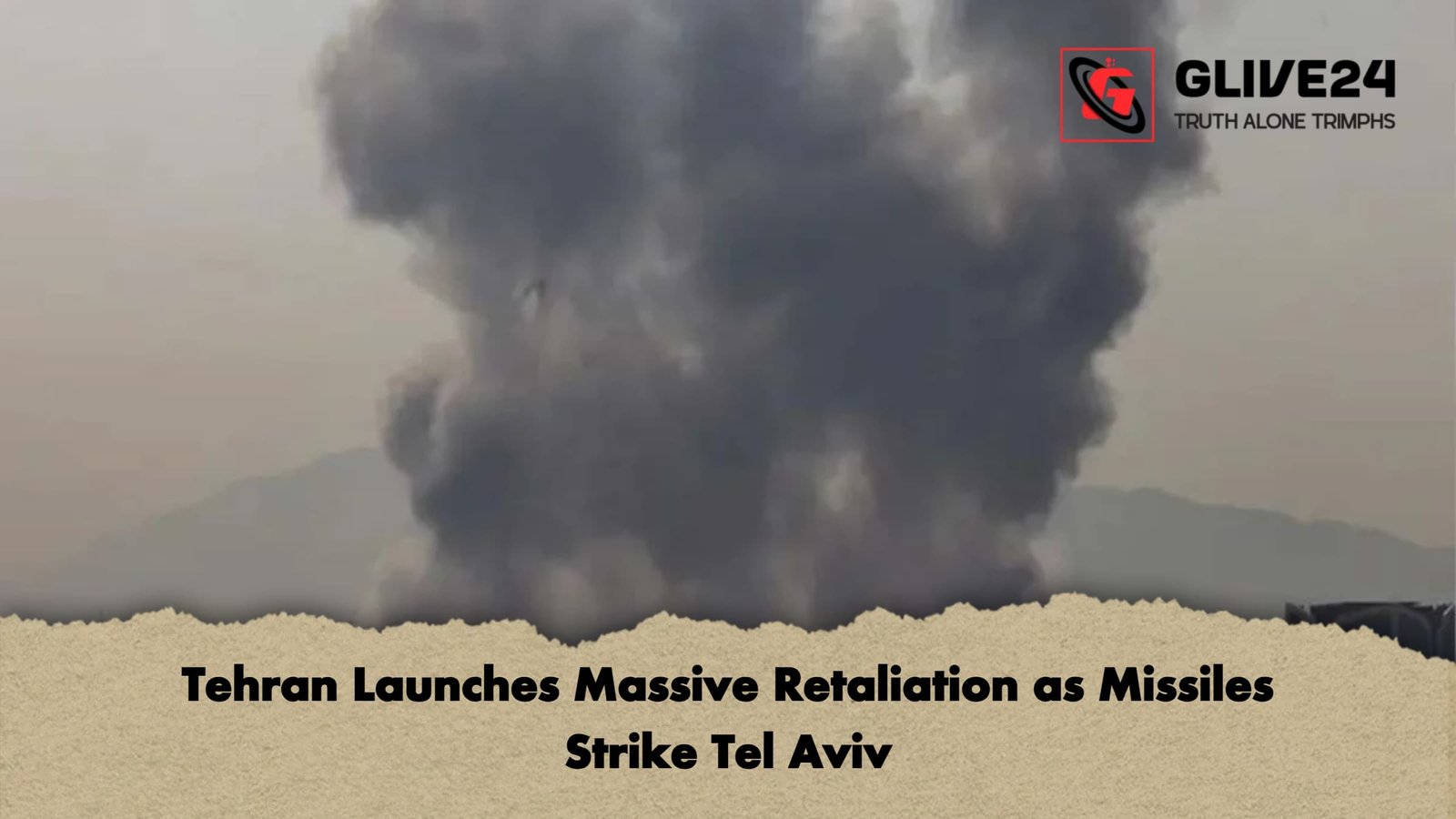
The Middle East is teetering on the brink of an all-out regional conflict following a significant escalation by the Islamic Republic of Iran. In a second wave of high-intensity retaliatory strikes, Iranian ballistic missiles have reportedly struck Tel Aviv, the commercial and administrative heart of Israel. The city was rocked by thunderous explosions as the Islamic Revolutionary Guard Corps (IRGC) broadened its offensive in response to a joint military operation conducted by Israeli and United States forces against Iranian territory.
A Multi-Front Retaliatory Campaign
Tehran has not limited its vengeance to Israeli soil. In a calculated move to punish regional actors perceived as complicit in the Western offensive, Iran has launched a series of strikes against Gulf nations hosting American military assets. The IRGC has issued a stern warning, stating that any nation providing “soil, airspace, or logistical support” for strikes against Iran would be treated as a legitimate military target.
This “scorched earth” diplomatic and military policy has already resulted in civilian casualties. Reports indicate at least one fatality in the United Arab Emirates following a missile impact, highlighting the severe risks faced by Arab states caught in the crossfire of this escalating superpower rivalry.
Strategic Targets and Reported Impacts
The Iranian leadership has framed these manoeuvres as a “crushing response” to the violation of its national sovereignty. By targeting US interests across the Middle East, Tehran aims to disrupt the Western security architecture that has defined the region for decades.
| Location | Target Category | Reported Impact |
| Tel Aviv, Israel | Strategic/Urban Centres | Multiple loud explosions confirmed |
| Abu Dhabi, UAE | Logistics/Infrastructure | One confirmed fatality; structural damage |
| Gulf States | US Military Bases | Ongoing missile and drone activity |
| Regional Waters | US & Israeli Interests | Heightened alert for maritime assets |
Sovereignty and the Risk of Total War
The IRGC’s official communique maintains that the joint US-Israeli aggression was a “grave miscalculation” that necessitated a disproportionate response. By striking the Israeli capital and threatening the stability of the Gulf monarchies, Iran is effectively testing the resolve of the international community.
As the smoke clears over Tel Aviv and sirens continue to wail across the Gulf, the central question remains: will this lead to a cycle of perpetual escalation? With Tehran vowing to continue its operations until its enemies are “subdued,” the diplomatic window for de-escalation appears to be closing rapidly.