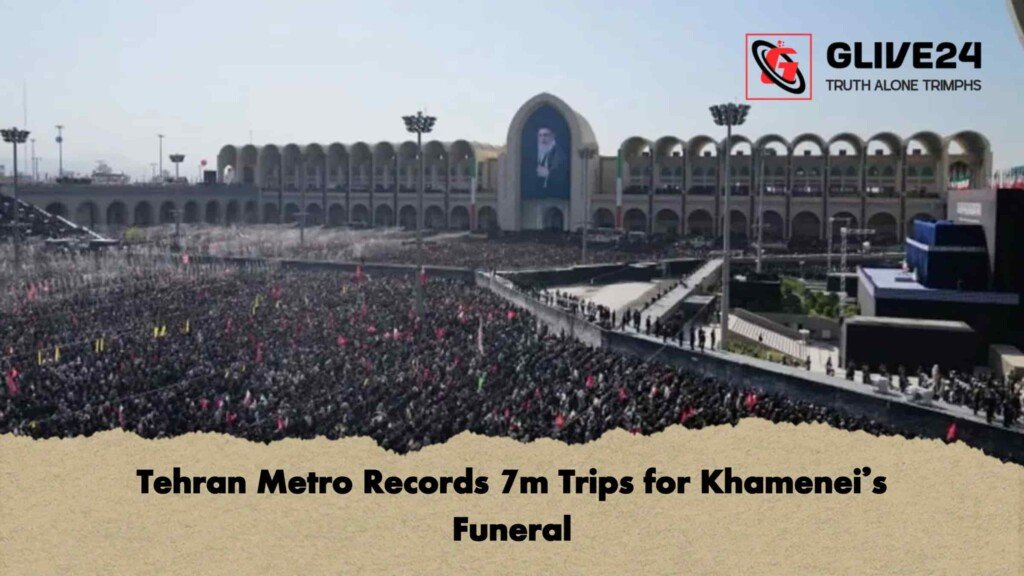
The Tehran urban transit network has recorded unprecedented passenger volumes, with more than seven million trips registered on the Tehran Metro as mourners converged on the capital for the funeral ceremonies of Iran’s late Supreme Leader, Ayatollah Ali Khamenei, and members of his family.
According to official data released by the semi-official Tasnim News Agency and reported by Al Jazeera, this staggering influx of commuters occurred between 17:30 local time on Saturday (4 July) and 07:00 on Sunday (5 July). The massive surge in passenger numbers directly correlates with the funeral processions and memorial services held at the grand Imam Khomeini Mosallah in central Tehran.
To ensure public safety and mitigate severe traffic congestion across the metropolitan area, event organisers had actively counselled attendees to utilise the underground rail network, which provided a vital logistical corridor for the millions heading towards the venue.
High-Profile Funeral Draws Millions to Imam Khomeini Mosallah
The funeral prayer (Janazah) commenced at 08:00 local time on Sunday at the Imam Khomeini Grand Mosallah. Demonstrating the profound state of national mourning, the primary courtyards and surrounding avenues of the sprawling complex were completely filled with grieving citizens hours before the scheduled start of the prayers.
The solemn service was led by Ayatollah Ja’far Sobhani, a highly revered and prominent Shia religious authority (Marja’). Given the scale of the tragedy affecting the late Supreme Leader’s household, the funeral proceedings were meticulously structured and conducted in three distinct stages:
-
First Stage: The initial prayer was dedicated exclusively to the late Supreme Leader, Ayatollah Ali Khamenei.
-
Second Stage: The second phase of the service was held for his immediate family members who passed away alongside him, namely Sayyideh Bushra Hosseini Khamenei, Mesbah al-Hoda Baqeri, and Zahra Haddad Adel.
-
Third Stage: The final phase of the Janazah was conducted for his 14-month-old granddaughter, Zahra Mohammadi Golpayegani.
Contextual Background and Logistical Challenges
The Tehran Metro, which typically handles approximately 2.5 million passengers on a standard weekday, faced an extraordinary logistical challenge in absorbing an additional 7 million trips within a mere 13.5-hour window. Managing such an unprecedented volume required around-the-clock operations, shortened headways between trains, and enhanced crowd-control measures at key interchange stations leading to the Imam Khomeini Mosallah.
The Imam Khomeini Grand Mosallah is a premier venue for major religious and political gatherings in Iran, specifically designed to host millions of worshippers during Eid prayers and state funerals. However, the sheer density of the crowd on this occasion underscores the momentous nature of this transition in Iranian leadership and the widespread public response to the state loss. Memory of historical state funerals in the Islamic Republic, such as that of Ayatollah Ruhollah Khomeini in 1989 and General Qasem Soleimani in 2020, indicates that transport infrastructure invariably bears the primary burden of facilitating national grief on this scale. With memorial ceremonies scheduled to continue until 20:00 on Sunday, municipal authorities in Tehran remain on high alert to manage the ongoing dispersal of the crowd.