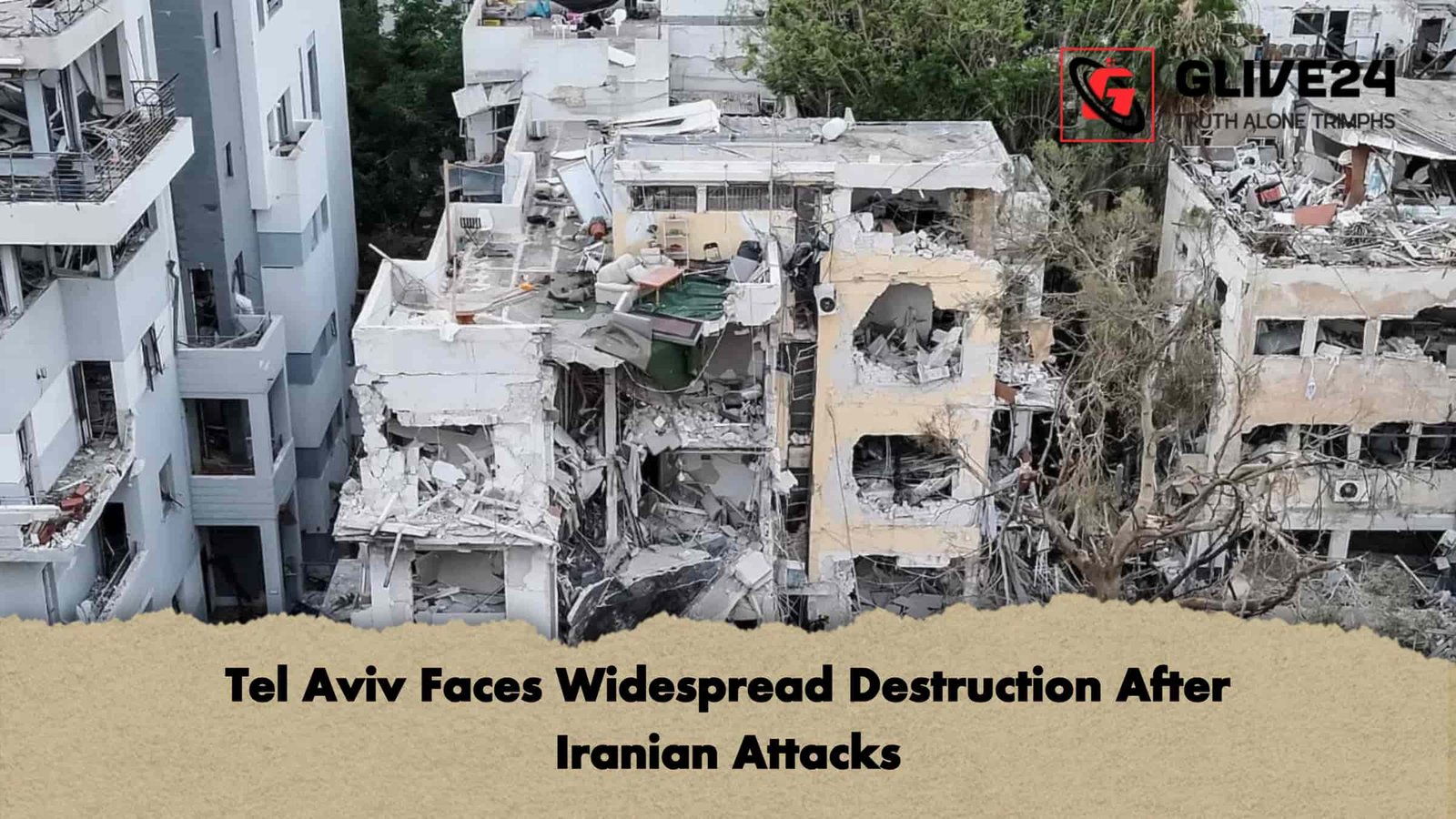
The city of Tel Aviv is grappling with unprecedented destruction following a series of Iranian military strikes that commenced late Saturday night. The combined use of missiles and drones has left critical areas of the city in ruins, exposing residents to severe danger and causing significant disruption to daily life.
Local authorities report that both commercial and residential zones have suffered extensive damage. Streets and public spaces are strewn with debris from collapsed buildings, vehicles, and shattered infrastructure. Emergency services are engaged in relentless search-and-rescue operations, attempting to locate survivors trapped beneath rubble. Hospitals are overwhelmed as the number of injured continues to rise, while power grids and telecommunications systems have been heavily compromised, further hampering relief efforts.
Initial assessments suggest that the most severe impacts have been concentrated in the central business district, port facilities, and key residential sectors. Thousands of residents have been displaced, and numerous public facilities—including schools, medical centres, and community services—have been rendered inoperative. Temporary shelters have been established to accommodate those forced to evacuate their homes.
The following table summarises the early reports on damage and casualties across the city:
| Area | Destruction Severity | Injuries Reported | Fully Destroyed | Partially Damaged |
|---|---|---|---|---|
| Central Business District | Extreme | 120+ | 35% | 50% |
| Port Area | Severe | 80+ | 40% | 30% |
| Residential East | Moderate | 50+ | 20% | 60% |
| Residential West | Lower | 30+ | 10% | 40% |
Eyewitnesses describe chaotic scenes, with families scrambling for safety amid crumbling buildings and shattered infrastructure. Experts warn that restoring the city’s essential services and rebuilding housing will be a long-term endeavour, likely requiring months or even years of coordinated effort.
Government officials are coordinating with international aid organisations to provide immediate medical care, food, and temporary shelter. Emergency teams are prioritising the rescue of those trapped under debris, while authorities work to restore electricity and communication lines.
The Iranian strikes have exposed vulnerabilities in urban preparedness and highlighted the urgent need for rapid disaster response. Observers both within Israel and internationally are closely monitoring developments as the city seeks to recover from one of the most devastating attacks in its recent history.
The full extent of casualties, structural damage, and long-term disruption is expected to become clearer in the coming days, underscoring the magnitude of the humanitarian and infrastructural challenge facing Tel Aviv.