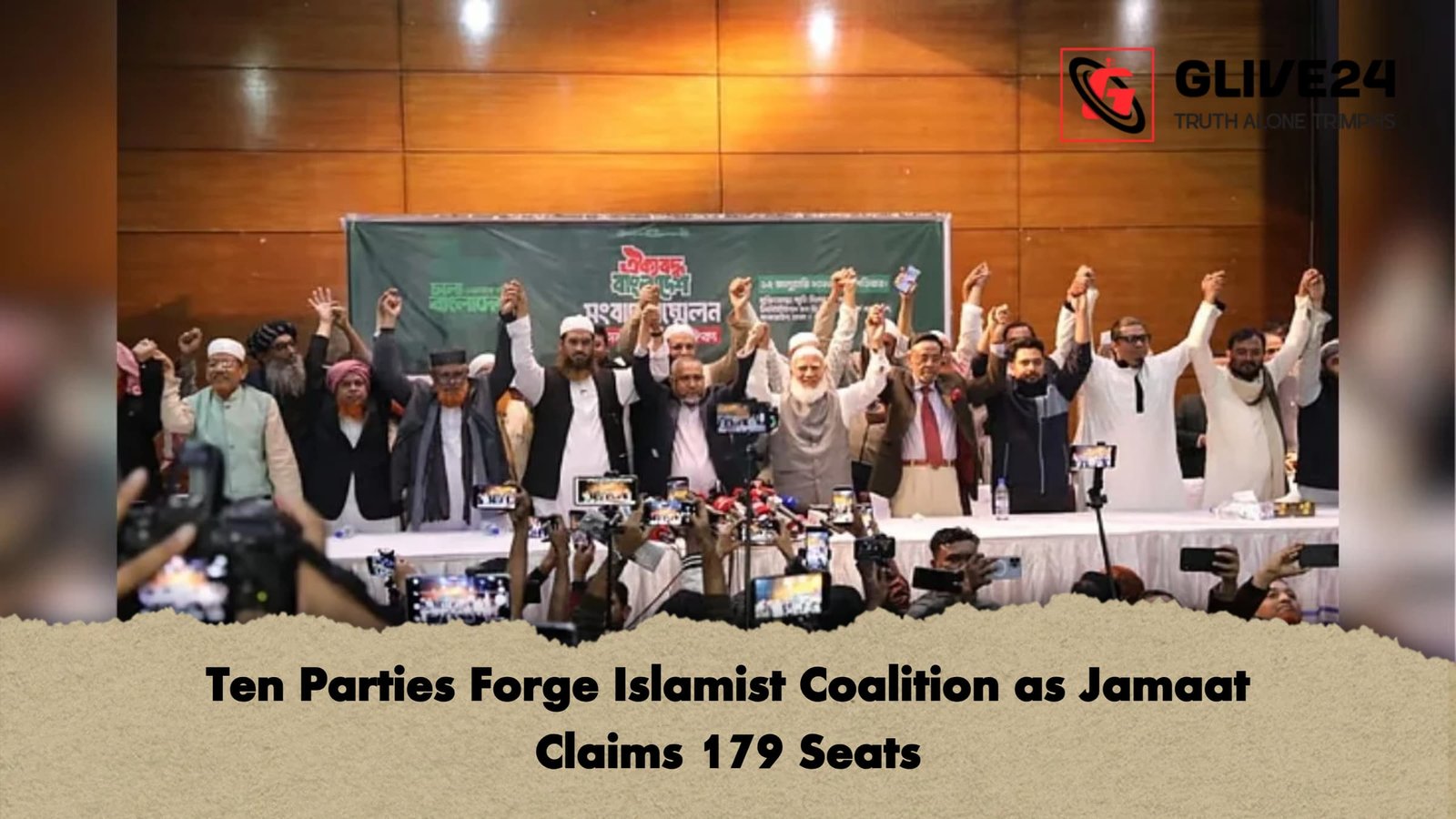
In a pivotal shift for Bangladesh’s right-wing political landscape, ten Islamist and conservative parties have finalised an electoral pact following weeks of fractious negotiation. The newly formalised “11-Party Electoral Unity” announced on Thursday night that they have reached a consensus on 253 constituencies, positioning Bangladesh Jamaat-e-Islami as the dominant partner with 179 confirmed candidates.
The announcement, made at the Institute of Diploma Engineers in Dhaka, comes with a notable caveat: Islami Andolan Bangladesh (IAB), the party of the Charmonai Pir and a founding member of the unity talks, has yet to officially endorse the deal. In a bid to keep the door open, the coalition has strategically left 47 seats vacant, inviting the IAB to join before the 20 January withdrawal deadline.
Table of Contents
The Seat-Sharing Formula
The alliance’s strategy focuses on consolidating the historically fragmented Islamist vote into a single “ballot box.” By avoiding internal competition, the bloc aims to maximise its representation in the upcoming 12 February polls.
Consolidated Seat Distribution for the 2026 Election:
| Party | Seats Allocated | Candidate Status |
| Bangladesh Jamaat-e-Islami | 179 | Primary Lead |
| National Citizen Party (NCP) | 30 | Confirmed |
| Bangladesh Khelafat Majlis | 20 | Confirmed |
| Khelafat Majlis | 10 | Confirmed |
| Liberal Democratic Party (LDP) | 7 | Confirmed |
| AB Party / BDP / Others | 7 | Confirmed |
| Islami Andolan Bangladesh (IAB) | (47) | Reserved / Awaiting Signature |
| Total Seats | 253 | (47 Open) |
Note: Bangladesh Khelafat Andolan and JAGPA will support the alliance without fielding candidates.
A Struggle for “National Existence”
During the press conference, Jamaat’s Nayeb-e-Amir, Syed Abdullah Muhammad Taher, framed the upcoming election as a historic turning point. “Unlike previous polls which merely oversaw a transfer of power, this is a battle for our very survival,” he stated, describing the mission as a collective effort to build a “New Bangladesh” following the political upheavals of late 2024.
The coalition’s coordinator, HM Hamidur Rahman Azad, moderated the event, which concluded with the leaders of the ten parties joining hands—a symbolic gesture of solidarity designed to project strength to their respective grassroots supporters.
The Standoff with Charmonai
The primary friction point remains the seat demands of the Islami Andolan. Reliable sources indicate that the IAB remained firm on contesting 70 seats, while Jamaat-e-Islami refused to concede more than 45 to 47. This mathematical impasse led the IAB to skip the joint announcement, despite a chair being kept vacant on the stage for their leader, Mufti Syed Muhammad Rezaul Karim.
Jamaat’s Amir, Dr Shafiqur Rahman, attempted to downplay the rift, insisting that the “electoral unity” remains intact. “They were with us from the start and we remain in regular contact. They are simply taking more time for internal deliberations,” he remarked. However, IAB insiders suggest that the possibility of a total reconciliation is “virtually non-existent” given the disparity in seat allocations.
Strategic Exclusions and Compromises
The alliance has also faced internal vetting challenges. Bangladesh Khelafat Andolan was reportedly pressured to refrain from fielding candidates after the NCP raised concerns regarding their participation in the widely boycotted 2024 general election. To preserve the coalition, the party agreed to withdraw its 11 nominations in exchange for promised “post-election evaluations.”
As the IAB prepares to hold its own press conference this afternoon, the political fate of the “single box” strategy hangs in the balance. Whether the Islamist bloc can present a truly united front or enters the fray as a fractured force will be a decisive factor in the 12 February national vote.