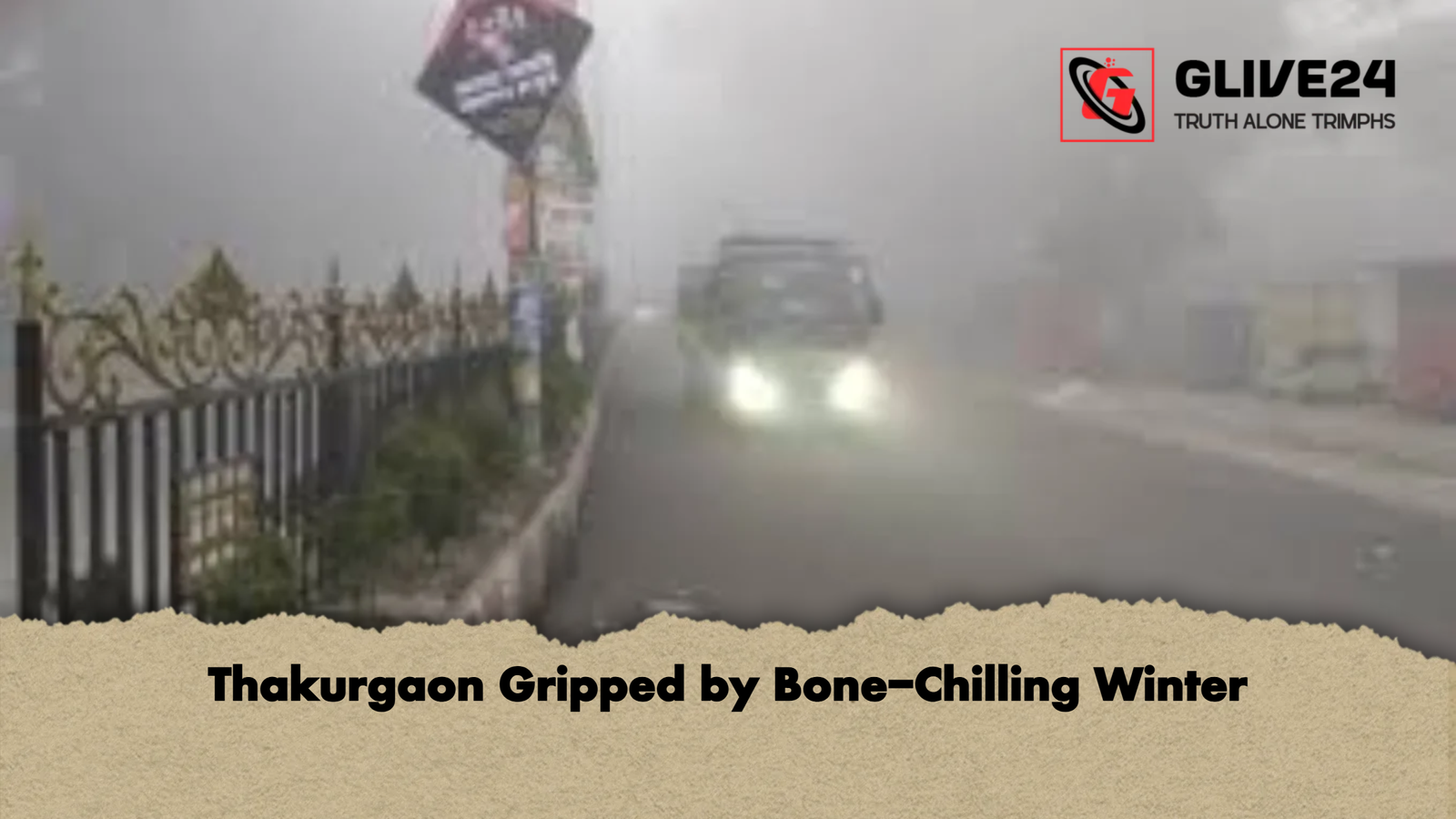
Life in Thakurgaon has been virtually brought to a standstill as a severe winter spell tightens its grip on the northern border district. The biting cold of the Bengali month of Poush, coupled with relentless icy northerly winds, has plunged the region into prolonged hardship. Nestled close to the foothills of the Himalayas, Thakurgaon has not seen the sun for five consecutive days, leaving the landscape shrouded in dense fog even during daylight hours. By midday, visibility often resembles dusk, casting a gloomy pall over daily life.
On Tuesday (30 December), the sky appeared marginally clearer, offering residents a brief glimmer of hope. However, that optimism quickly faded as light drizzle-like dew fell from dawn, intensifying the cold. Across the district, the prevailing sensation is one of piercing chill, with temperatures dropping sharply after sunset and showing no signs of immediate relief.
The icy northern wind feels almost needle-like against the skin. In both urban neighbourhoods and rural villages, locals can be seen gathering around makeshift fires fuelled by straw, twigs, and dry leaves at street corners. The harsh conditions have hit daily wage earners the hardest. Day labourers, rickshaw pullers, and farm workers are struggling to find work, as agricultural and livestock activities have slowed to a near halt. Fields lie quiet, and farmyards remain largely inactive under the unforgiving cold.
Attendance at offices, courts, and educational institutions has noticeably declined, while road traffic has thinned to a trickle. Many residents are choosing to remain indoors unless absolutely necessary, prioritising warmth over routine.
Healthcare services are facing mounting pressure. According to Thakurgaon District Hospital, cases of cold-related illnesses are steadily increasing. Patients suffering from coughs, colds, breathing difficulties, pneumonia, and diarrhoea are filling hospital wards. Children and the elderly are particularly vulnerable, and doctors and nurses are working tirelessly to cope with the rising number of admissions.
The cold wave has spared neither humans nor animals. Dr Saidur Rahman, Livestock Officer of Thakurgaon Sadar Upazila, reports a growing incidence of winter-related diseases among cattle, poultry, and ducks. Farmers are being urged to take preventive measures to protect their livestock from the extreme conditions.
Thakurgaon’s Deputy Director of the Department of Agricultural Extension, Majedul Islam, confirmed that the district has recorded a minimum temperature of 13.7 degrees Celsius. He warned that temperatures continue to fall rapidly after evening, worsening the situation with each passing night.
For the people of this border district, there is now a single, shared hope: a glimpse of sunshine. Yet behind the thick curtain of fog, when the sun will finally reappear remains an unanswered question, seemingly locked away in the overcast winter sky.
Winter Situation in Thakurgaon: Key Facts :
| Category | Details |
|---|---|
| District | Thakurgaon |
| Duration without sunlight | 5 consecutive days |
| Minimum recorded temperature | 13.7°C |
| Most affected groups | Day labourers, farmers, children, elderly |
| Health concerns | Cough, pneumonia, breathing issues, diarrhoea |
| Impact on livestock | Increase in cold-related animal diseases |