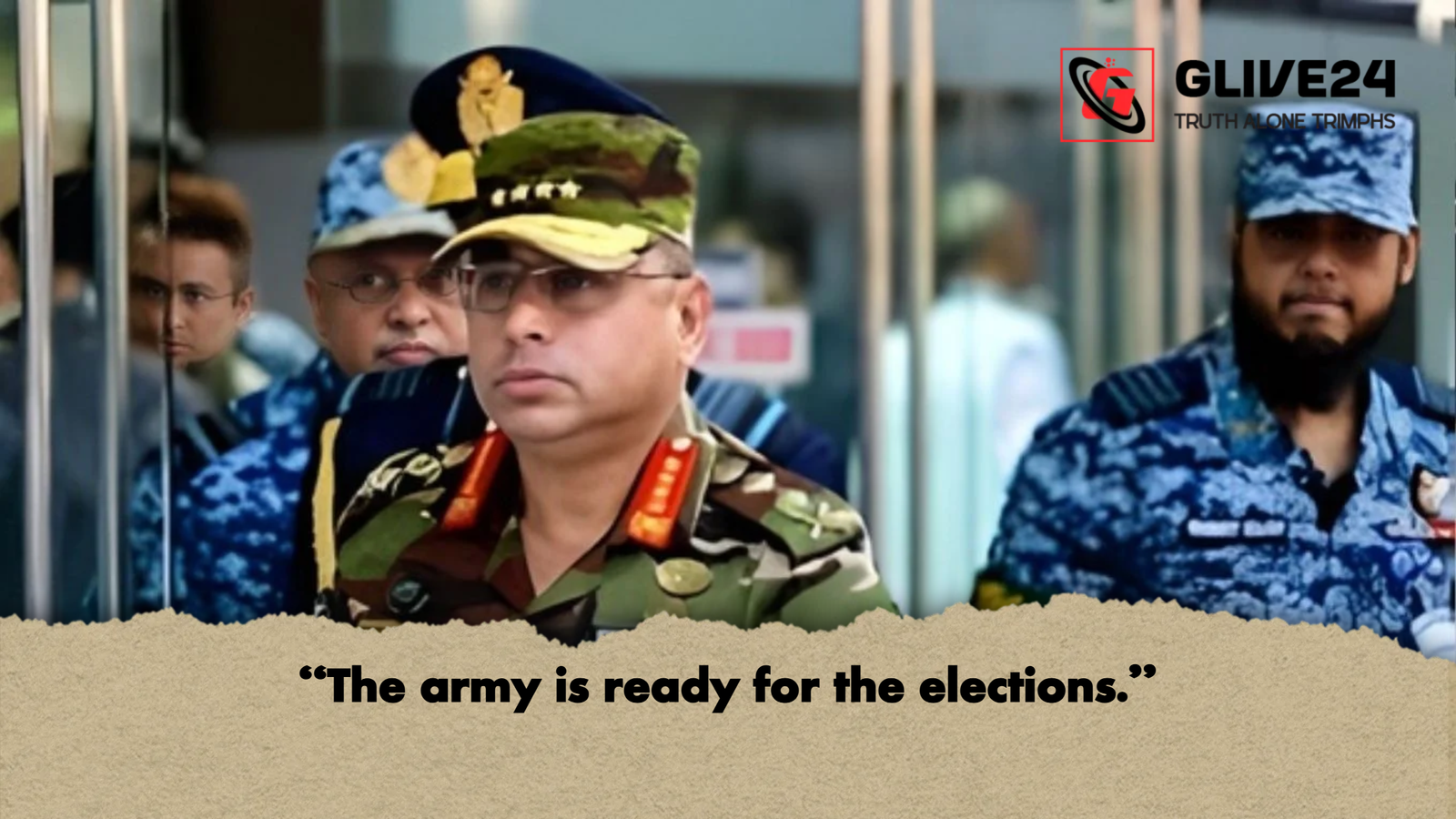
The Chief of Army Staff, General Waker-uz-Zaman, has clarified the dual responsibilities and objectives of all stakeholders, including the Bangladesh Army, ahead of the 13th National Parliament elections and the 2026 referendum. Speaking at a consultative meeting yesterday morning at the National Football Stadium in Gulistan, he emphasised that the army is fully prepared to assist civil administration and law enforcement agencies wherever required to ensure a free, fair, and peaceful electoral process.
“The first responsibility,” he said, “is to support the civil administration and law enforcement agencies in maintaining security and operational integrity at election-related sites. The second is to build public confidence in the electoral process, sending a clear message that the government, Election Commission, law enforcement agencies, and the armed forces are jointly committed to a transparent election.”
General Waker-uz-Zaman also inspected the army camp at the stadium and assured that military helicopters and watercraft will be on standby to transport personnel and equipment to remote and high-risk polling centres. He confirmed that all military helicopters will be strategically positioned across the country to respond swiftly to any emergency situation.
Brigadier General Dewan Mohammad Monjur Hossain, Director of Military Operations at Army Headquarters, elaborated on the army’s preparedness during a press briefing at the Roller Skating Complex in Gulistan. He confirmed that approximately 100,000 army personnel have been mobilised for this election—more than double the force deployed in previous polls. In addition, substantial numbers of police, Rapid Action Battalion (RAB), Border Guard Bangladesh (BGB), Navy, and Air Force personnel will be deployed.
The army will take all necessary measures to protect voters and ballot boxes at polling centres. Election monitoring will be conducted continuously from Army Headquarters in Dhaka, ensuring real-time oversight. Brigadier General Monjur added, “We have conducted comprehensive threat assessments and deployed forces accordingly. To maintain voter confidence, sub-district and certain polling-station-based camps have been established for round-the-clock patrols.”
Security and operational arrangements for the election are summarised below:
| Category | Personnel / Resources | Coverage / Details |
|---|---|---|
| Army | 100,000 | 411 sub-districts across 62 districts, including metropolitan areas |
| Navy | 5,000 | Deployment for riverine security and transport support |
| Air Force | 3,730 | Rapid response and logistical support |
| Temporary Camps | 544 | Election monitoring, patrols, joint operations, check-posts |
| Weapons & Ammunition Confiscated | 10,152 weapons, 291,000 rounds | Seized during joint operations; 22,282 identified criminals handed to police |
| Patrols | 2,000–2,500 daily | Round-the-clock voter protection and rapid threat response |
The army will monitor the entire process using advanced technology, including safety apps, drones, and body-worn cameras for police personnel. For the first time, patrolling will be permitted within the immediate premises of polling centres to ensure voter safety. The Chief of Army Staff stressed that all actions will be conducted with impartiality, discipline, and respect for citizens’ rights.
Brigadier General Monjur also highlighted the growing threat of misinformation, exacerbated by artificial intelligence, and called upon journalists to provide fact-based reporting to counteract disinformation campaigns.
On the question of missing weapons from the July revolution, he stated that continuous operations are underway, with 15 weapons recovered in the last 24 hours alone. The army will remain in the field as long as the government requires, ensuring a secure and credible electoral process.