
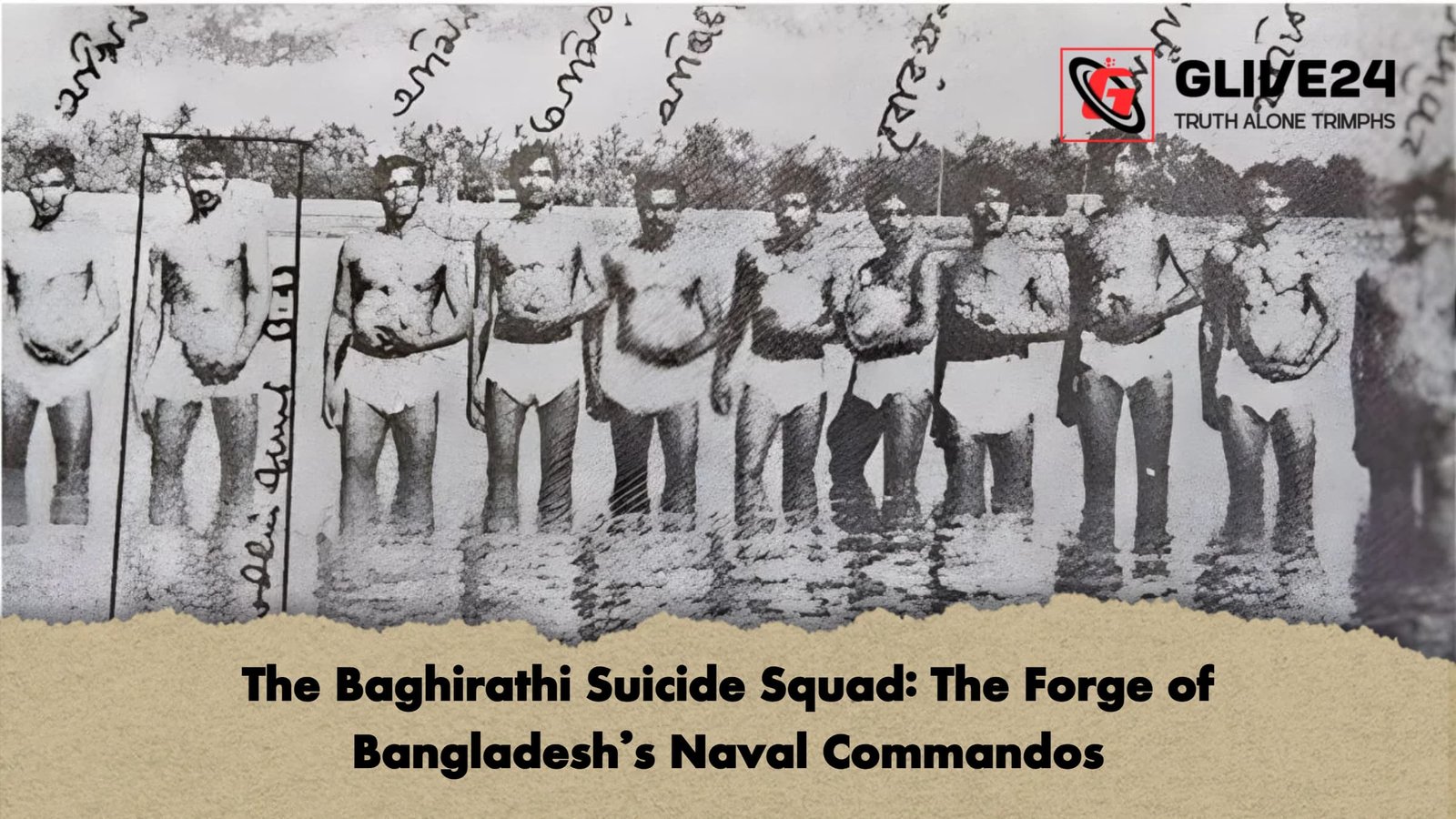
The liberation of Bangladesh in 1971 was not merely won on the terrestrial battlefields; it was significantly accelerated by a group of elite underwater saboteurs who crippled the Pakistani maritime infrastructure. The legendary Operation Jackpot and Operation Hotpants were the culmination of months of secret, grueling training on the banks of the Baghirathi River in Murshidabad. This site was deeply symbolic: the training grounds were the historical plains of Plassey, the very spot where Bengal’s sovereignty had vanished in 1757.
The recruitment for this specialized unit began in the summer of 1971. A joint team of Indian Navy officers and Mukti Bahini commanders selected 480 freedom fighters from various refugee and insurgent camps. On 11 June 1971, Tajuddin Ahmad, the Prime Minister of the Mujibnagar Government, arrived at the camp alongside General M.A.G. Osmani to deliver a sobering address. He informed the recruits that they were effectively joining a Suicide Squad. “This is a one-hundred-per-cent risk of death,” he warned. “If you are not prepared for the ultimate sacrifice, you may leave now.”
The psychological toll was immediate. Faced with the prospect of certain death, 345 of the 480 recruits chose to withdraw. They were sent back on the same trucks that had brought them. The remaining 135 volunteers became the vanguard of the Naval Commandos. Under the command of Lieutenant Commander G.M. Martis and his training officers, Lieutenant A.K. Das and Lieutenant Kapil, these young men—mostly students from Dhaka University and youths from riverine districts—began a transformation into silent shadows of the deep.
The Submariner Defectors: The Professional Core
The tactical expertise of the unit was bolstered by eight Bengali submariners who had defected from the Pakistani submarine PNS Mangro while stationed in France. Their defection was a masterstroke of courage, as they navigated through Spain and India to join the struggle.
| Name of Submariner | Legacy and Role |
| Abdul Wahed Chowdhury | Lead defector; architect of the command structure. |
| Abdur Rakib Miah | Specialized in underwater demolition and explosives. |
| Syed Mosharraf Hossain | Provided intelligence on Pakistani naval vulnerabilities. |
| Mohammad Rahmatullah | Expert in covert navigation and currents. |
| Ahsanullah | Senior instructor for deep-water endurance drills. |
| Aminullah Shekh | Tactical expert for harbour infiltration. |
| Abdur Rahman | Coordinated intelligence between sectors. |
| Badiul Alam | Instrumental in the Moongla Port raids. |
The training regimen was designed to push the human body to its absolute limits. Every day began at dawn with intense physical training and wrestling, followed by the national anthem. By 9:00 am, the commandos were in the Baghirathi. For the first hour, they were forbidden from touching the riverbed or any support. They practiced swimming for up to 18 hours a day, often in pitch darkness to mimic the conditions of occupied ports. To breathe while submerged, they used hollowed-out bamboo stalks or papaya stems, allowing them to remain invisible to sentries on the shore.
The primary weapon of the Naval Commandos was the limpet mine, a magnetic explosive designed to be attached to the hulls of ships. The fighters had to swim through monsoon-swollen rivers, often dodging venomous snakes and debris, to reach their targets. They would dive beneath the Pakistani vessels, attach the mines, and swim to a safe distance before the timed fuses ignited.
Their success was unparalleled. In a series of coordinated strikes, they paralyzed the ports of Chittagong, Moongla, Narayanganj, and Chandpur. These operations effectively cut off the Pakistani army’s supply lines and destroyed their naval superiority. The courage forged on the banks of the Baghirathi turned the tide of the war, proving that the spirit of the “Suicide Squad” was the unstoppable engine of the nation’s independence.