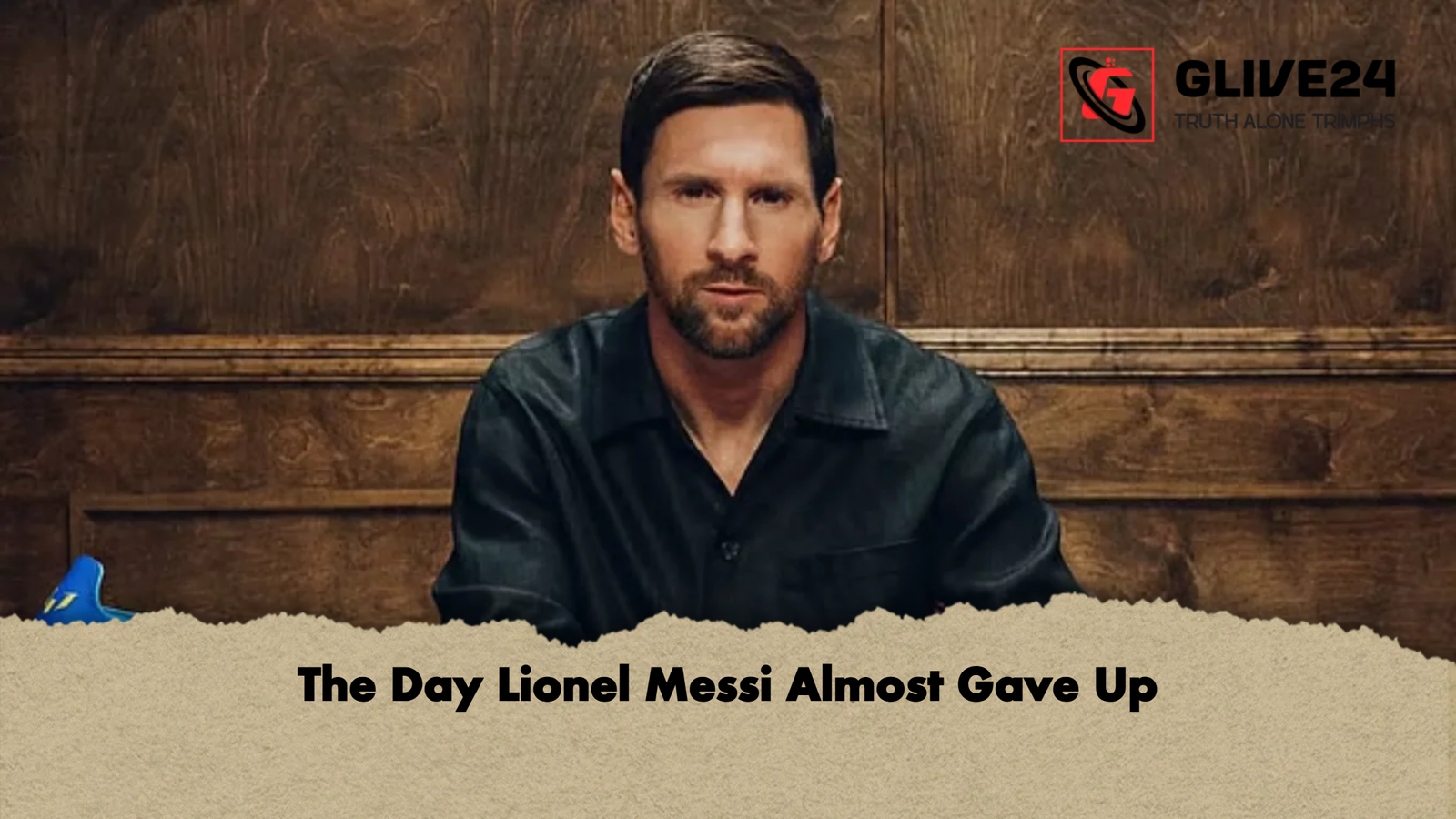
Lionel Messi’s football career is now widely regarded as complete in every meaningful sense. At club level, he has collected virtually every major trophy available, dominating domestic leagues and continental competitions over nearly two decades. On the international stage, he has lifted the FIFA World Cup, won the Copa América multiple times and finally silenced the long-standing criticism that he could not replicate his club success with Argentina. Yet behind this glittering résumé lies a moment of profound despair—one that even Messi himself admits nearly broke him.
In a recent interview with Argentina’s streaming platform Luzu TV, the Argentine icon spoke candidly about the emotional toll of the 2016 Copa América final. Although the interview was recorded last month, it was released only this week, quickly drawing global attention. Messi revisited the night in New Jersey when Argentina lost to Chile on penalties, marking their second consecutive Copa América final defeat against the same opponents.
That loss proved to be a psychological breaking point. Messi missed his penalty in the shootout, and the weight of repeated near-misses with the national team became unbearable. Public criticism reached fever pitch, with accusations that he failed to deliver when it mattered most for Argentina. In the aftermath, Messi made the shocking decision to retire from international football, a move that stunned supporters and teammates alike.
Reflecting on that period, Messi admitted: “The regret was overwhelming. At that moment, I felt like I wanted to disappear.” His words offer a rare glimpse into the mental strain endured by elite athletes, even those celebrated as the greatest of their generation.
Just months later, however, Messi reversed his decision and returned to the national team. What followed is now footballing folklore: Copa América triumphs in 2021 and 2024, and the crowning achievement of winning the 2022 World Cup in Qatar. Looking back, Messi believes the decision to return was driven by an inner calling rather than public opinion. “Everyone must go through their own experiences,” he explained. “You cannot escape what your heart truly wants.”
Key Milestones in Messi’s Journey
| Year | Event |
|---|---|
| 2005 | International debut for Argentina |
| 2016 | Copa América final defeat; international retirement |
| 2017 | Return to Argentina national team |
| 2021 | Copa América victory |
| 2022 | FIFA World Cup triumph |
| 2023 | Joined Inter Miami |
| 2028 | Contracted to play until end of MLS season |
Now 38, Messi’s philosophy of perseverance defines his life story. Childhood growth hormone deficiency did not derail his ambitions, nor did years of international disappointment. Persistence has filled his trophy cabinet to capacity and secured his place in sporting history.
While retirement looms, Messi has not yet confirmed whether he will feature in the 2026 World Cup, though he has not ruled it out. Beyond his playing days, he does not envision himself as a coach. Instead, he is drawn to football ownership and development. Already, alongside close friend Luis Suárez, he co-owns Deportivo LSM in Uruguay’s fourth division, a club focused on nurturing young talent from the ground up.
Messi’s journey, marked by despair, resilience and ultimate redemption, stands as a powerful reminder that even legends must first endure their darkest days.