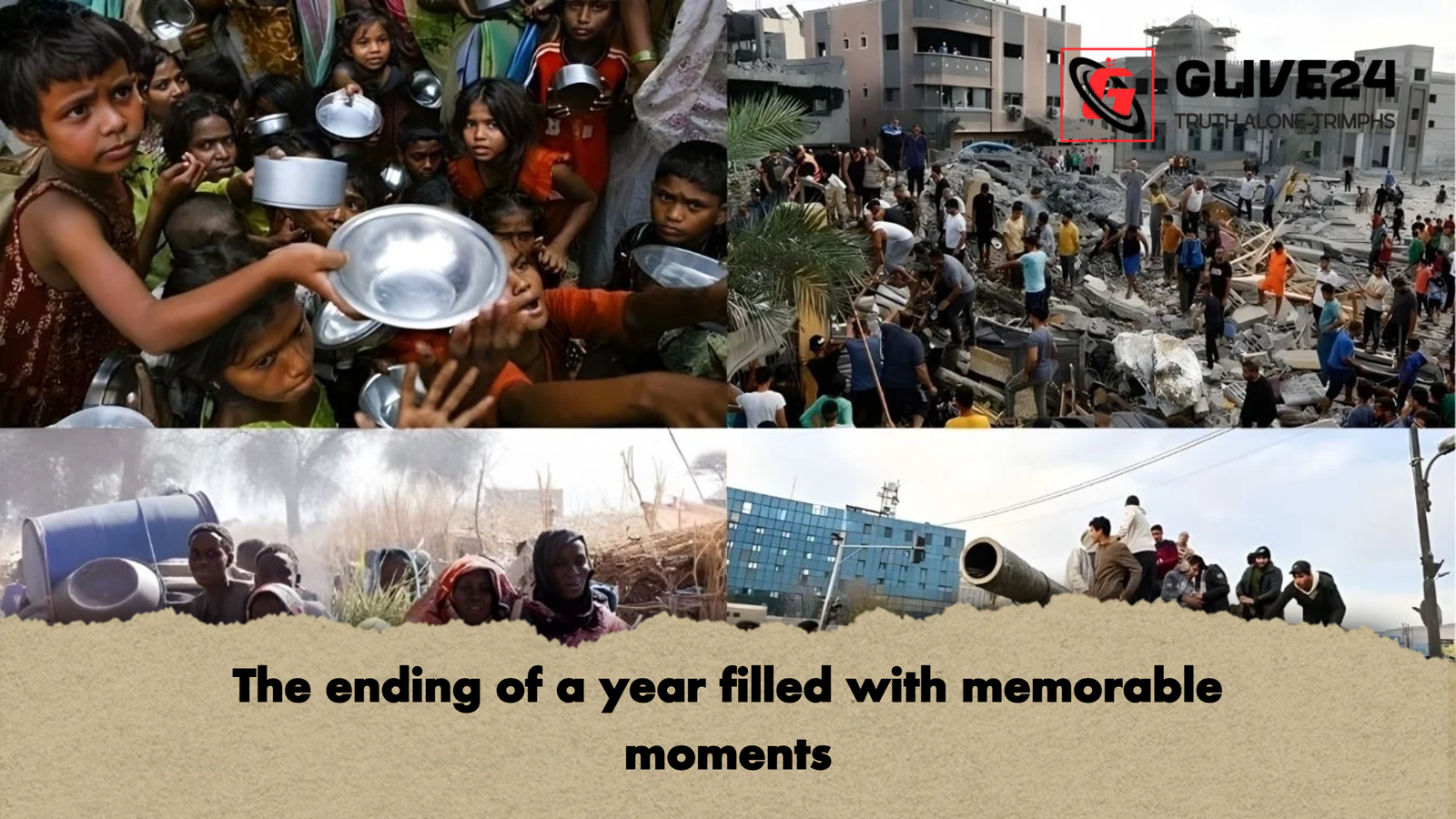
The world has endured yet another year dominated by crises and violent conflicts. From the Middle East to Europe, and South Asia to Africa, 2025 bore witness to wars, aggression, and human suffering across every continent.
In Gaza, civilians have continued to face extreme humanitarian hardship and brutality. The atrocities that began on 7 October 2023 against the Palestinian population have persisted into 2025. While a ceasefire was formally declared last October, attacks have not completely ceased in the region, leaving residents in a constant state of fear.
The broader Middle East remained highly volatile throughout 2025. Beyond Gaza, Israeli operations affected several countries. A 12-day conflict in June between Israel and Iran inflicted severe damage, including attacks on Tehran’s nuclear facilities, with the United States becoming indirectly involved. Although the confrontation threatened to escalate into full-scale war, American mediation temporarily halted hostilities.
Despite a ceasefire agreement with Hezbollah, Israeli military action continued in Lebanon, while Yemen, Qatar, and Syria also faced ongoing assaults. Internal instability plagued the region as well: Syria remained turbulent following Bashar al-Assad’s downfall, and Yemen witnessed fierce power struggles.
Europe experienced continued instability from the war in Ukraine, described as the continent’s gravest conflict since World War II. Despite repeated US-mediated negotiations, the conflict, which began in February 2022, has yet to reach a lasting resolution.
Africa was no less afflicted. Sudan endured one of the world’s most severe humanitarian crises after over three and a half years of civil war. Northern Congo witnessed brutal violence amid power struggles, and jihadist activities disrupted Niger, Mali, Burkina Faso, and other West African countries throughout the year.
South Asia was also unsettled. A brief but tense war between nuclear-armed India and Pakistan lasted four days, while Pakistan engaged in several confrontations with neighbouring Afghanistan. Myanmar continued to face internal conflict, with border clashes spilling into Thailand and Cambodia. Cross-strait tensions persisted between China and Taiwan, and the Korean Peninsula experienced heightened military alert, affecting North Korea, South Korea, and Japan.
Globally, anti-government protests erupted in at least 70 countries, targeting corruption, authoritarianism, and political malpractice. Several nations, including Nepal and Bulgaria, saw governments toppled amid mass demonstrations.
Economic instability intensified as Donald Trump returned to power in the United States in 2015, triggering a new wave of trade wars and imposing heavy tariffs on numerous nations, affecting global markets.
Meanwhile, climate change exacerbated disasters worldwide. Europe, the US, and several Asian countries were battered by earthquakes, wildfires, storms, and floods, displacing millions and causing severe humanitarian crises.
Major Global Conflict Hotspots, 2025
| Region / Country | Key Conflict / Crisis | Notes |
|---|---|---|
| Gaza | Ongoing attacks despite ceasefire | Humanitarian crisis continues |
| Middle East (Iran, Lebanon, Yemen, Syria) | Military strikes, civil unrest | US mediation limited escalation |
| Ukraine | War with Russia | US-mediated talks ongoing |
| Sudan | Civil war | Over 3.5 years of conflict; humanitarian crisis |
| Northern Congo | Armed conflict | Power struggle; civilian casualties |
| West Africa (Niger, Mali, Burkina Faso) | Jihadist activity | Regional instability |
| South Asia (India, Pakistan, Afghanistan) | Short war, cross-border clashes | Nuclear powers involved briefly |
| Myanmar, Thailand, Cambodia | Civil and border conflicts | Ongoing internal strife |
| China-Taiwan | Military posturing | Year-long tension |
| North-East Asia (Korea, Japan) | Military alert and threats | Heightened regional tensions |
2025 will be remembered as a year marked by relentless conflict, political unrest, and environmental disasters, underscoring the fragility of global stability and the urgent need for humanitarian intervention and international cooperation.