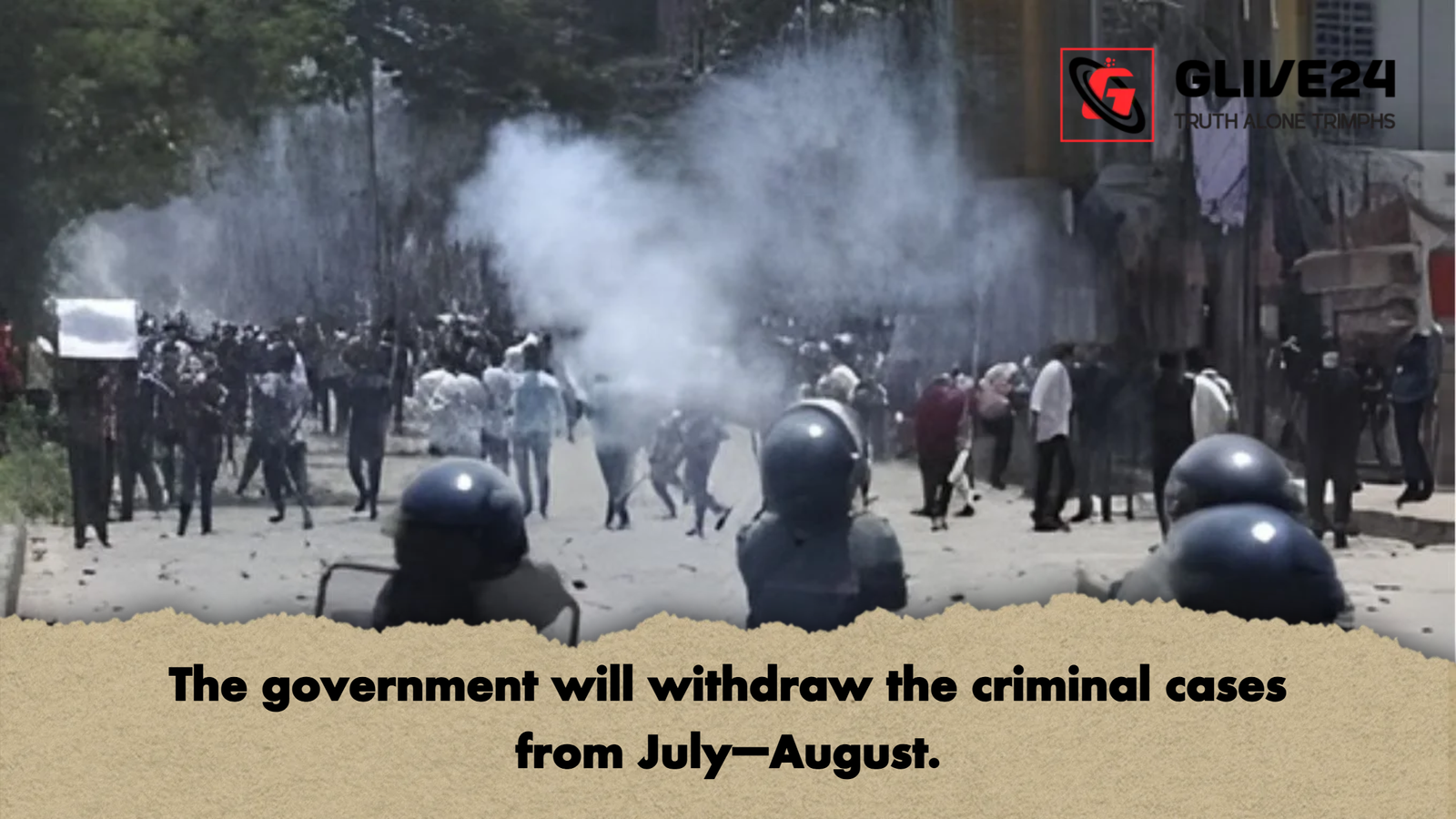
The interim government has taken a landmark decision to withdraw all criminal cases filed against individuals involved in the political protests of July–August 2024. In tandem, it has enacted the “July Mass Uprising Immunity Act” through the advisory council to ensure legal protection for active participants in the movement.
On Thursday, 15 January, during a contemporary affairs briefing held at the Foreign Service Academy in the capital, the government’s legal advisor, Professor Asif Nazrul, provided detailed insights into the decision. He stated:
“All criminal cases lodged under the pretext of political resistance against individuals participating in the July–August protests will be withdrawn. No new cases will be filed. Additionally, ongoing reviews are being conducted to determine if any pending cases still require action.”
Professor Nazrul further explained that the immunity legislation has been introduced to formally recognise the role of citizens who engaged in the protests while providing them with protection from potential legal repercussions. The Act is intended to shield participants from legal pressures that may arise from previous or future administrations, thereby safeguarding civil activism.
He also noted that the draft of the “Immunity Ordinance” had been finalised on 8 January, as mentioned in his social media post. According to him:
“This initiative ensures that the heroes of the July uprising receive recognition for their resistance efforts, and that all citizens involved in the movement can remain secure and confident in their legal standing.”
The table below summarises the key aspects of the legal initiatives related to the July–August protests:
| Subject Matter | Details |
|---|---|
| Period of Protests | July–August 2024 |
| Legal Measures | Immunity Act & Withdrawal of Cases |
| Responsible Advisor | Professor Asif Nazrul |
| Objective | Legal protection for protest participants |
| Previous Step | Draft of Immunity Ordinance finalised on 8 January 2026 |
Political analysts have welcomed the decision, suggesting that it reflects the government’s commitment to fostering a cooperative relationship with citizens engaged in political activity, while also strengthening legal certainty. Experts believe that this approach may enhance political stability and encourage broader civic participation.
Government sources have additionally indicated that clear criteria will be established for future application of the law, detailing the specific circumstances under which immunity provisions may apply. This move is seen as part of a broader strategy to institutionalise accountability while recognising the legitimacy of peaceful political action.