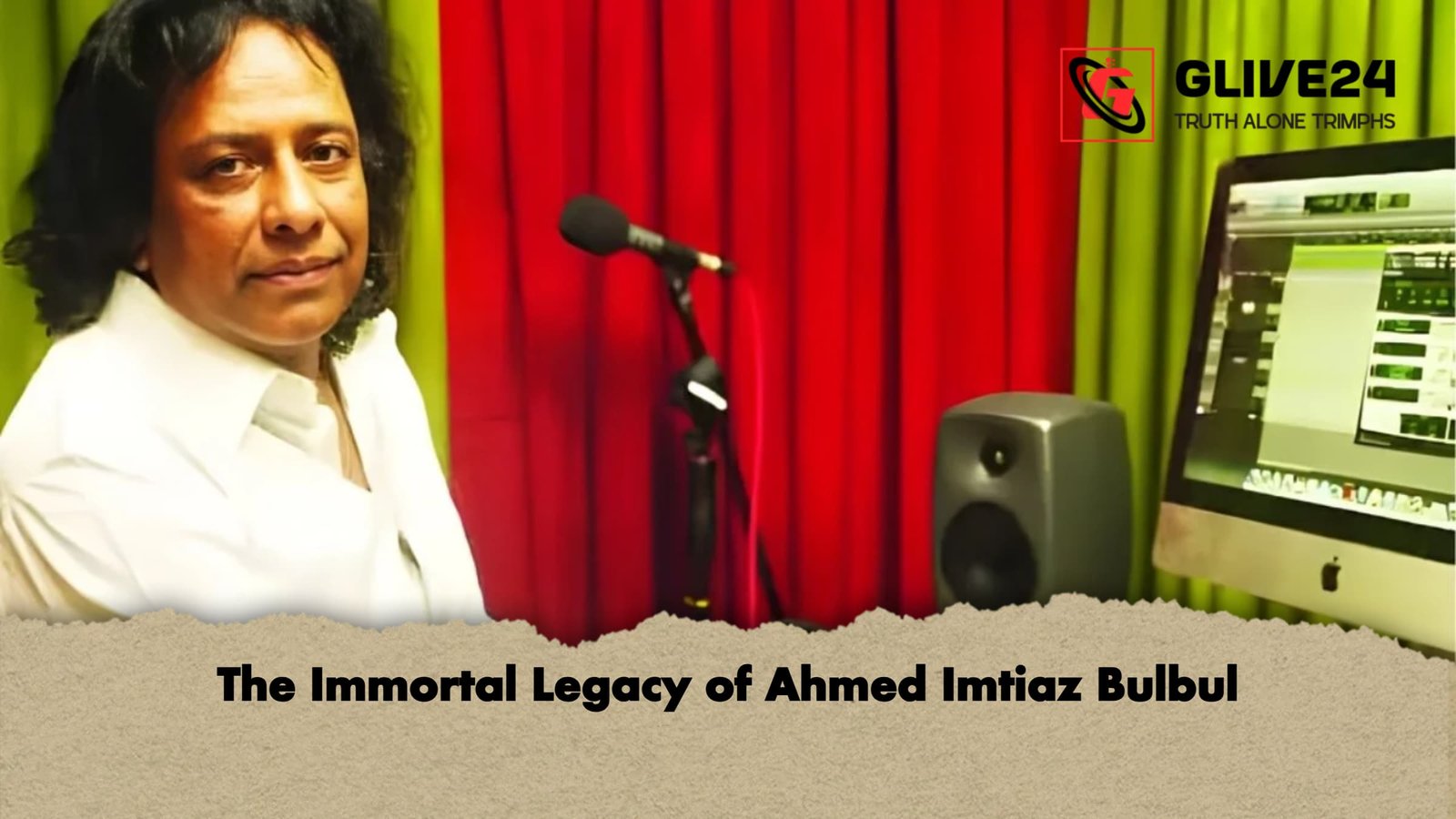
“Please do not forget me… so I am posting a photo just to remind you of my face.” These haunting words, written by the legendary Ahmed Imtiaz Bulbul on social media in 2018, feel more like a prophecy than a mere caption today. Posted while he sat at an airport, the maestro’s plea for remembrance was a rare moment of vulnerability from a man who had spent his life giving a voice to an entire nation. As the calendar turned to 1st January 2026, marking what would have been his 70th birthday, the outpouring of affection online proved that his fear of oblivion was, perhaps, unfounded.
Bulbul was not merely a composer; he was a chronicler of the Bangladeshi soul. Whether it was the patriotic fervour of ‘Sab Kota Janala Khule Dao Na’ or the cinematic ache of ‘Amar Shara Deho Kheyo Go Mati’, his music acted as a bridge between the soil of the motherland and the hearts of its people. Despite the absence of a massive state ceremony this year, his disciples and fans ensured his memory burned bright. Artists like Kanak Chapa and Salma shared tributes that painted a picture of a “Bohemian” genius—a man who lived for his art and cared little for the trappings of fame.
A Life Forged in Fire
Born in 1956, Bulbul’s adolescence was interrupted by the call of history. At just fourteen, he became a Freedom Fighter, joining the struggle for independence in 1971. This experience defined his creative output. For eight years following the liberation, he focused almost exclusively on patriotic songs, channelling the “fire of rebellion” into melodies that offered courage to a newly born nation. His transition to film music in the late 1970s brought his genius to the masses, resulting in a career that spanned over 300 films and redefined the sound of Bengali cinema.
Bulbul’s versatility was staggering. He was a master of the guitar, violin, and keyboard, often writing his own lyrics to ensure that word and melody were born of the same breath. He was a father figure to a generation of singers, from established icons like Runa Laila to the young stars he mentored on the reality show CloseUp One. He believed that a truly great song was indestructible, often discarding drafts that failed to meet his exacting standards.
| Key Milestone | Achievement Details |
| National Service | Joined the 1971 Liberation War at age 14 |
| Cinematic Debut | Megh Bijli Badol (1978) |
| Filmography | Music Direction for over 300 films |
| Iconic Track | Sab Kota Janala Khule Dao Na (A national anthem of loss and hope) |
| Health Struggle | Diagnosed with 8 cardiac blocks in 2018 |
| Lasting Legacy | National Film Awards & Ekushey Padak |
In his final months, Bulbul lived a quiet, somewhat reclusive life as he battled severe heart disease. He passed away on 22nd January 2019, leaving behind a void that has yet to be filled. However, through the “open windows” of his songs, his presence remains palpable. Though he may have worried that his face would fade from memory, his music has ensured that the name Ahmed Imtiaz Bulbul is etched permanently into the cultural bedrock of Bangladesh.