
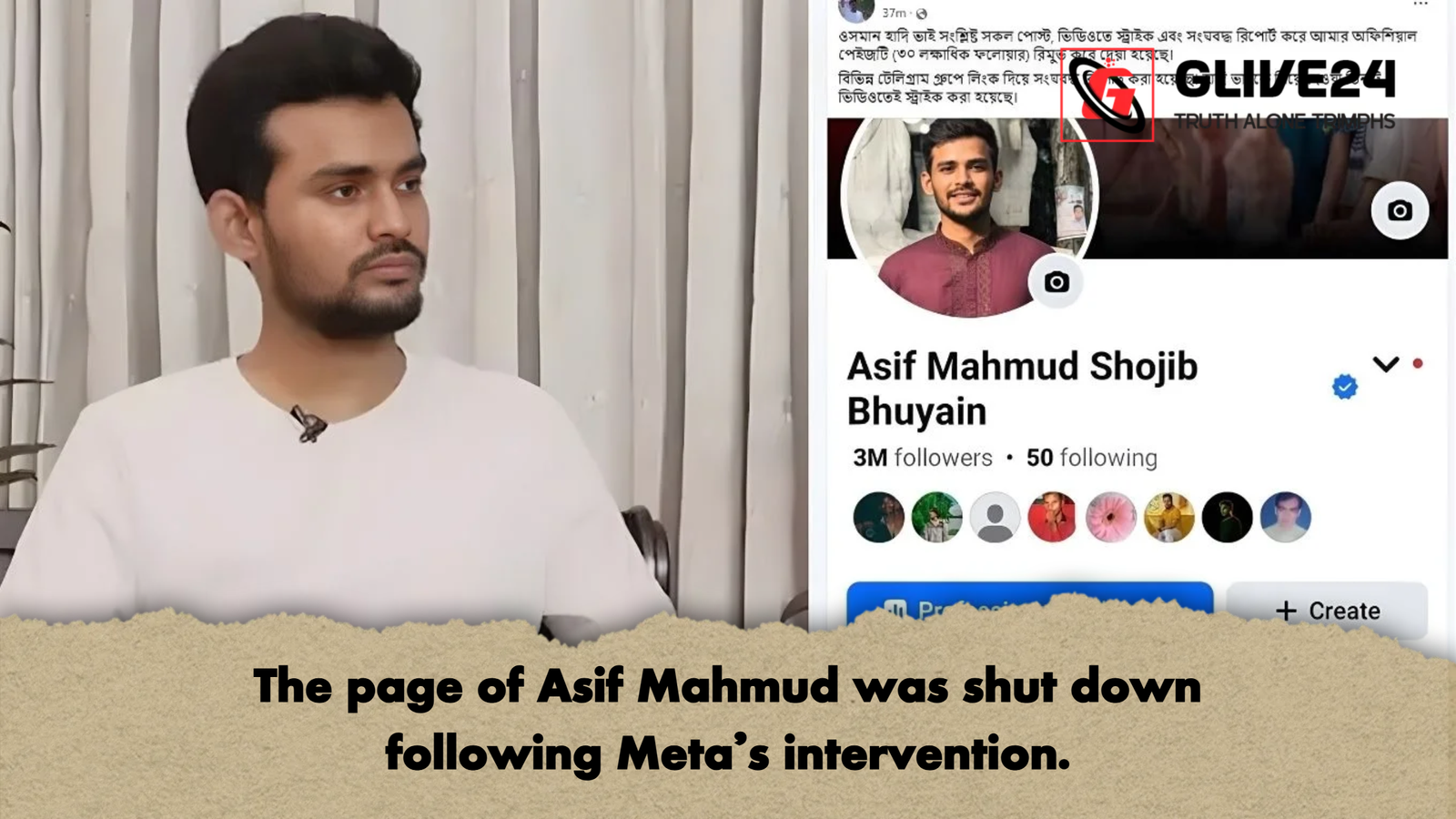
The official Facebook page of Asif Mahmud, a former adviser to the interim government, has been removed by Meta. The page, which boasted over 3 million followers, was reportedly taken down following a series of coordinated reports.
According to sources, the action was triggered by posts related to Sharif Osman Hadi, the spokesperson for the Inquilab Mancha movement. These posts were reported multiple times, ultimately leading Meta to remove the page.
On Friday, 26 February, Asif Mahmud confirmed the removal in a post on his personal Facebook profile. In the post, he stated that “all posts and videos concerning Osman Hadi were struck and mass-reported, resulting in the removal of my official page with over 3 million followers.”
He further added that the reports were organised through various Telegram groups, linking to his content. Three specific videos concerning Hadi were reportedly given strikes, which cumulatively led to the page’s removal.
This incident highlights the increasing influence of coordinated online reporting and the challenges faced by high-profile figures on social media platforms. Experts suggest that pages with large followings, such as Asif Mahmud’s, are particularly vulnerable to targeted campaigns that exploit platform policies.
For context, the following table summarises key details of the removed page:
| Detail | Information |
|---|---|
| Name | Asif Mahmud Official Facebook Page |
| Follower Count | Over 3,000,000 |
| Platform Action | Page Removed by Meta |
| Triggering Content | Posts and videos concerning Sharif Osman Hadi |
| Method of Reporting | Mass reports via Facebook and Telegram links |
| Date Confirmed | 26 February 2025 |
Asif Mahmud has not yet indicated whether he intends to contest the removal or create an alternative platform for his followers. Meanwhile, the episode has sparked debate in Bangladesh regarding the power of social media platforms to moderate content and the potential misuse of reporting mechanisms to silence voices.
Analysts note that this case serves as a reminder of the growing intersection between social media governance, digital activism, and political discourse in the region.