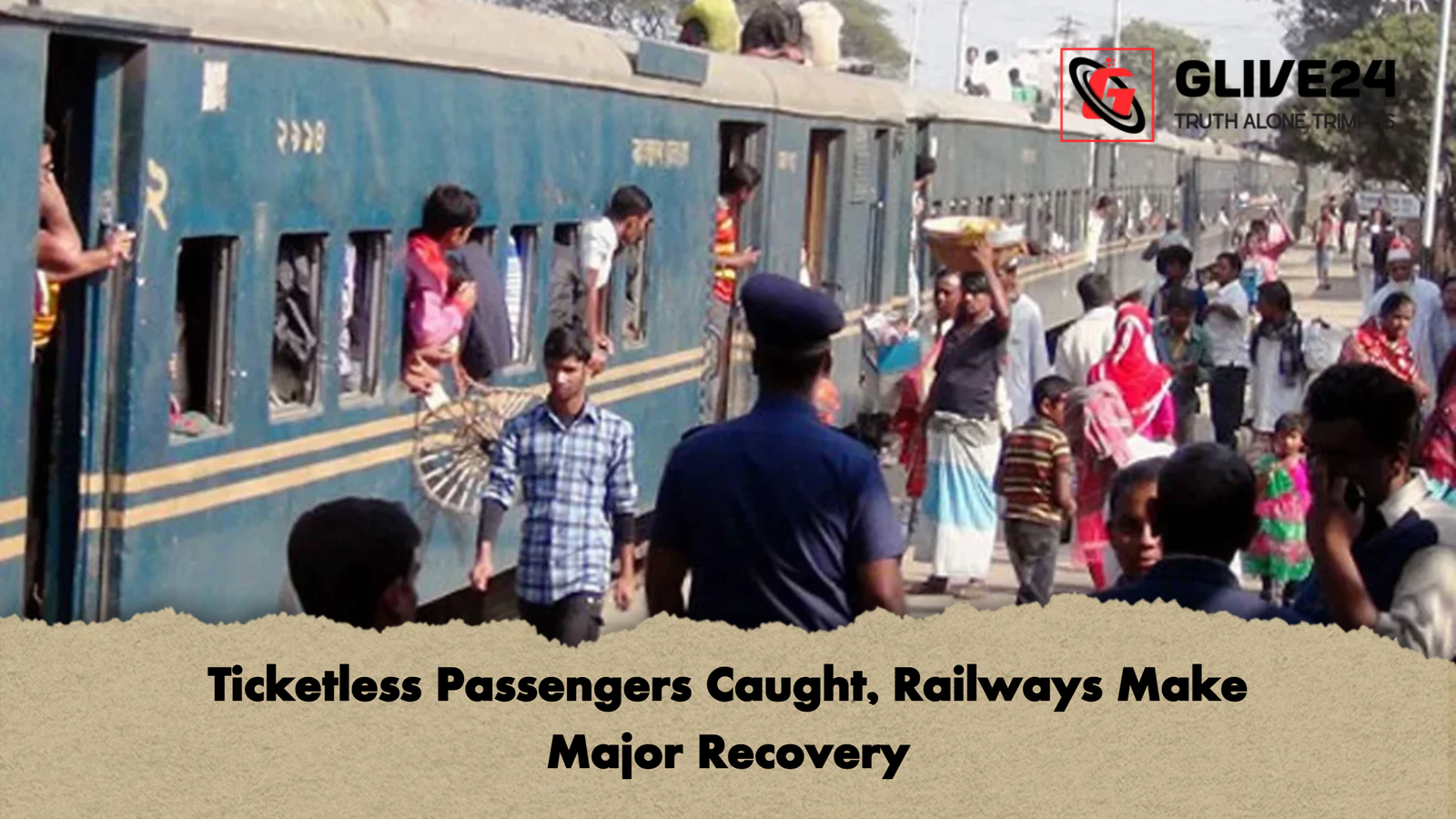
Bangladesh Railway has reported a significant financial recovery following a nationwide crackdown on ticketless travel, underscoring its renewed efforts to enforce discipline and protect public revenue across the rail network. In a single day of coordinated inspections, railway authorities identified 5,220 passengers travelling without valid tickets on trains operating in both the eastern and western regions of the country. As a result, a combined total of Tk 1,069,135 was collected in fares and fines.
According to an official statement published on Thursday on Bangladesh Railway’s verified platform, the operation was carried out on 4 February and involved a large-scale mobilisation of manpower. A total of 206 Travelling Ticket Examiners (TTEs) were deployed across 149 passenger trains. These officials conducted systematic ticket inspections throughout the journeys, checking compliance and taking action against those found to be travelling without proper authorisation.
The breakdown of the recovered amount highlights the scale of ticket evasion and its impact on railway finances. Of the total sum collected, Tk 759,610 was realised as unpaid fares, while Tk 309,525 was recovered as fines imposed on offenders under existing railway regulations. Officials confirmed that 3,775 tickets were formally checked during the course of the day, reflecting both routine verification and targeted enforcement.
Railway authorities noted that ticketless travel remains a persistent challenge, particularly on busy intercity and regional routes. Such practices not only deprive the national rail operator of essential revenue but also undermine fairness for law-abiding passengers who purchase tickets in advance. Overcrowding, safety risks and service disruptions are often aggravated by unauthorised travel, prompting the need for stricter monitoring.
In recent months, Bangladesh Railway has signalled a tougher stance on fare evasion as part of broader reforms aimed at improving service quality, punctuality and financial sustainability. Officials believe that visible and regular enforcement drives play a crucial role in deterring violations and encouraging passengers to comply with ticketing rules. They have also emphasised the importance of public awareness, urging travellers to use official ticket counters and digital platforms to avoid penalties and inconvenience.
Transport analysts observe that while the expansion of online ticketing and mobile booking services has made access easier, enforcement remains essential to change long-standing habits among a section of commuters. Consistent inspection regimes, coupled with reasonable fines, are widely regarded as effective tools for reducing fare evasion in public transport systems.
Bangladesh Railway has indicated that similar operations will continue in the coming weeks, with both announced and surprise inspections planned across key routes. The authorities maintain that such measures are not intended to harass passengers but to ensure order, safety and equity within the rail system.
Summary of the Operation
| Category | Details |
|---|---|
| Date of operation | 4 February |
| Trains inspected | 149 |
| TTEs deployed | 206 |
| Ticketless passengers identified | 5,220 |
| Tickets checked | 3,775 |
| Fare collected | Tk 759,610 |
| Fines collected | Tk 309,525 |
| Total revenue recovered | Tk 1,069,135 |
Overall, the one-day enforcement drive demonstrates how targeted action can yield tangible results for Bangladesh Railway, reinforcing the message that ticketless travel carries real financial consequences while helping to safeguard public resources.