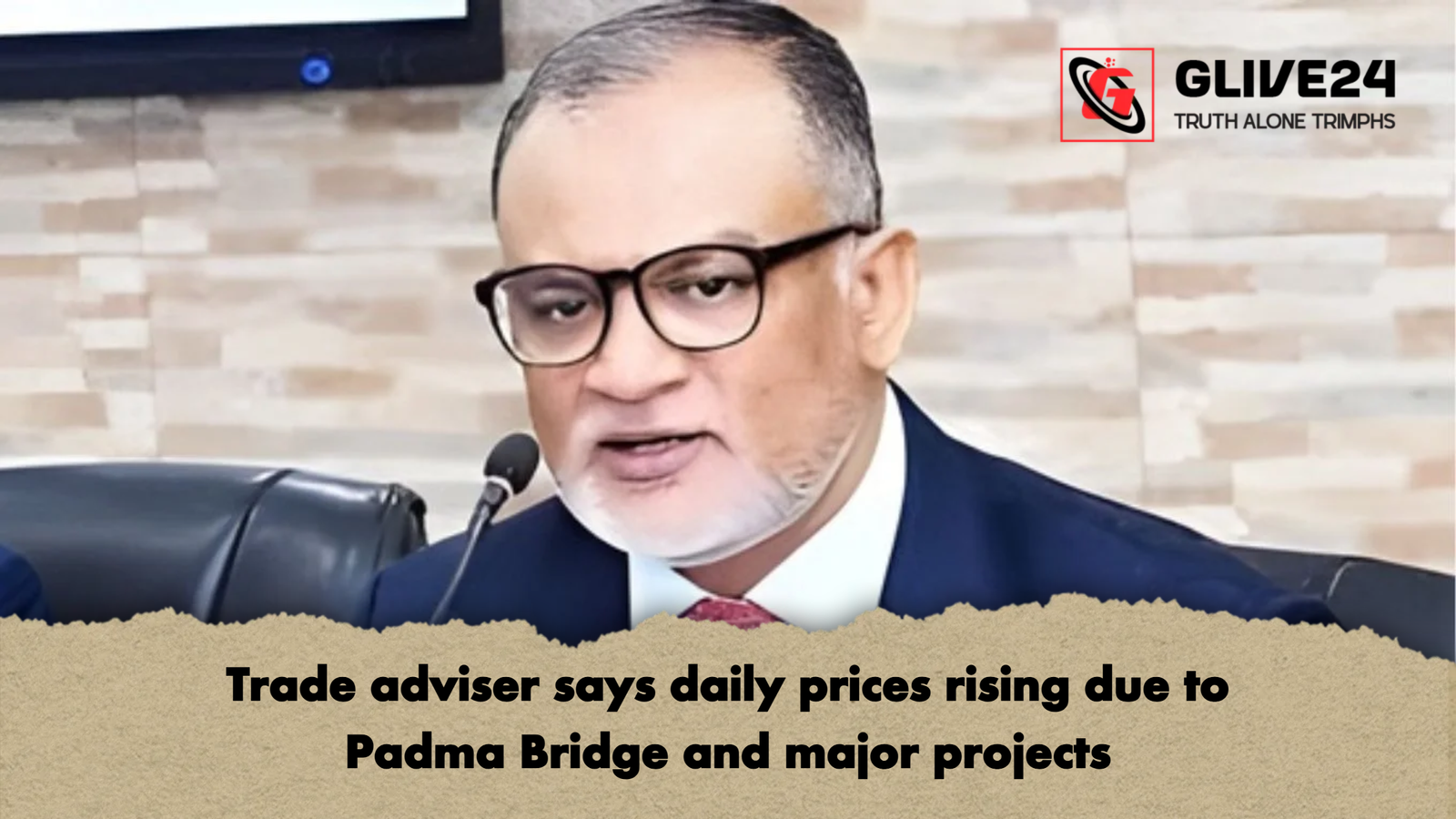
Sheikh Bashir Uddin, the Government’s Trade Adviser, has raised concerns over the financial burden created by several large-scale infrastructure projects, including the Karnaphuli Tunnel, Payra Port, and the Padma Bridge. According to him, these projects—while monumental in scale—were largely unnecessary, leading to significant government expenditure and contributing to the depreciation of the national currency. To meet the resulting fiscal shortfall, Bangladesh has had to secure substantial loans from the International Monetary Fund (IMF), a situation which has had a direct impact on the prices of essential commodities in local markets.
Speaking to reporters on Sunday, 25 January, following a taskforce meeting at the Secretariat to review the pricing and supply of essential goods ahead of the upcoming Ramadan, Sheikh Bashir noted that despite overall economic pressures, there is potential for some essential items to see price reductions during the holy month. He cited a marked improvement in import volumes as a key factor: imports of basic commodities have increased by approximately 40 percent compared with the previous year, easing supply constraints.
The Trade Adviser also stated that traders and importers have assured the government that the supply chain remains robust. Should this trend continue, prices of certain items could stabilise further, with some even falling. Highlighting the edible oil market specifically, he mentioned that an additional 500,000 tonnes of rice bran oil have been released into the market, keeping prices steady.
Returning to the subject of large infrastructure projects, Sheikh Bashir reiterated his criticism of prior government policies. “Projects such as the Padma Bridge, Karnaphuli Tunnel, and Payra Port involved excessive expenditure with limited economic returns,” he said. In the case of the Padma Bridge, he claimed that anticipated GDP growth has not materialised, and the resulting financial strain has necessitated stringent fiscal measures across various sectors.
When asked about the recent construction of luxury flats for ministers, he stated he had no knowledge of any such project or allocation.
Earlier, on 19 January in a discussion session in Netrokona, Sheikh Bashir noted that the huge expenditure on the Padma Bridge had contributed to rising rice prices. Had the funds been directed instead to irrigation development, he estimated that rice prices could have fallen by at least five taka, whereas the current financial burden of the project has pushed prices up by nearly twenty taka.
Key Highlights from the Trade Adviser’s Statement
| Issue | Key Information |
|---|---|
| Impact of Mega Projects | Increase in government financial liabilities |
| Currency Situation | Depreciation of the Bangladeshi Taka |
| International Debt | Large loans from IMF |
| Import Situation | 40% higher imports than last year |
| Edible Oil | 500,000 tonnes of rice bran oil released |
| Ramadan Market | Some essential goods likely to see price reductions |
Overall, Sheikh Bashir’s remarks underline a dual reality: while past mega-projects continue to exert pressure on daily commodity prices, the government is actively taking steps to ensure market stability and affordability for citizens in the lead-up to Ramadan.