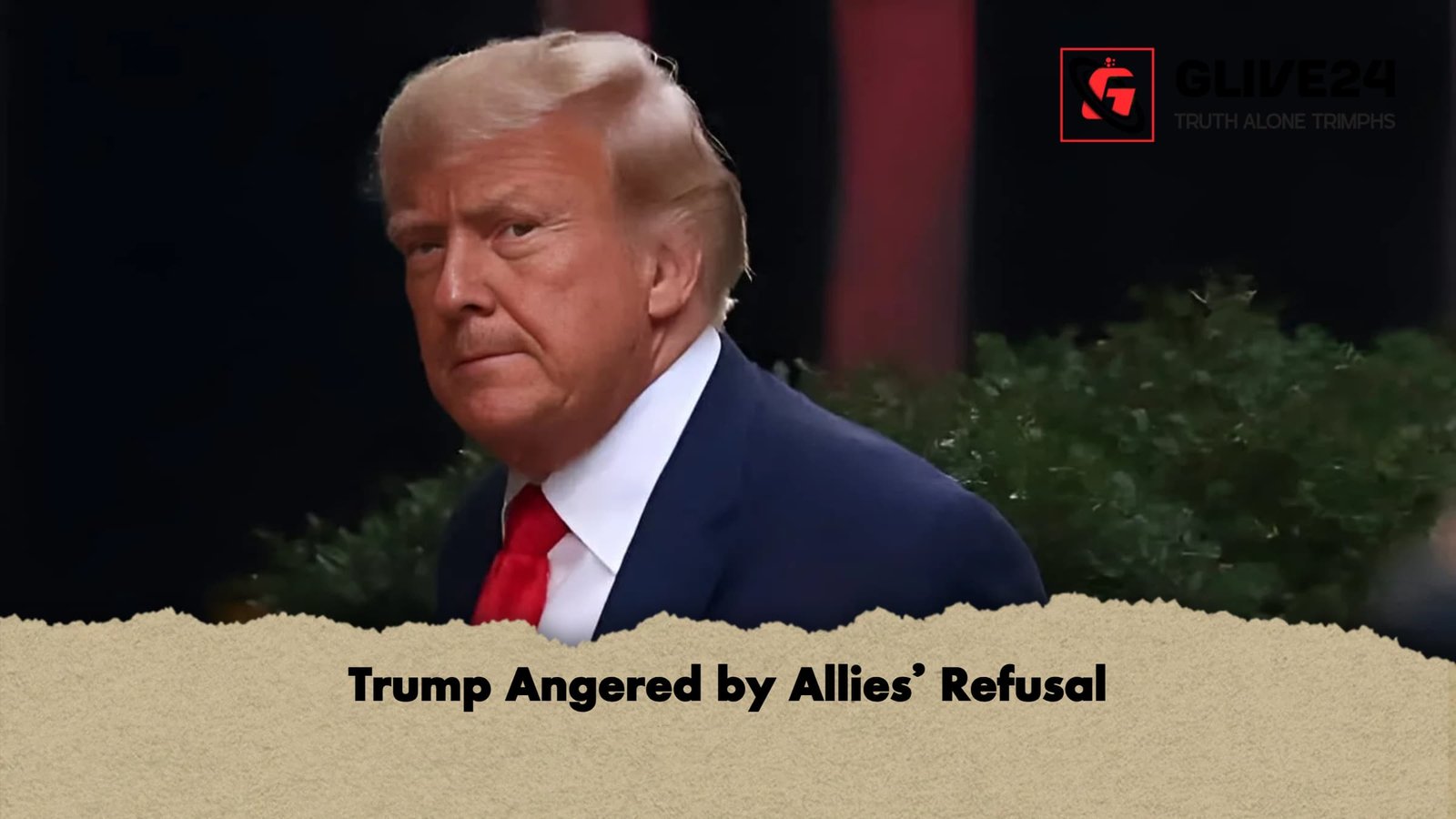
Tensions in the Middle East have intensified following a lack of support from key allied nations for a United States-led initiative in the strategically vital Strait of Hormuz. The development has prompted a sharp reaction from former U.S. President Donald Trump, who expressed frustration at what he described as an absence of solidarity among traditional partners.
The United States had urged allied countries to deploy naval forces to the Strait of Hormuz, a crucial maritime corridor through which a significant portion of the world’s oil supply is transported. However, several major allies declined to participate. Instead, the European Union called on both the United States and Israel to halt military operations against Iran, signalling a preference for de-escalation over confrontation.
Reacting to the situation, Trump asserted that the United States does not require assistance from any other nation. “We do not need anyone. We are number one,” he stated, emphasising America’s military strength and global standing. His remarks reflect growing frustration within U.S. leadership circles over what is perceived as a lack of commitment from allies during times of crisis.
Since the outbreak of hostilities, the Strait of Hormuz has effectively fallen under Iranian control, severely disrupting maritime traffic. This has led to a bottleneck in global oil shipments, pushing up crude prices and unsettling international markets. Analysts warn that prolonged instability in the region could have far-reaching economic consequences, particularly for energy-dependent economies.
Following joint military actions by the United States and Israel against Iranian targets, Washington renewed its call for allied naval deployments. Nevertheless, countries including the United Kingdom, Germany, Spain, Australia, Japan, and Italy declined to take part in the proposed mission.
German Chancellor Friedrich Merz stated that European nations had not been adequately briefed in advance regarding the U.S. operation. He further emphasised that Berlin could not support any military deployment lacking approval from international bodies such as the United Nations, the European Union, or the NATO.
Trump later suggested that his request to allies had also served as a test of loyalty. He indicated that the situation provided insight into which nations would stand by the United States in times of need.
Below is a summary of key allied responses:
| Country | Position Taken | Stated Reason |
|---|---|---|
| United Kingdom | Declined participation | Favours diplomatic resolution |
| Germany | Declined participation | Lack of prior consultation, legal concerns |
| Spain | Declined participation | Avoid escalation |
| Australia | Declined participation | Regional stability concerns |
| Japan | Declined participation | Energy security considerations |
| Italy | Declined participation | Alignment with broader European stance |
The episode underscores a widening divide between the United States and its traditional allies over military engagement in the Middle East. Observers note that the reluctance of allied nations to commit forces may signal a broader shift towards caution and multilateral decision-making in international security matters.