
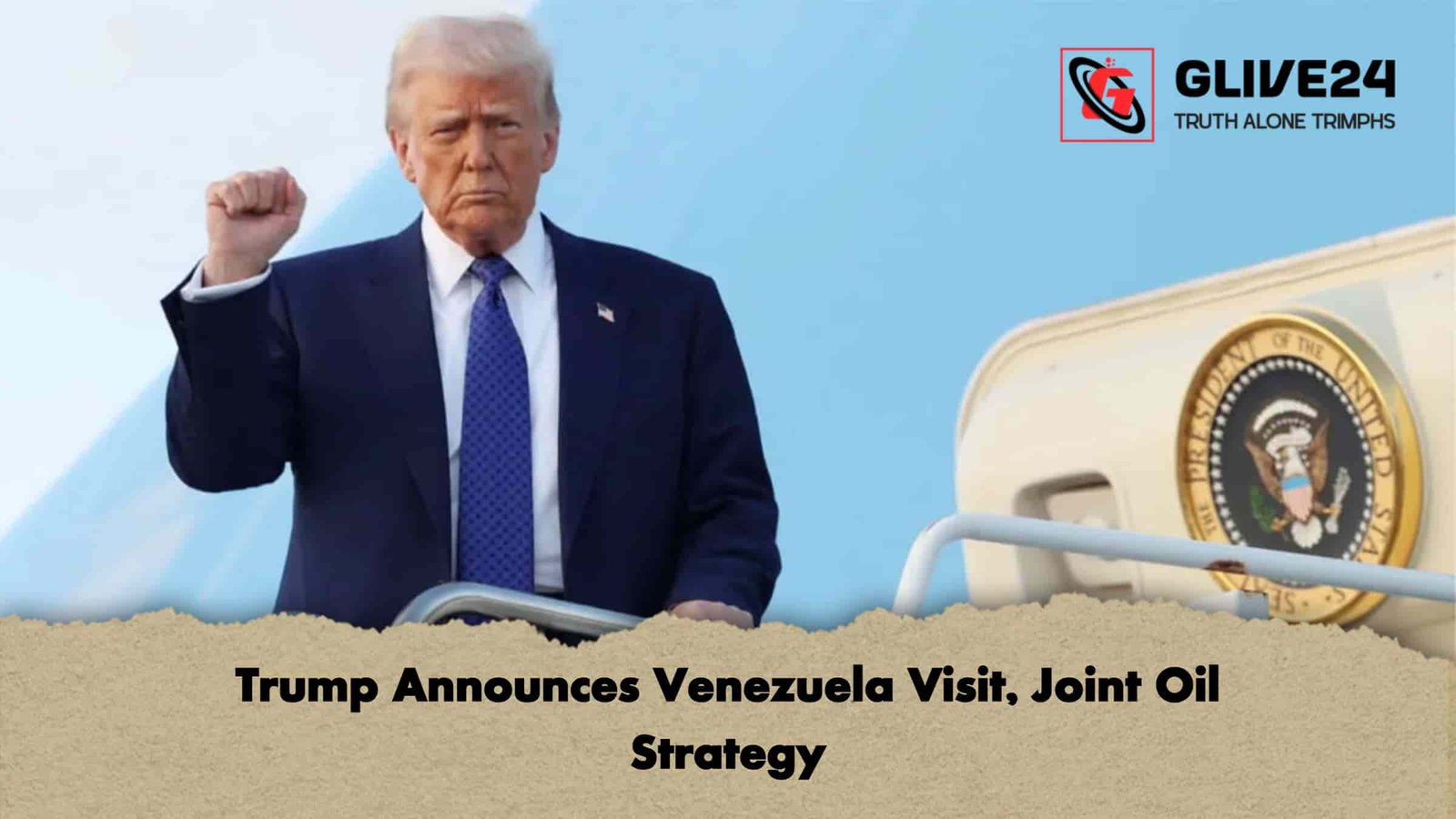
United States President Donald Trump has announced plans to undertake an official visit to Venezuela in the near future, focusing on comprehensive joint management of the country’s vast oil reserves and strategic economic cooperation. The announcement has sparked international discussion, given the complex political landscape in Venezuela, ongoing economic instability, and the critical role of oil in global energy markets.
Speaking to reporters at the White House on Friday, Trump stated that while a specific date for the visit has not yet been finalised, he is optimistic about bilateral relations. “Our relationship is currently very strong—I would rate it a ten out of ten,” he remarked.
This announcement comes amid heightened tensions: Venezuela’s President Nicolás Maduro and his spouse face drug trafficking charges in the United States, and the country is currently governed by an interim administration recognised by Washington. The geopolitical and legal context has made any potential collaboration on oil management highly sensitive.
Key data regarding Venezuela’s oil resources are summarised below:
| Resource / Factor | Approximate Figure / Status |
|---|---|
| Proven Oil Reserves | ~300 billion barrels (≈17% of global total) |
| Production (2025) | ~1.2 million barrels per day |
| Petro‑legal Reforms | New legislation allows increased foreign and private investment |
| U.S. Policy | Eased oil sanctions; revenue may be deposited in U.S.-controlled accounts |
In recent months, the Trump administration dispatched a senior energy official to Caracas to assess investment opportunities and oversee the recovery of Venezuela’s oil industry. Early reports suggest that revenue from oil sales has already surpassed $1 billion, with projections indicating potential earnings of up to $5 billion in the coming months.
The U.S. Treasury has granted special permissions to major international oil companies—including BP, Chevron, Eni, Shell, and Repsol—to conduct business in Venezuela’s oil and gas sector, while sanctions against entities linked to Russia, China, and Iran remain in force.
Interim Venezuelan President Delcy Rodríguez emphasised that no sovereignty has been relinquished in these arrangements, and asserted that the agreements are intended to stabilise the economy and support long-term reconstruction.
Analysts have highlighted that the planned visit and joint oil management initiatives are controversial. Some caution that such arrangements could raise complex questions under international law regarding sovereignty and resource control. Others, however, view the initiative as the beginning of a new chapter in U.S.–Venezuelan political and economic relations.
In summary, Trump’s prospective visit and the proposed joint management of Venezuela’s oil reserves are being closely monitored on the global stage. Despite political tensions, Venezuela’s substantial oil wealth positions it as a significant player in the world energy market, and this visit could serve as a pivotal step in strengthening that role.