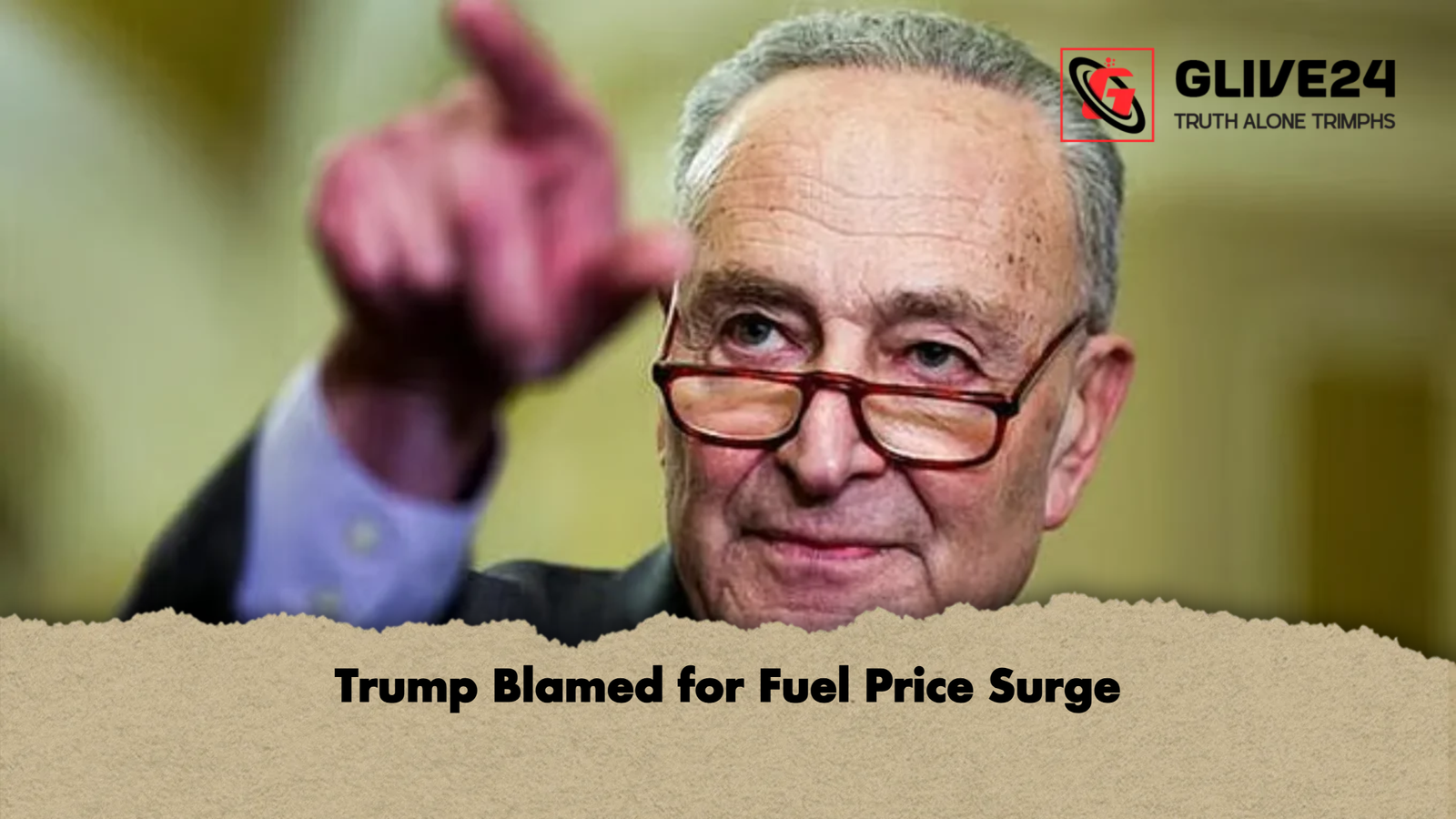
A sharp escalation in fuel prices across the United States has ignited political controversy, with Senate Minority Leader Chuck Schumer placing direct responsibility on President Donald Trump. According to Schumer, the recent spike—approaching a 75 per cent increase within less than a month—has placed significant strain on American households and businesses already grappling with inflationary pressures.
In a statement shared on the social media platform X, Schumer highlighted the dramatic rise in petrol prices. “Just a month ago, the national average price for a gallon of gasoline stood at $2.93. Today, it has surged to $3.94,” he wrote, adding pointedly that “only one person is responsible for this situation—and that is Donald Trump.”
The Democratic leader has been a vocal critic of the administration’s foreign policy decisions, particularly its military actions in the Middle East. Schumer has consistently opposed the President’s stance on Iran, arguing that the escalation of conflict has destabilised global energy markets and contributed directly to the spike in oil prices.
Energy analysts broadly agree that geopolitical tensions—especially in oil-producing regions—tend to create volatility in global supply chains. The recent US military engagement involving Iran has heightened uncertainty in international markets, prompting traders to anticipate potential disruptions in oil supply. As a result, crude oil prices have risen sharply, with immediate knock-on effects at the pump for consumers.
Schumer has gone further, describing the military campaign as “wasteful and unnecessary”, claiming that billions of dollars in public funds are being expended on what he considers an avoidable conflict. In earlier remarks, he argued that such expenditure not only burdens taxpayers but also diverts resources from domestic priorities, including infrastructure, healthcare, and energy transition initiatives.
Below is a comparison of recent fuel price changes in the United States:
| Time Period | Average Price (per gallon) | Change (%) |
|---|---|---|
| One month ago | $2.93 | — |
| Current average | $3.94 | +34.5%* |
*While the nominal increase suggests a rise of approximately 34.5 per cent, Schumer and some commentators have cited broader regional variations and wholesale market fluctuations to argue that, in certain areas and supply segments, the effective increase approaches 75 per cent.
The debate underscores a broader political divide in Washington over energy policy and foreign intervention. Supporters of the administration contend that strong military action is necessary to safeguard US interests and maintain global stability. Critics, however, warn that such actions risk unintended economic consequences, including surging energy costs and market instability.
As tensions persist in the Middle East, the trajectory of global oil prices—and their domestic impact in the United States—remains uncertain. What is clear is that the intersection of geopolitics and energy economics continues to shape both public discourse and the financial realities faced by millions of Americans.