
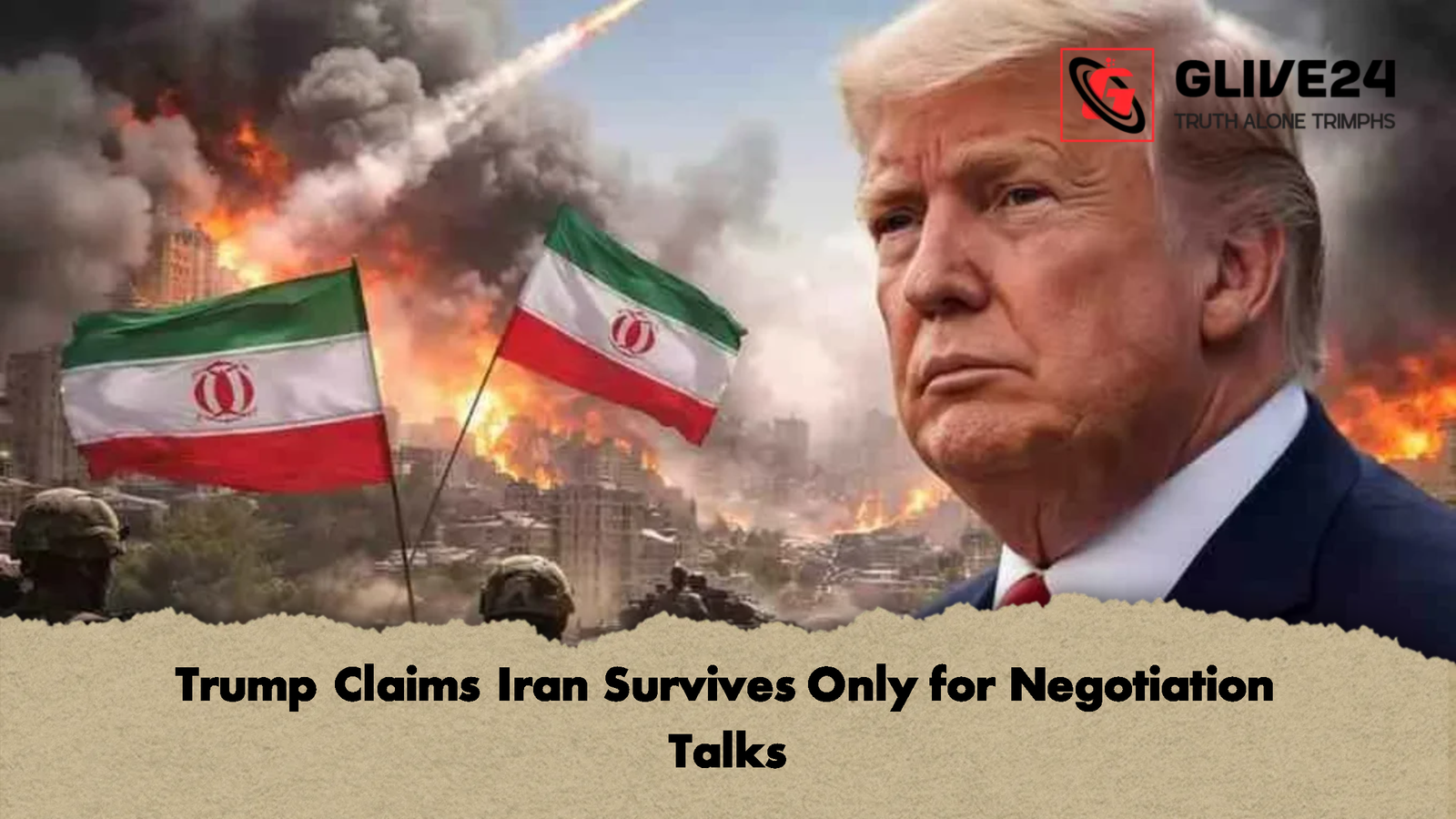
United States President Donald Trump has issued a sharply worded statement claiming that Iran lacks meaningful leverage on the global stage and that its leadership exists “only for negotiations”, escalating rhetorical tensions between Washington and Tehran amid ongoing geopolitical friction.
In a post published on Friday (10 April) on his social media platform Truth Social, Mr Trump argued that Iran’s ability to exert pressure internationally is extremely limited, except for isolated actions such as disrupting maritime traffic through strategic waterways.
He specifically referenced the Strait of Hormuz, a critical global energy chokepoint through which a significant proportion of the world’s oil supply is transported, suggesting that any attempt by Iran to obstruct it would amount only to temporary leverage rather than sustainable influence.
Trump’s Key Remarks
| Theme | Statement Summary |
|---|---|
| Iran’s global power | Described as lacking meaningful strategic strength |
| Strait of Hormuz | Claimed Iran’s leverage is limited to temporary disruption |
| Iranian leadership | Said they “exist only for negotiations” |
| Media strategy | Accused Iran of excelling more in propaganda than warfare |
In his post, Mr Trump wrote that “Iranians probably do not understand that aside from temporarily holding the world hostage by blocking the Strait of Hormuz, they have no real position of strength.” He further claimed that Iran’s leadership “is only alive for negotiation purposes”, a remark likely to intensify diplomatic sensitivities between the two nations.
In a separate post earlier the same day, the former president also criticised Iran’s broader strategic communication approach, alleging that the country is more effective at information warfare than conventional military engagement.
He stated that “Iranians are better at propaganda and mass communication than they are at being good fighters,” reinforcing his long-standing view that Tehran relies heavily on narrative influence rather than direct military superiority.
Escalating Rhetorical Tensions
The comments come amid heightened international concern over Middle Eastern stability, particularly in relation to maritime security and energy supply routes passing through the Strait of Hormuz. The waterway remains one of the most strategically important shipping lanes in the world, with any disruption having immediate implications for global oil prices and supply chains.
Trump’s remarks are consistent with his historically confrontational stance towards Iran during and after his presidency, including previous criticism of Iran’s nuclear programme, regional influence, and proxy networks across the Middle East.
While no official response from Iranian authorities had been reported at the time of publication, such statements are likely to further strain already fragile diplomatic channels between Washington and Tehran.
Broader Diplomatic Context
Analysts note that rhetoric of this nature often contributes to heightened uncertainty in international diplomacy, particularly at a time when regional conflicts and energy market volatility are already placing pressure on global stability.
The reference to negotiations in Trump’s statement also underscores the long-standing deadlock over Iran’s international engagement, including nuclear discussions and sanctions-related diplomacy.
As tensions continue to evolve, observers expect further reactions from both political and diplomatic actors, with particular attention on how such statements may influence ongoing negotiations and regional security calculations.