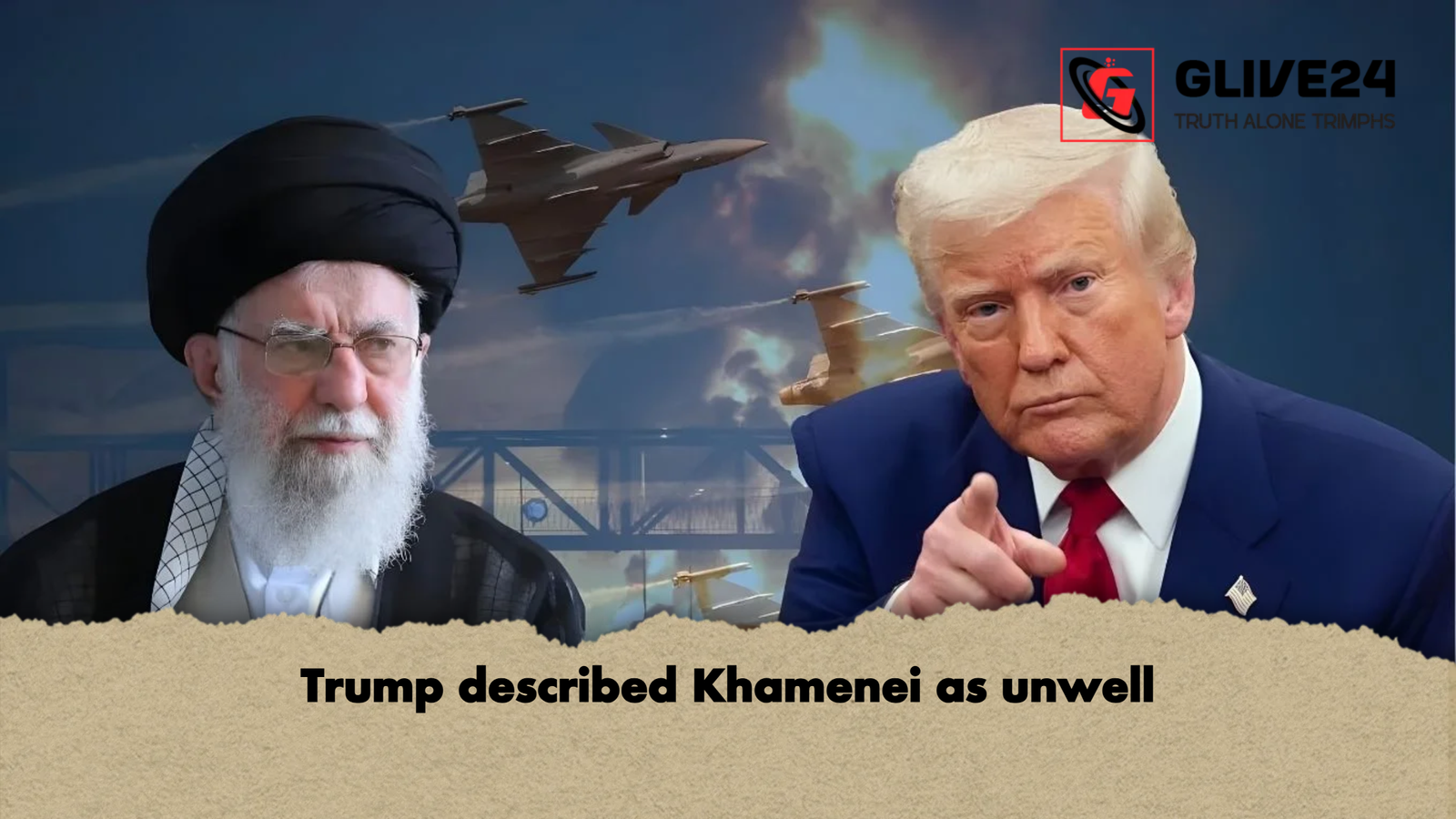
Former U.S. President Donald Trump has described Iran’s Supreme Leader, Ayatollah Ali Khamenei, as an “ill person” and called for an end to his rule. His remarks come amid mounting unrest in Iran and in direct response to Khamenei’s criticism of Trump regarding the ongoing protests.
In a Saturday (17 January) interview with Politico, Trump asserted that the time has come for new leadership in Iran. He argued that the ruling elite in Tehran maintains power through repression and widespread violence rather than governance.
Trump’s comments followed a series of posts on the social media platform X (formerly Twitter) by Khamenei, in which the Iranian leader labelled Trump a “criminal” and accused him of encouraging rebellion within Iran. Responding to these accusations, Trump sharply criticised Khamenei’s leadership style, describing it as destructive and historically unprecedented in its violence.
“Leadership is not about fear and death,” Trump said. “As a national leader, his greatest crime is steering an entire country toward ruin. True leadership requires guiding your nation responsibly, not maintaining control through mass killings, as he has attempted.”
Trump went on to argue that Khamenei’s failure to govern effectively has rendered Iran one of the world’s least habitable nations. “This is a sick individual,” Trump remarked. “He ought to focus on properly managing his own country and stopping the killing of his people.”
To summarise Trump’s criticisms and position:
| Aspect | Trump’s Comment |
|---|---|
| Leadership | Should focus on governance, not violence |
| Responsibility | Steering the country towards destruction |
| Human Rights | Mass killings used to retain power |
| Characterisation | Described as “ill” and dangerous |
| Desired Outcome | End of Khamenei’s rule; new leadership |
Trump’s intervention adds another dimension to the international debate over Iran’s internal unrest, which has seen widespread protests and casualties. His remarks not only challenge Khamenei personally but also question the legitimacy of the Iranian regime’s reliance on repression to sustain authority.
By emphasising principles of respect and proper governance, Trump framed his criticism within a broader call for systemic change in Iran. Analysts suggest that such statements from former U.S. leaders can intensify diplomatic tensions, particularly at a time when the Middle East remains politically volatile.