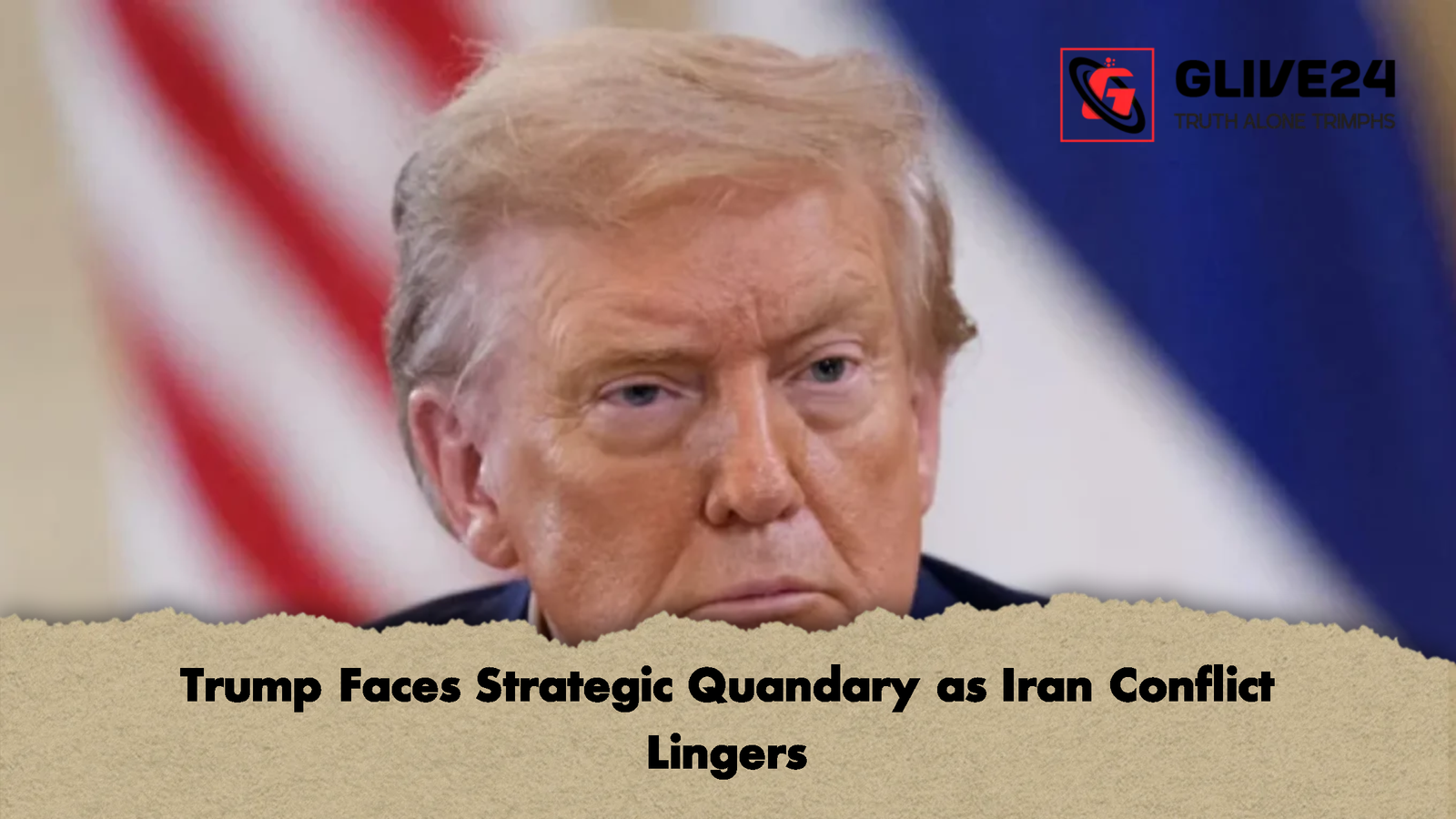
Three weeks into the US-Israel military campaign against Iran, the situation has entered a tense and uncertain stalemate, with statements by former President Donald Trump often appearing at odds with events on the ground. While Trump has repeatedly described the war as “almost over” and claimed the situation is “calming,” airstrikes and missile attacks across Iran continue, alongside the deployment of US Marine units to the region.
Despite assurances of operational success, the Strait of Hormuz—a narrow maritime corridor critical for roughly 20 percent of global oil exports—remains under Iranian control, with only Tehran-approved vessels allowed passage. Trump has acknowledged that, while Iran’s conventional forces are “finished,” its drones and missiles continue to strike regional targets, with some attacks reportedly reaching joint US-UK bases, demonstrating the campaign’s widening scope.
Table of Contents
Threats and Strategic Warnings
On Saturday, Trump posted on Truth Social, warning that if Iran does not fully reopen the Strait of Hormuz within 48 hours “without any threats,” US forces would begin targeting Iranian power plants, starting with the largest facility. The previous day, he had released a list of Iranian military and nuclear targets, claiming the United States was “very close” to completing its operational goals.
Key objectives outlined include:
- Neutralising Iran’s military forces
- Disabling defensive infrastructure
- Targeting nuclear programmes
- Safeguarding US allies in the region
Notably absent was securing the Strait of Hormuz, which Trump suggested should be the responsibility of regional nations reliant on Persian Gulf oil exports.
US Ground Forces in the Middle East
Although Trump denied deploying ground forces, reports indicate a 2,500-strong Marine unit, supported by ships and aircraft, has been dispatched from Japan, with additional forces from California expected in April. Analysts suggest a potential operation to seize Kharg Island, an eight-square-kilometre island hosting Iran’s principal oil export terminals. Controlling the island could halt Iranian oil exports, depriving the country of vital revenue and forcing concessions, without demanding regime change.
Iran has countered, warning that any strike on Kharg Island would make the Red Sea unsafe and endanger energy infrastructure across the region, significantly raising the risk of retaliatory attacks on US forces.
Congressional Funding and Long-Term Implications
Reports indicate that the Trump administration is preparing to request $200 billion in emergency funding from Congress to sustain operations, signalling preparation for a protracted, high-cost campaign. Lawmakers, including Texas Republican Chip Roy, have stressed the need for clarity on objectives, cost, and scope, reflecting cautious oversight amid the ongoing escalation.
Current Status
The conflict has reached a critical juncture, leaving Trump balancing public optimism with operational realities, while regional, logistical, and political risks mount. The conflict’s trajectory remains unpredictable, with significant implications for regional security, global energy markets, and US foreign policy.
Conflict Overview
| Aspect | Details |
|---|---|
| Duration | 23 days since outbreak |
| US Position | War “almost over,” operational objectives near completion |
| Military Deployment | Marine units en route from Japan and California |
| Strategic Targets | Iranian military, nuclear sites, defensive infrastructure |
| Strait of Hormuz Status | Controlled by Iran; limited vessel passage |
| Potential Escalation Points | Kharg Island, Iranian power plants, Red Sea energy corridors |
| Congressional Funding | $200 billion emergency request under preparation |
With escalating threats, strategic uncertainty, and global energy stakes, the Iran conflict remains at a tense stalemate, demanding close attention from policymakers, military planners, and energy markets worldwide.