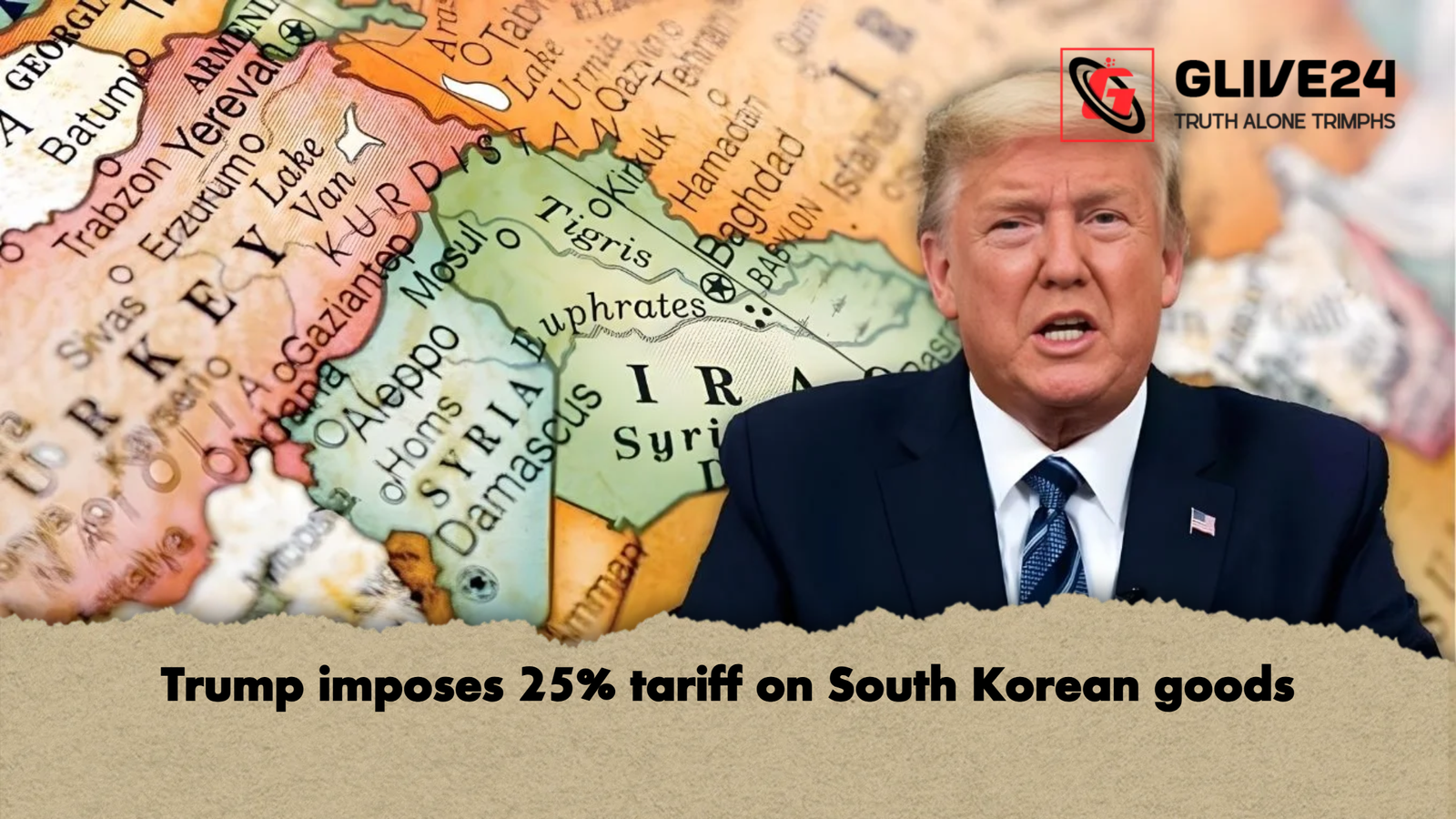
In a bold move, United States President Donald Trump has announced an increase in tariffs on goods imported from South Korea, raising them from 15% to 25%. The announcement was made on Monday, 26 January, via a post on his social media platform, Truth Social, according to reports from Al Jazeera.
President Trump justified the measure by citing South Korea’s failure to implement a key trade agreement with the United States. “It is their right to enforce the agreement, but until they do, we are raising tariffs,” he stated. However, it remains unclear whether the new tariffs have already come into effect.
The additional tariffs will apply to a broad range of products, including automobiles, timber, pharmaceuticals, and other mutually tariffed goods. The White House has not issued an immediate comment on the move.
South Korea is one of the United States’ largest trading partners. According to the U.S. Department of Commerce, exports from South Korea to the United States totalled nearly $132 billion in 2024. Key export categories include vehicles and vehicle parts, semiconductors, and electronics. Analysts warn that the increased tariffs could lead to higher prices for these goods in the American market, affecting both consumers and businesses.
| Year | U.S. Imports from South Korea | Major Products Exported | Tariff Before | Tariff Now |
|---|---|---|---|---|
| 2024 | $132 billion | Vehicles, Semiconductors, Electronics | 15% | 25% |
This development follows a trade agreement announced last July between the United States and South Korea. That agreement had aimed to gradually reduce tariffs, including specific concessions on imported vehicles, rather than immediately raising them to 25%. Trump’s latest action represents a sharper escalation, reversing some of the benefits outlined in the prior deal.
The legality of Trump’s authority to impose these new tariffs has already sparked debate. A key case currently before the U.S. Supreme Court seeks to determine whether the president has the unilateral power to impose broad tariffs on goods from a specific country. Should the court rule against the administration, such tariffs could be reversed or blocked.
This announcement comes amid a series of prior tariff threats by Trump. These included proposals for a 100% tariff on Canadian goods and an additional 10% tariff on imports from countries involved in disputes over Greenland. The latter measure was later withdrawn, highlighting the unpredictable and high-stakes nature of Trump’s trade strategy.
Economic analysts warn that the escalation could strain U.S.–South Korea relations and disrupt global supply chains, particularly in the automotive and electronics sectors. Both governments are expected to engage in urgent discussions to mitigate the potential impact on trade and prices.