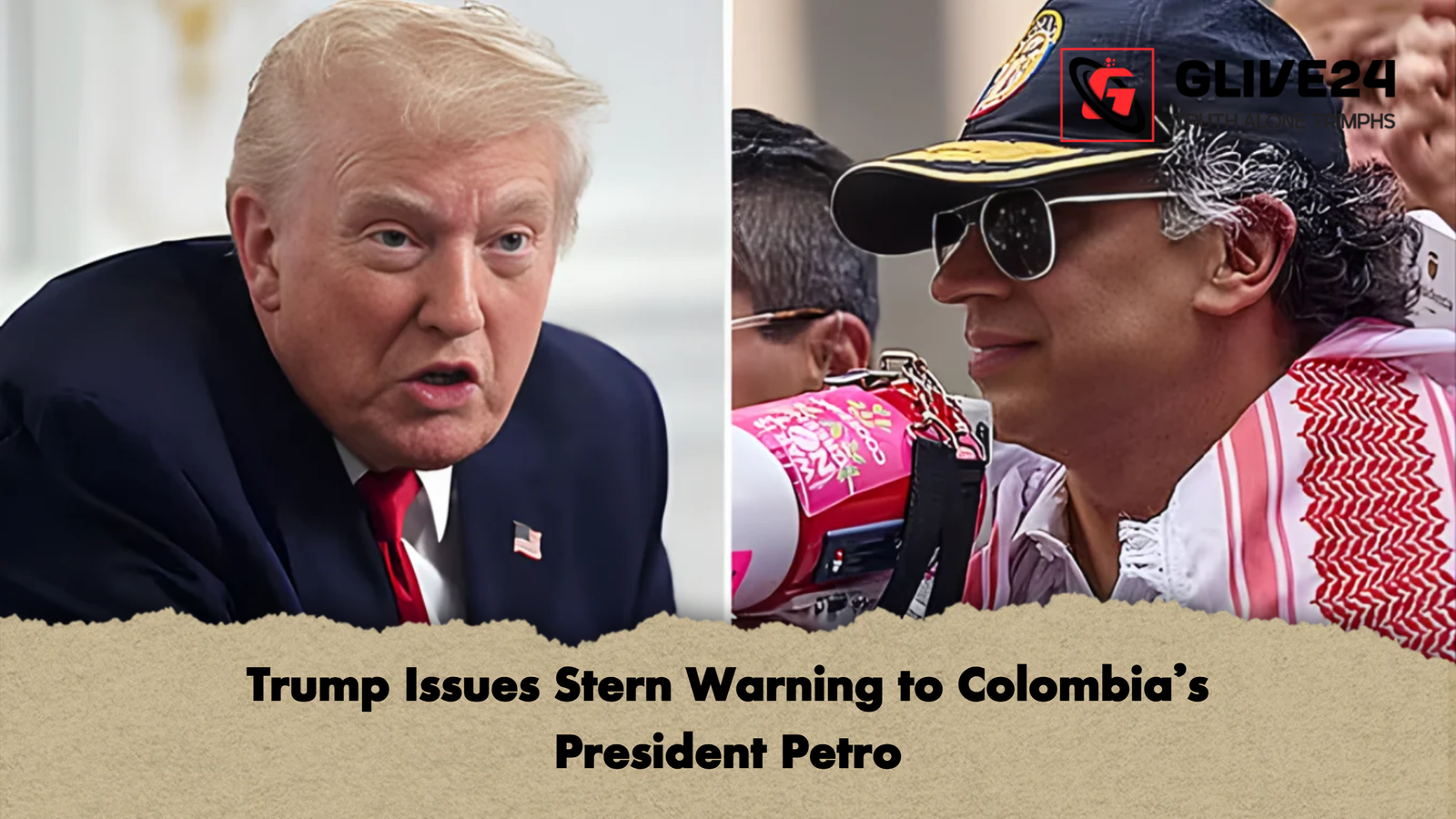
In a move that has sent ripples through Latin American diplomacy, former U.S. President Donald Trump delivered an unusually sharp warning directly targeting Colombia’s President Gustavo Petro. Speaking at a roundtable meeting at the White House with business leaders, Trump responded to a journalist’s question by claiming that Colombia continues to export cocaine to the United States. He cautioned that Petro “would be wise to watch out for his own good,” suggesting that failure to do so could place him in serious jeopardy.
When asked whether he had recently communicated with Petro, Trump’s reply sparked immediate diplomatic tension. Speaking in a visibly agitated tone, he asserted that Petro harbours “hostile intentions” towards the United States, and therefore he had not prioritised any engagement. He escalated his rhetoric, warning, “If he does not consider his own welfare, he could be the next target. We are not fond of those who kill people.”
The remarks come amid Trump’s references to alleged breaches of sanctions by Venezuela and Iran in the Caribbean, further inflaming the situation. For Colombia, the timing could not have been more sensitive. As the nation’s first left-wing president, Petro has sought to recalibrate decades-old anti-drug policies, shifting focus from merely reducing production to targeting criminal networks. According to Petro’s administration, over 18,000 illicit drug laboratories have been dismantled under his leadership, yet Trump alleges that Petro has failed to curb cocaine production.
The dispute has intensified bilateral tensions between the two nations. Colombia, once a major recipient of U.S. military and economic aid, has seen relations deteriorate since Trump returned to the political forefront. Social media exchanges over immigration policies have become increasingly hostile, with Petro advocating stricter measures on deportation and Trump threatening tariffs ranging from 25 to 50 per cent.
Petro has also responded directly to Trump, defending Colombia’s efforts in counter-narcotics and warning that attacks on allied nations jeopardise centuries of diplomatic relations. He invited Trump to Colombia to witness the ongoing destruction of drug laboratories firsthand.
Meanwhile, Petro denounced recent U.S. military strikes in the Caribbean and Pacific as “acts of murder,” citing reports of at least 87 deaths. The United Nations has condemned these actions as extrajudicial killings.
The unfolding verbal duel and deteriorating diplomacy have heightened regional anxiety. What began as a personal confrontation between two leaders has now escalated into a broader geopolitical concern, intertwining drug wars, immigration crises, and regional politics across the Americas. Both nations now navigate a precarious path, with every statement from either side intensifying the stakes.