
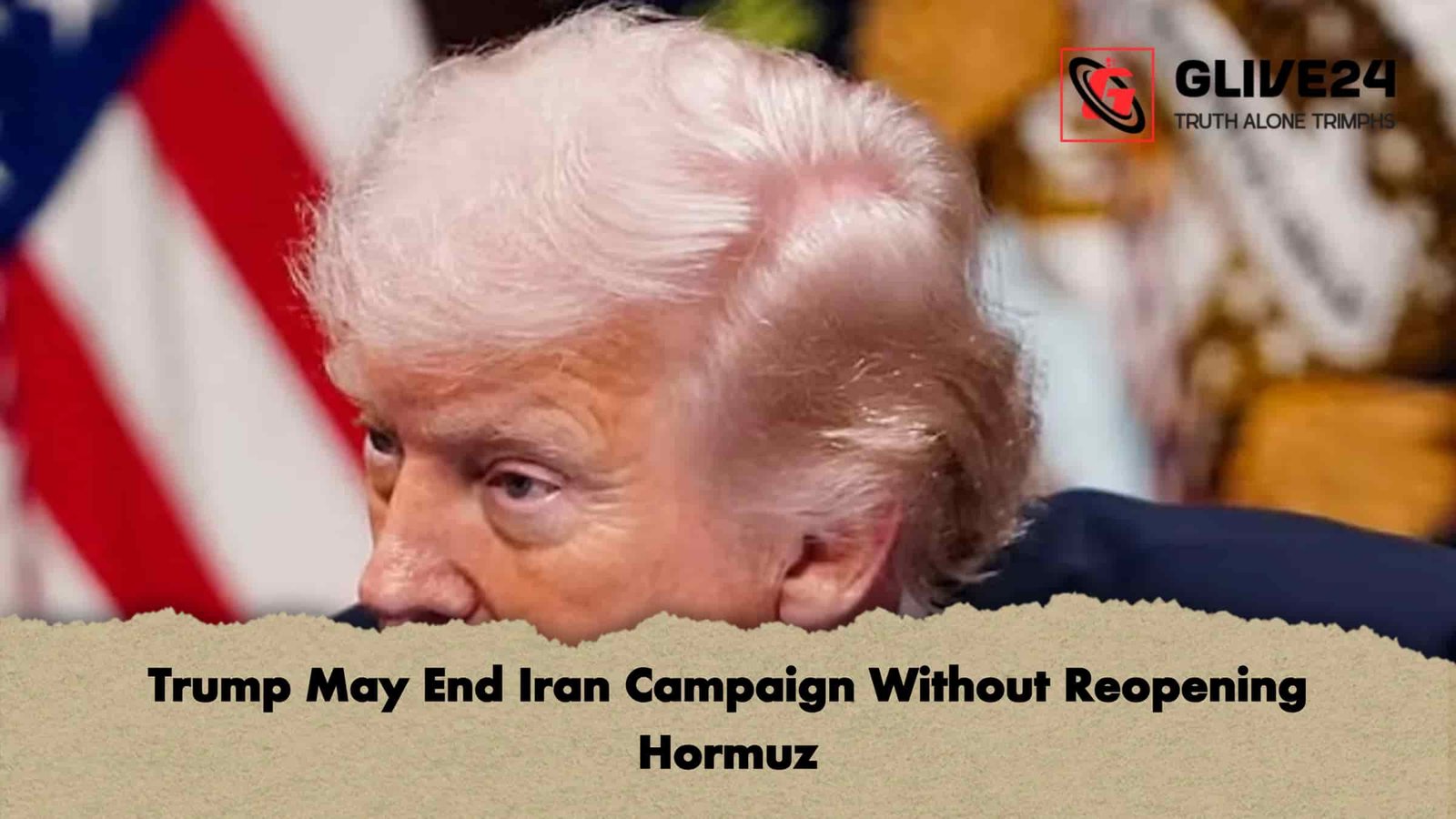
President Donald Trump is reportedly considering concluding the United States’ military campaign against Iran even if the Strait of Hormuz remains closed, according to The Wall Street Journal.
Citing anonymous administration officials, the report states that Mr Trump and his advisers are re-evaluating the campaign, concerned that a direct operation to reopen the crucial shipping lane could extend the conflict well beyond the four-to-six-week timeframe originally projected by the White House.
Focus on Military and Diplomatic Pressure
Officials suggest the president’s immediate priority is to degrade Iran’s naval and missile capabilities, central to U.S. military objectives, before turning to diplomatic channels to pressure Tehran into reopening the strait for commercial traffic. Should diplomacy fail, Washington plans to encourage European and Gulf partners to take a leading role in ensuring passage through the strategic waterway.
White House Press Secretary Karoline Leavitt stressed during a briefing that reopening the Strait of Hormuz—through which nearly one-fifth of global oil supply transits—is not a primary military objective, even though negotiations and efforts to restore normal traffic continue.
Financial Markets Respond
Markets have reacted swiftly to reports of potential de-escalation. On Tuesday, Brent and WTI crude prices dipped approximately 1 per cent in Asian trading, while U.S. stock futures rose amid expectations that hostilities may be easing.
| Objective | Current Status / Approach |
|---|---|
| Degrade Iranian Navy | Active military operations underway |
| Destroy missile stockpiles | Targeted strikes ongoing |
| Reopen Strait of Hormuz | Deferred; not a central military goal |
| Diplomatic pressure on Tehran | Planned escalation |
| Coalition involvement (Europe/Gulf) | Potential future leadership role |
Source: Wall Street Journal, Reuters
Background
The confrontation, now approaching a month, began with late February U.S.–Israeli strikes, prompting retaliatory actions by Iran and its effective closure of the Strait of Hormuz. This has included attacks on commercial vessels and new regulatory measures by Tehran, such as toll proposals and limits on certain foreign ships.
Although Washington has indicated a willingness for direct engagement, Iran has publicly rejected formal talks, describing U.S. proposals as unrealistic. Meanwhile, diplomats from Pakistan, Turkey, and other neutral parties have conducted indirect discussions aimed at reducing tensions.
With energy markets highly sensitive to developments in the region, the status of the Strait of Hormuz remains a key determinant of both regional stability and global economic impact.