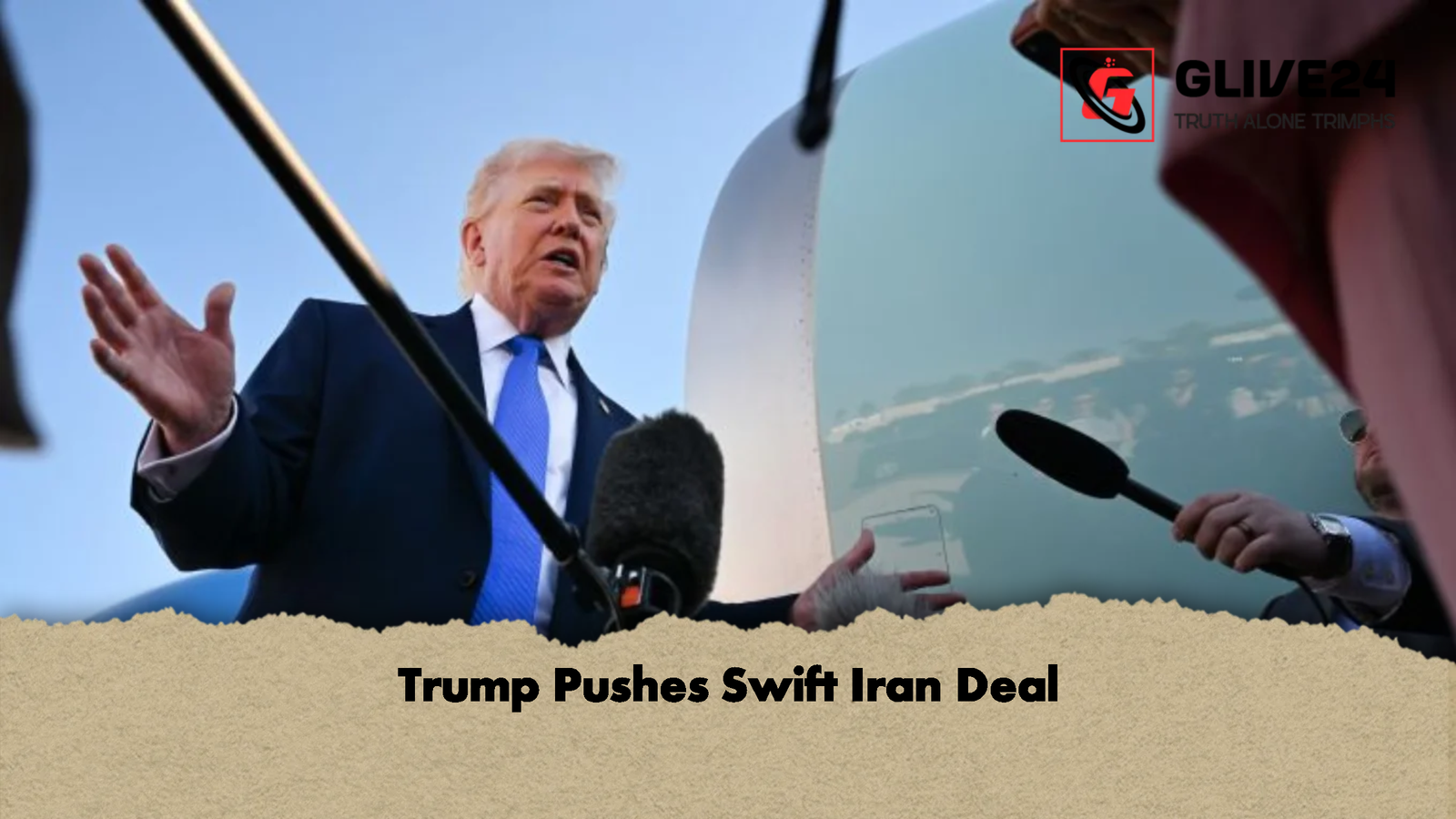
United States President Donald Trump is reportedly seeking a rapid resolution to the ongoing confrontation with Iran, aiming to avoid a prolonged military entanglement and instead secure a settlement within a matter of weeks, according to a report by The Wall Street Journal.
Citing individuals familiar with internal deliberations, the newspaper reported that in recent private discussions with advisers, Trump has expressed a clear preference for a short, decisive outcome rather than an extended conflict. He is believed to consider the current phase of tensions to be approaching what he has described as the “final stage”, with an informal objective of stabilising the situation within a timeframe of four to six weeks.
The report further indicates that the President has directed senior officials to align operational and diplomatic planning with this proposed schedule, reflecting an urgency to accelerate de-escalation efforts and avoid long-term military commitments.
Table of Contents
Reported Strategic Position
| Aspect | Reported Position |
|---|---|
| Preferred outcome | Rapid resolution, avoidance of prolonged conflict |
| Timeframe target | 4–6 weeks |
| Conflict assessment | Nearing “final stage” |
| Policy focus | Accelerated de-escalation and planning alignment |
Domestic Pressures and Policy Priorities
The report also suggests that the Iran situation is increasingly diverting attention within the administration from key domestic priorities. In particular, rising inflationary pressures and broader concerns over the cost of living are said to be placing additional strain on the White House agenda.
Officials are reportedly wary that sustained geopolitical tension could further complicate efforts to stabilise prices and maintain public confidence in the economy. As such, reducing external volatility is seen as indirectly linked to domestic economic management.
Foreign Policy Timing and Diplomatic Calendar
In addition, the White House is understood to be preparing for a possible visit by President Trump to China in mid-May. Diplomatic sources suggest that Washington is keen to ensure that any escalation in the Middle East does not interfere with or overshadow high-level engagement with Beijing.
Analysts argue that this diplomatic timetable may be contributing to a heightened sense of urgency within the administration, as policymakers seek to prevent overlapping international crises that could stretch U.S. strategic focus and resources.
Context and Verification
It should be noted that the claims are based on reporting from The Wall Street Journal, referencing unnamed individuals familiar with internal discussions. There has been no independent confirmation from official U.S. government statements regarding the reported timeframe, strategic objectives, or operational planning related to Iran.
Likewise, the precise nature, scale, and progression of the reported confrontation remain unverified through publicly available, independently corroborated international sources.
Broader Geopolitical Context
The reported approach highlights a recurring challenge in U.S. foreign policy: balancing external security engagements with domestic economic stability and wider diplomatic priorities. Analysts emphasise that any attempt to rapidly de-escalate a complex geopolitical confrontation would likely require sustained negotiation, multilateral coordination, and carefully managed regional diplomacy.
As developments continue, attention remains focused on whether Washington will pursue a more intensive diplomatic track, maintain its current strategic posture, or recalibrate its approach in response to evolving geopolitical conditions.