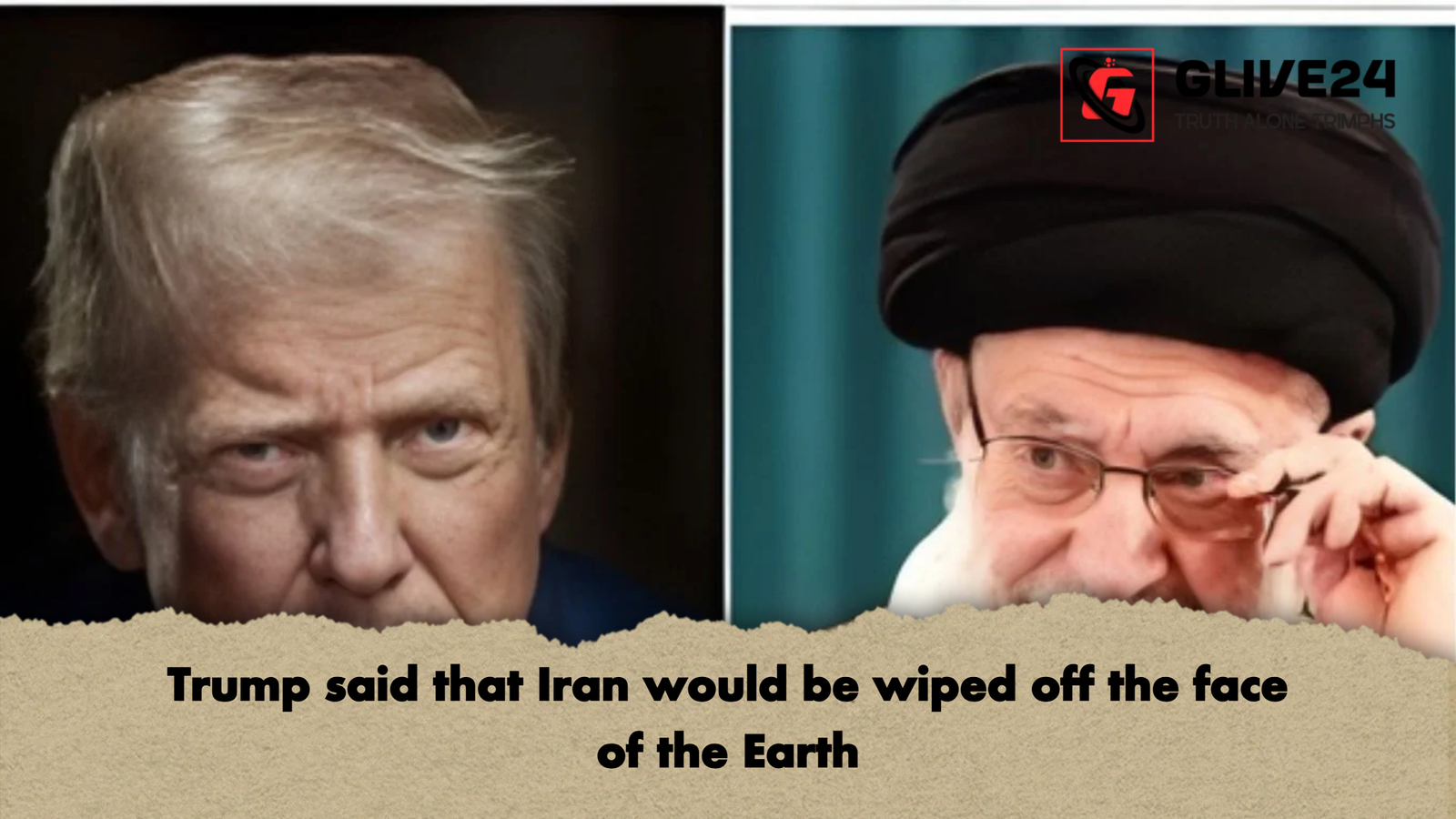
Former United States President Donald Trump has delivered an unusually stark warning to Iran, declaring that the country would be “wiped off the face of the earth” if threats against his life were ever carried out. His remarks, made during a televised interview, have reignited international concern over already fragile US–Iran relations and raised questions about the language used by political leaders in matters of global security.
Speaking on Tuesday during Katie Pavlich Tonight, a programme broadcast by NewsNation, Trump responded to reports of alleged assassination threats from Iranian actors. He said such actions “should not be done” and claimed that he had already issued instructions that, should anything happen to him, Iran would face total destruction. The comments were first reported by the US political outlet The Hill.
Trump stated that during his 2024 presidential election campaign he had been briefed by intelligence officials from the Biden administration about potential threats originating from Iran. According to Trump, then Attorney General Merrick Garland indicated that any such plot might be linked to Tehran’s desire for revenge over the killing of General Qasem Soleimani in 2020. Soleimani, a senior Iranian military commander, was killed in a US drone strike in Baghdad during Trump’s first term in office, an event that dramatically escalated tensions between the two nations.
The former president criticised President Joe Biden for not addressing the issue publicly, arguing that current and former presidents should protect one another in the face of external threats. Trump repeated his assertion that he had given “very clear instructions” and insisted that any attempt on his life would result in Iran’s complete annihilation.
Trump has previously made similar statements, saying that Iran would be “completely destroyed” if it attempted to assassinate him. These remarks followed his signing of an executive order reaffirming a policy of “maximum pressure” on Iran while formally keeping open the possibility of diplomatic engagement.
Beyond personal threats, Trump also referenced Iran’s internal situation. He warned of possible US military action in response to reports that more than 3,300 people had been killed amid prolonged anti-government protests and clashes with security forces. He added that if executions of protesters continued, Washington could respond militarily, though he claimed to have been informed recently that such killings had temporarily ceased.
Meanwhile, Iran’s Supreme Leader Ayatollah Ali Khamenei has accused the United States of conspiring to overthrow the Iranian government. In a series of posts on the social media platform X, he alleged that Washington sought to “devour” Iran. While insisting that Iran did not wish to be pushed towards war, Khamenei warned that both domestic “criminals” and what he termed “international criminals” would not be spared.
Key Events and Statements
| Issue | Details |
|---|---|
| Alleged threat | Trump claims Iranian-linked assassination threats |
| US response | Warning of total destruction if attack occurs |
| Historical context | Killing of Gen Qasem Soleimani in 2020 |
| Domestic Iran | Over 3,300 reportedly killed in protests |
| Iranian stance | Accusations of US regime-change plots |
The exchange of accusations underscores the enduring volatility between Washington and Tehran, with rhetoric on both sides continuing to fuel international unease.