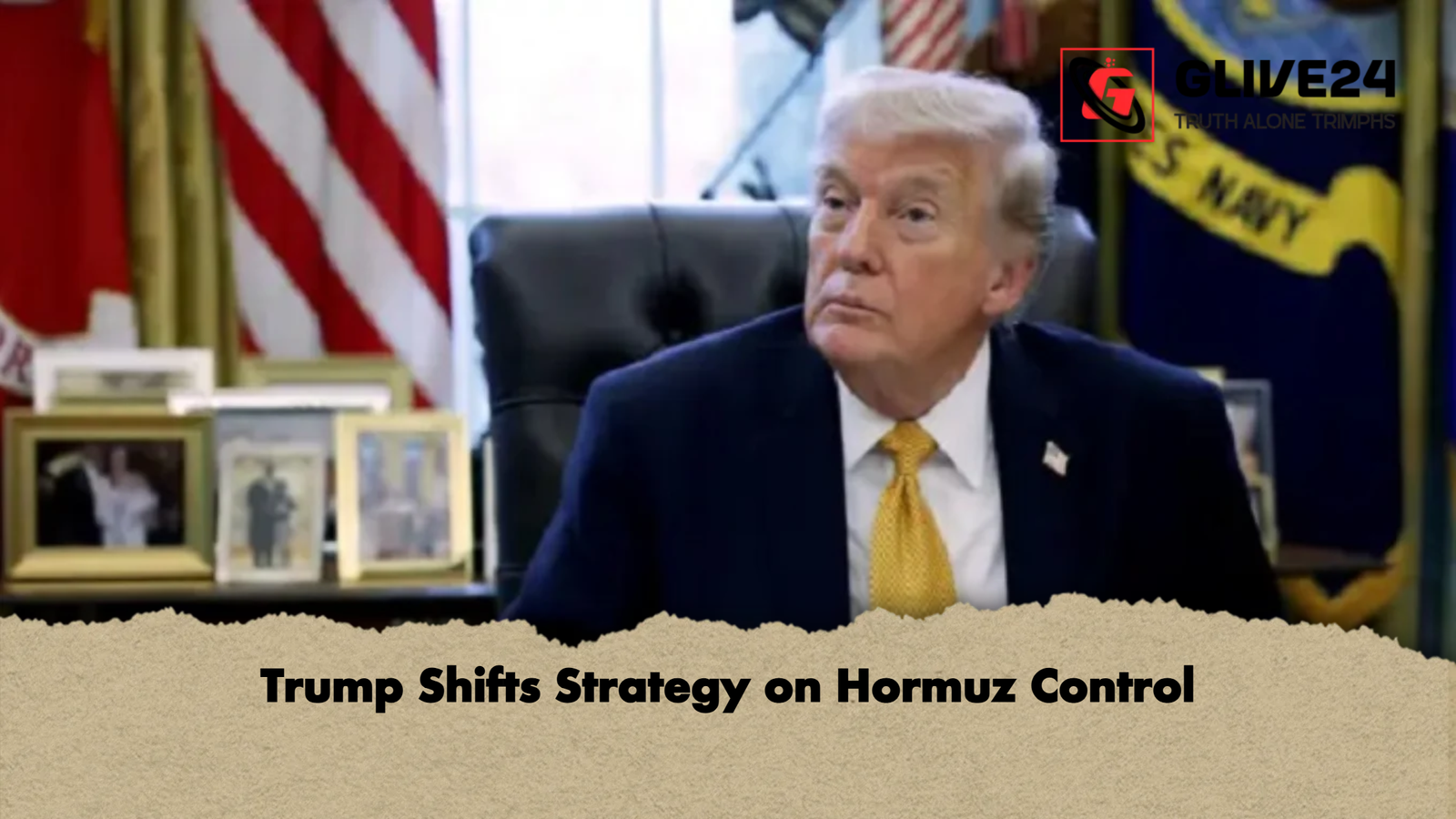
US President Donald Trump appears to be navigating a strategic deadlock over the Strait of Hormuz, a situation he once dismissed lightly but which has now emerged as a significant obstacle to his proclaimed ‘victory’ in Middle East policy. Facing mounting challenges, Trump has begun altering his stance, moving away from his earlier insistence on unilateral action.
Previously, Trump emphasised that the United States could control the strategic waterway ‘by any means necessary’ without requiring assistance from allies, including NATO partners or key Asian nations such as Japan and South Korea. However, recent statements reveal a notable shift: he now frames the Hormuz crisis not as a solely American issue but as a global concern demanding broader international engagement.
Analysts suggest that this strategic pivot reflects Trump’s recognition that unilateral approaches have proved insufficient. On Friday, he openly criticised NATO allies as “cowardly” and blamed their inaction for the continued vulnerability of the Strait. By publicly attributing part of the responsibility to his partners, Trump seems intent on drawing them into a more active role in securing this vital maritime chokepoint.
Experts interpret these remarks as a sign of what some describe as ‘strategic frustration’. While Trump had initially projected confidence in the United States’ ability to act independently, the current stance acknowledges the limitations of unilateral power in managing complex international crises.
The following table summarises the evolution of Trump’s approach to Hormuz:
| Aspect | Initial Position | Current Position | Notes |
|---|---|---|---|
| Control of Strait | Unilateral US control | Requires multilateral cooperation | Shift from independence to engagement |
| Role of Allies | Not needed | Essential for stability | Allies now key actors |
| Crisis Framing | US issue | Global issue | Recognises international stakes |
| Public Criticism | Rare | Openly critical of inaction | Calls NATO allies “cowardly” |
Strategic observers note that this change is not merely rhetorical. It signals an implicit acceptance that the United States alone cannot secure the Strait of Hormuz against increasingly complex regional threats. By positioning the issue as a global challenge, Trump seeks to mobilise allies and international partners, effectively sharing both responsibility and the burden of potential military and diplomatic interventions.
Moreover, this development has implications for broader US foreign policy in the Middle East. It may prompt a recalibration of military deployments, naval presence, and engagement strategies, as well as influence negotiations with Iran and regional partners. Trump’s evolving rhetoric thus reflects both a pragmatic reassessment of capabilities and a tactical effort to ensure that key allies are drawn into a cooperative security framework.
In summary, facing the limits of unilateral action, Donald Trump has shifted his approach on the Hormuz crisis, emphasising global cooperation and shared responsibility. This change highlights the complex interplay between US strategic objectives, ally engagement, and the realities of regional geopolitics.