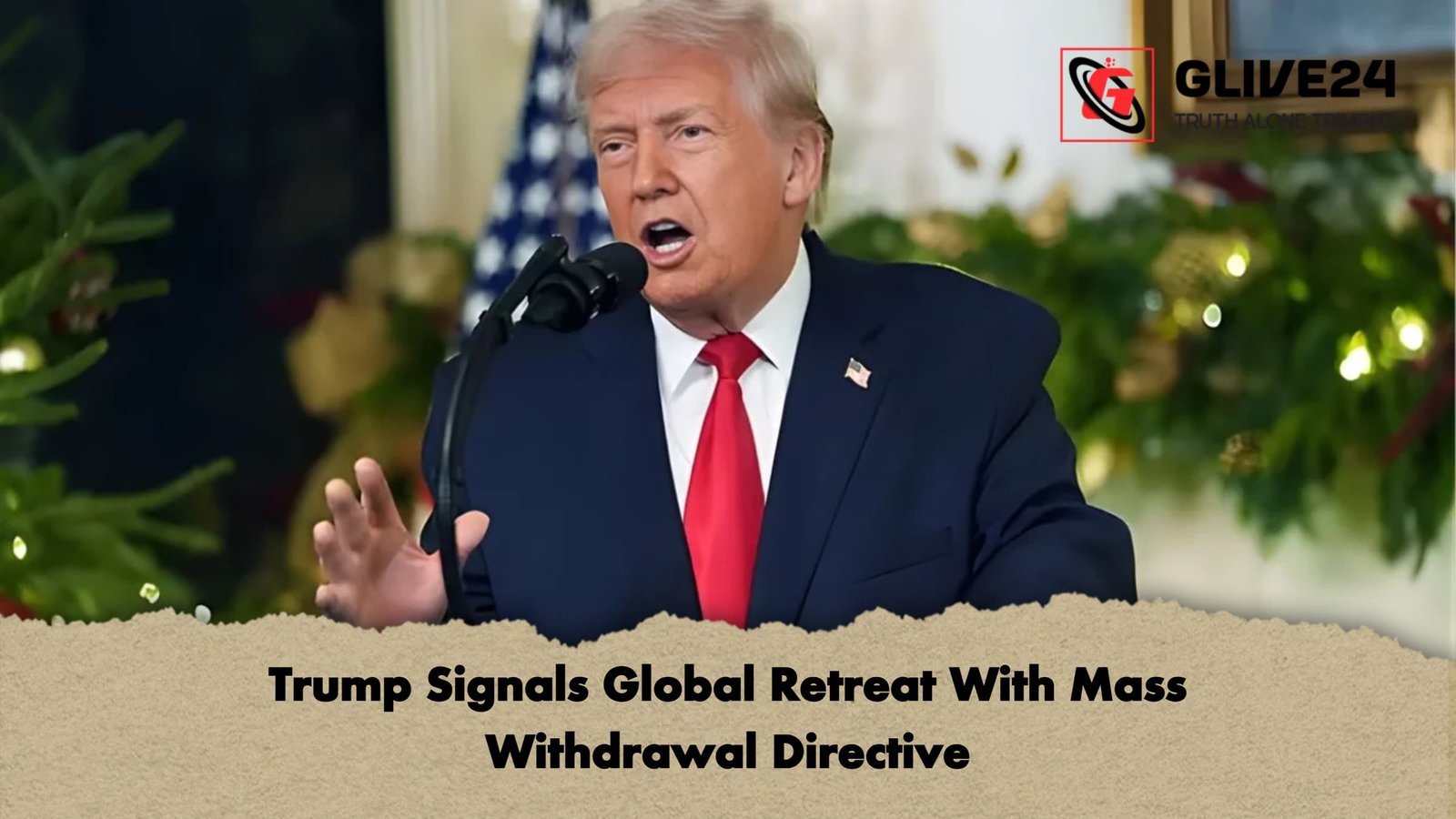
In an unprecedented move that threatens to dismantle the architecture of modern diplomacy, US President Donald Trump has formally announced the United States’ withdrawal from 66 international organisations. The declaration, made on Wednesday, 7 January 2026, marks a definitive pivot toward isolationism, with the President asserting that these global bodies have become “instruments of obstruction” against American national interests.
Breaking the Multilateral Pillars
The administration’s strategy involves a systematic “unplugging” from both the United Nations (UN) and various independent international pacts. A memorandum released by the White House lists 31 UN-affiliated agencies and 35 non-UN multilateral organisations earmarked for termination.
The President’s rhetoric suggests a desire to reclaim what he describes as “forfeited sovereignty.” By withdrawing, the United States aims to halt billions of dollars in annual contributions, shifting the financial burden of global governance onto other member states.
The Climate and Social Fallout
The most consequential departure is the exit from the United Nations Framework Convention on Climate Change (UNFCCC). As the legal engine behind the 2015 Paris Agreement, the UNFCCC is the world’s primary forum for environmental policy. Experts warn that a US departure will effectively paralyse international efforts to regulate carbon markets.
“The United States is poised to become the first sovereign nation to defect from the UNFCCC,” remarked Manish Bapna, CEO of the Natural Resources Defence Council (NRDC). He noted that the US had already signaled this intent by refusing to attend the 2025 annual climate summit—the first such absence in three decades.
In addition to climate withdrawal, the memorandum targets agencies focused on gender equality and human rights, reflecting the administration’s intent to decouple US foreign policy from international social standards.
Table: Statistical Breakdown of the US Withdrawal (2026)
| Scope of Withdrawal | Quantity | Notable Entities Involved |
| UN Agencies | 31 | UNFCCC, UN Women, UNDP |
| Independent Bodies | 35 | Regional Trade Blocs, Environmental Pacts |
| Estimated Savings | TBD | Billions in annual membership dues |
| First-Ever Defection | 1 | UNFCCC (Climate Framework) |
| Absence from Summits | 2025 | No US attendance at Global Climate COP |
A Geopolitical Power Vacuum
Diplomatic analysts suggest that the withdrawal of the world’s largest economy from these 66 bodies creates a massive void in international leadership. As the US retreats, it surrenders its ability to influence global regulations, trade standards, and security protocols.
While the “America First” directive aims to prioritise domestic spending, critics argue that the long-term cost of diplomatic isolation—such as losing the ability to counter the influence of strategic rivals in these forums—may far outweigh the immediate financial savings.