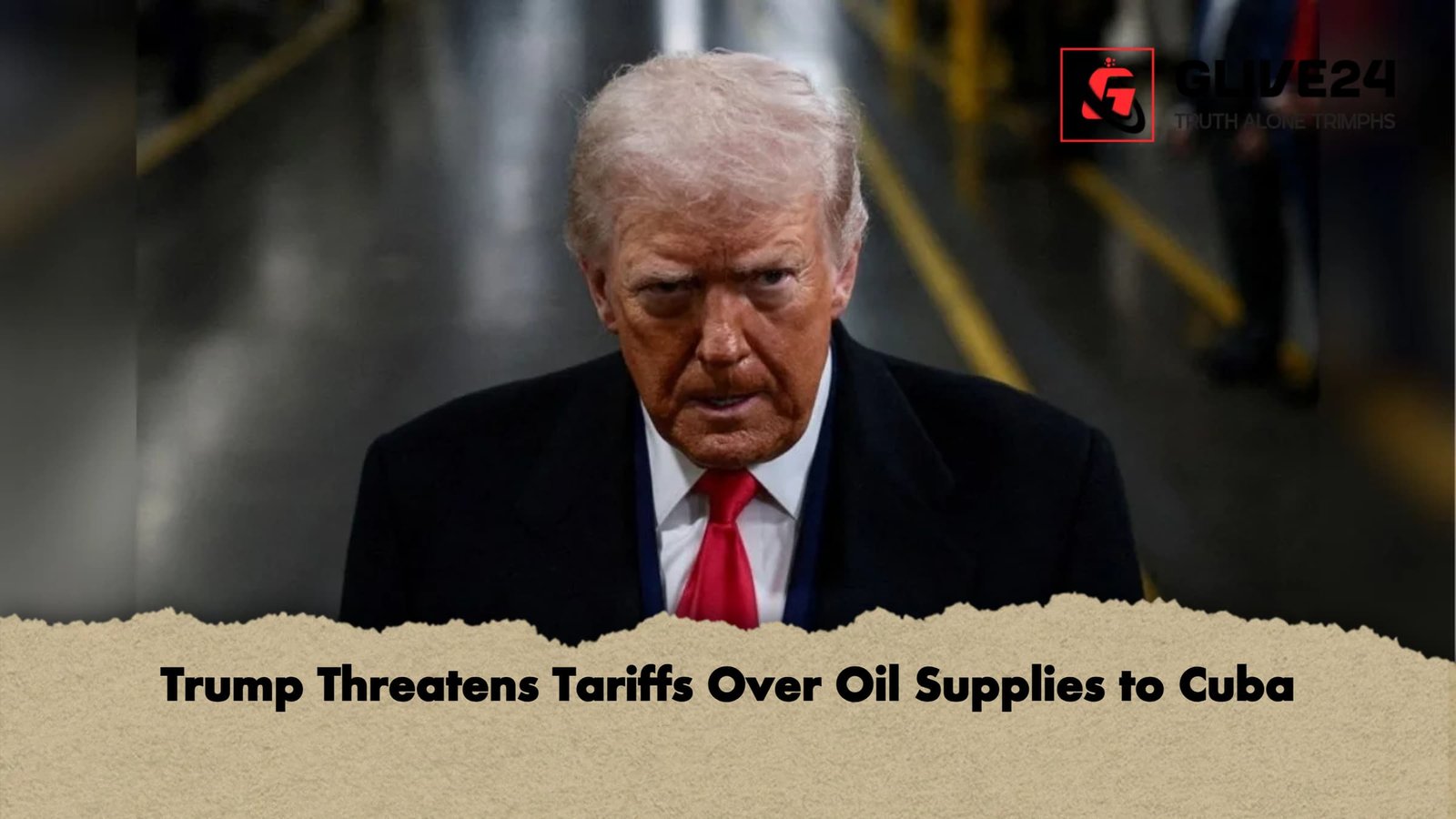
In a significant escalation of his “maximum pressure” campaign against Havana, US President Donald Trump announced late on Thursday a fresh directive to impose punitive tariffs on any nation supplying oil to Cuba. This latest manoeuvre, authorised via an executive order under a declared state of national emergency, represents a calculated attempt to sever the energy lifelines of the Communist-ruled island and cripple its remaining economic infrastructure.
Strategic Strangulation and National Security
While the executive order provides the broad legal framework for these levies, the administration has remained strategically vague regarding the specific tariff percentages or the specific countries targeted. President Trump justified the move as an essential safeguard for “US national security and foreign policy interests,” citing the alleged “malign activities and detrimental policies” of the Cuban administration.
The timing of the threat is particularly potent. Since the recent detention of Nicolás Maduro by US forces in a high-stakes operation earlier this month, the White House has turned its full attention to Havana. Trump emboldened his rhetoric this week, predicting that “Cuba will fold very soon,” noting that Venezuela—once the island’s primary benefactor—is no longer in a position to provide fiscal or fuel subsidies.
| Key Aspect | Details of the Executive Order |
| Legal Basis | National Emergency Declaration / Executive Order |
| Primary Target | Third-party nations exporting oil/petroleum to Cuba |
| Stated Objective | Protecting US National Security and Foreign Policy |
| Potential Impact | Total cessation of power generation and transport in Cuba |
Havana Denounces ‘Fascist’ Tactics
The response from the Caribbean was swift and scathing. On Friday morning, President Miguel Díaz-Canel dismissed the American justifications as entirely baseless. He characterised the new measures as revealing the “fascist, criminal, and genocidal nature” of a political clique that has taken the interests of the American people hostage for personal gain.
Cuban state media warned that the order could effectively paralyse the country’s basic services. An economy already reeling from chronic shortages now faces the prospect of a complete halt in agricultural production, water distribution, and essential healthcare services. A government statement aired during the evening news accused Washington of attempting to “asphyxiate every aspect of life” on the island.
International Law and Coercion
Foreign Minister Bruno Rodríguez amplified the criticism, labelling the tariff threats a blatant violation of international law and the principles of free trade. He accused the US of employing “blackmail and coercion” to force sovereign nations to comply with a blockade that has been almost universally condemned by the United Nations.
As Trump continues to utilise tariffs as his primary weapon of diplomacy during his second term, the global community remains on edge. The threat of secondary sanctions or trade barriers against major oil producers could create significant friction with international allies and adversaries alike, further isolating Cuba while testing the limits of American economic hegemony.