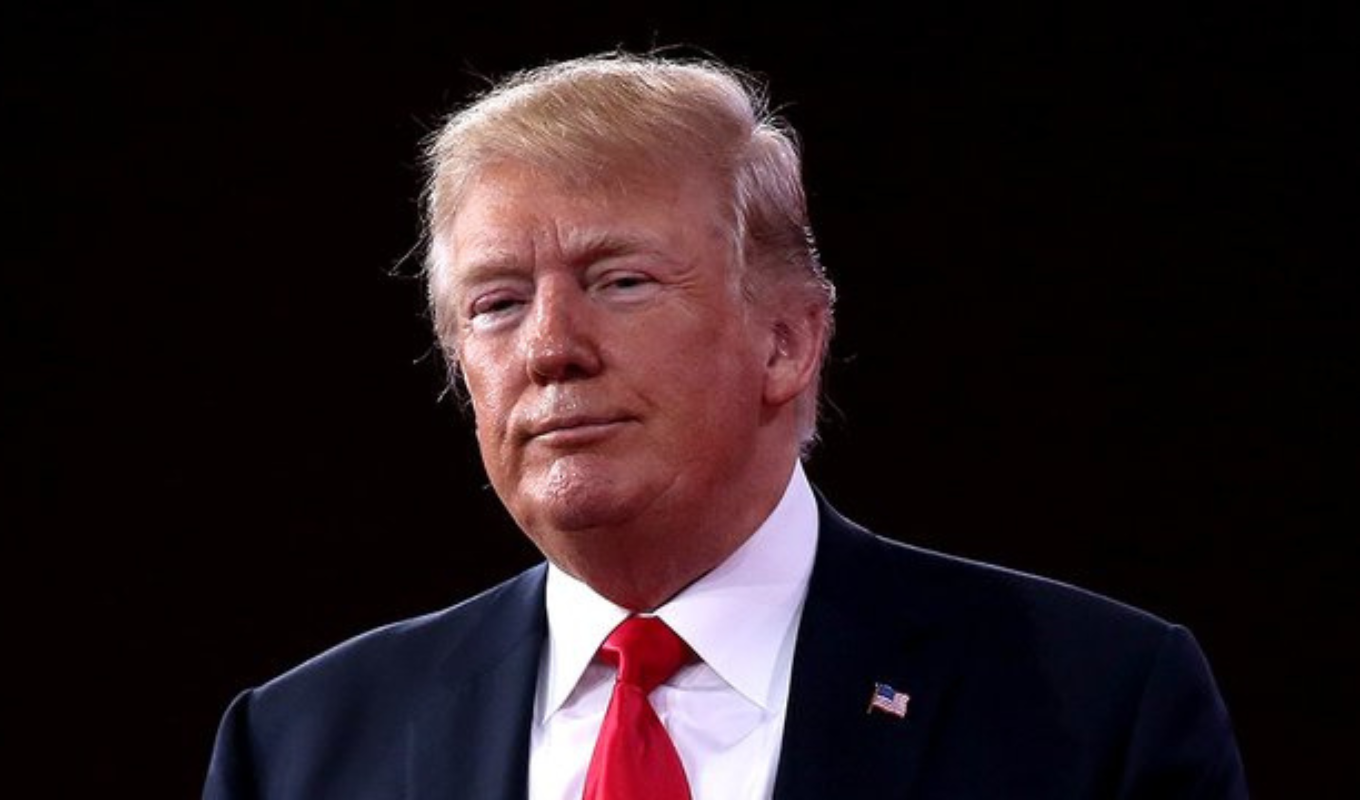
US President Donald Trump appeared to offer a lifeline on Friday to low-income Americans reliant on food aid, stating he does not want them to “go hungry” a day before approximately 42 million people could lose their monthly assistance.
In an extensive post on Truth Social, Trump acknowledged that “Government lawyers do not think we have the legal authority to pay” Supplemental Nutrition Assistance Program (SNAP) benefits once funding expires on 1 November during the ongoing government shutdown. However, he added that he has instructed officials to “clarify how we can legally fund SNAP as soon as possible.”
Earlier on Friday, a federal judge in Rhode Island granted the programme a temporary reprieve, ordering the White House to use emergency funds to pay for food stamps during the shutdown. The case was brought by charities and other advocacy groups.
Despite the ruling, the administration has argued that it cannot legally access the emergency fund, leaving uncertainty over whether Americans will receive their weekend SNAP payments.
Since partisan gridlock triggered the US government shutdown on 1 October, many federal workers have gone without pay, while millions of Americans face increasing disruption to basic federal services. Now entering its second month, the shutdown has evolved into a slow-motion collapse of public services and a mounting economic strain.
As Republicans and Democrats continue to blame one another, without immediate action, millions of Americans will experience the full impact of the shutdown for the first time this weekend.
CNN reported that it asked Agriculture Secretary Brooke Rollins whether she would comply with the judge’s order to release the funds. She responded: “We’re looking at all the options.”
At the core of the congressional standoff is the expiration of health insurance subsidies that keep care affordable for more than 20 million people. Premiums are expected to surge when the new sign-up period opens on Saturday.
Democrats have refused to reopen the government without a deal to extend the subsidies, while Republicans have insisted that negotiations will not resume until the government is reopened.
Other food aid programmes are also under threat. WIC, which provides support for pregnant women, new mothers and infants, is nearing a critical point, and “Head Start” programmes serving 65,000 infants could begin to close from Saturday.
With growing uncertainty over food stamps, communities have begun organising to support vulnerable neighbours.
Kerry Chausmer, 55, from Bethesda, Maryland, said she was buying groceries for two local families in need, at a personal cost likely exceeding $200.
“I think that you can judge a culture by how they help the people that need it most… We’re failing, and I am honestly despondent and embarrassed to be an American,” she told AFP.
The administration claims to have secured sufficient funds to cover Friday’s payday for active-duty troops, but acknowledges that payments could be interrupted by mid-November.
US air travel has also been significantly affected. Airports in the New York area—John F Kennedy, Newark Liberty and LaGuardia—have imposed restrictions partly due to reduced staffing at air traffic control towers.
A ground stop was in effect at JFK until mid-afternoon, with delays ranging from 60 to 100 minutes. Passengers at Newark faced delays exceeding three hours, while some at LaGuardia were bracing for waits of up to five hours.
Trump, whose influence shapes Republican strategy, has largely remained on the sidelines of the shutdown dispute, though lawmakers from both parties hope he will intervene to broker a deal on health care subsidies.
He reiterated his willingness to meet with Democrats over their demands, but only once the shutdown has ended.
“We’ll meet very quickly, but they have to open up the country,” he told reporters. “It’s their fault. Everything is their fault. It’s so easily solved.”