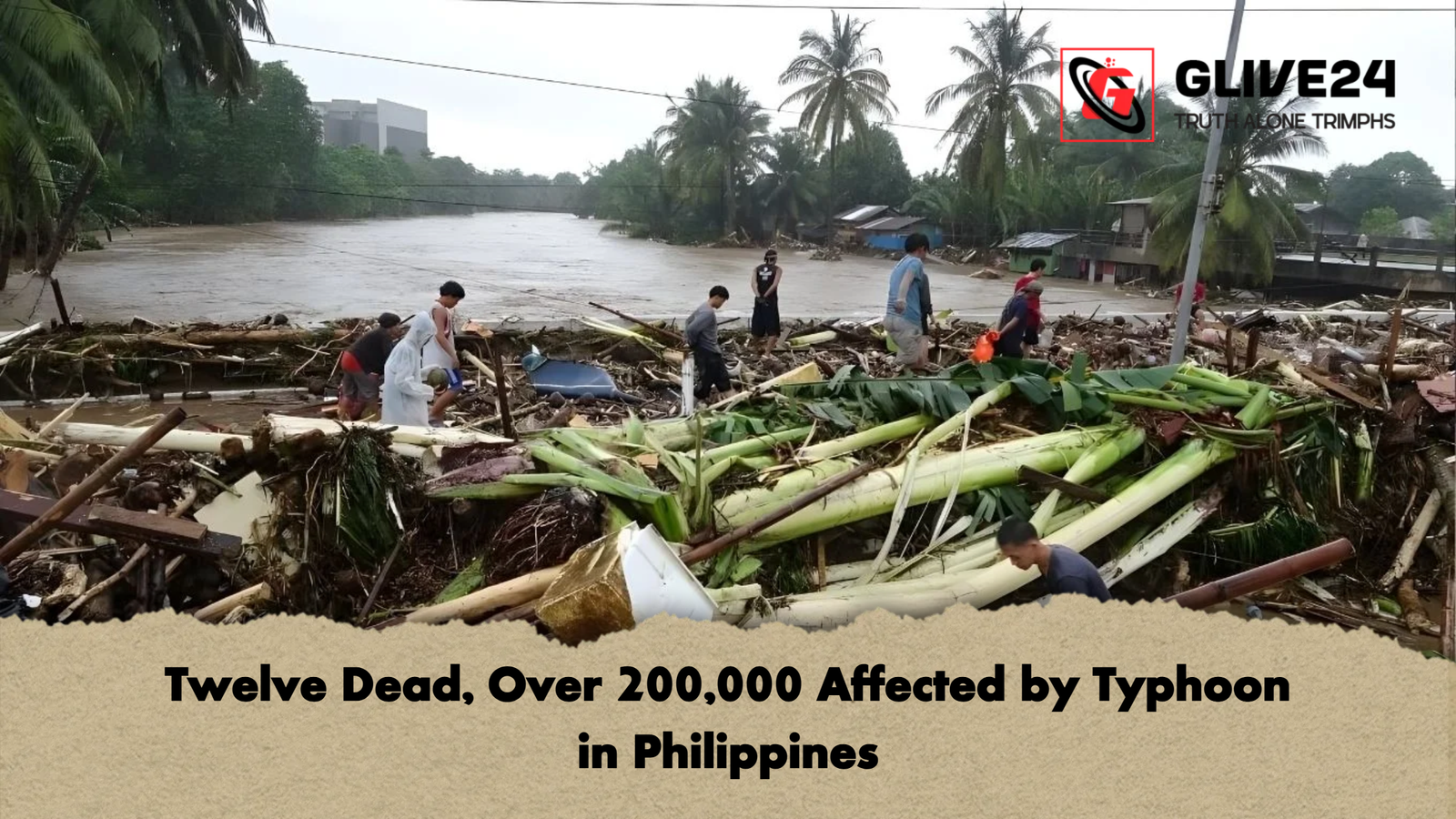
At least 12 people have lost their lives in the Philippines following severe flooding and landslides triggered by the country’s second-strongest typhoon of 2026, Typhoon Basyang. The Civil Defence Office (OCD) reported that the fatalities primarily occurred on Mindanao Island, where torrential rainfall and unstable slopes led to deadly landslides.
According to the Philippines’ Disaster Risk Reduction and Management Department (DRRMD), several regions, including Northern Mindanao and the neighbouring Negros Island, have recorded unprecedented rainfall levels. The flooding has inundated hundreds of villages, affecting more than 232,000 residents directly.
Authorities have noted that approximately 64,000 families were forced to evacuate their homes and seek shelter in designated safe zones. In addition, around 16,000 families are currently accommodated in government-run evacuation centres as rescue and relief operations continue.
The Philippine Atmospheric, Geophysical and Astronomical Services Administration (PAGASA) highlighted that Northern Mindanao experienced its heaviest rainfall in a century, leading to rivers overflowing and washing away three critical bridges in Iligan City and neighbouring areas. The collapse of drainage systems has also caused severe waterlogging in numerous towns, exacerbating the humanitarian crisis.
Meanwhile, maritime transport has been severely disrupted. Operations at 82 seaports across the Mimaropa and Caraga regions have been suspended due to adverse weather, leaving more than 4,000 passengers stranded along with several hundred cargo vessels.
Although the typhoon weakened into a low-pressure system in the early hours of Saturday, 7 February, the affected regions remain under a heightened risk of further heavy rainfall and landslides, prompting authorities to maintain emergency warnings and ongoing relief efforts.
Summary of Typhoon ‘Basyang’ Impact
| Category | Figures / Details |
|---|---|
| Fatalities | 12 |
| People affected | 232,000+ |
| Families evacuated | 64,000 |
| Families in government shelters | 16,000 |
| Villages inundated | Hundreds |
| Bridges destroyed | 3 (Iligan City & nearby areas) |
| Seaports closed | 82 (Mimaropa & Caraga) |
| Stranded passengers | 4,000+ |
| Stranded cargo ships | Several hundred |
| Historical note | Northern Mindanao recorded highest rainfall in 100 years |
Authorities continue to monitor the situation closely, warning residents in vulnerable areas to remain vigilant and follow evacuation directives. Relief agencies are mobilising food, water, and medical supplies to support displaced families, while engineers work to restore critical infrastructure damaged by the storm.
Typhoon Basyang is the latest in a series of extreme weather events affecting the Philippines, underlining the nation’s ongoing vulnerability to climate-related disasters.