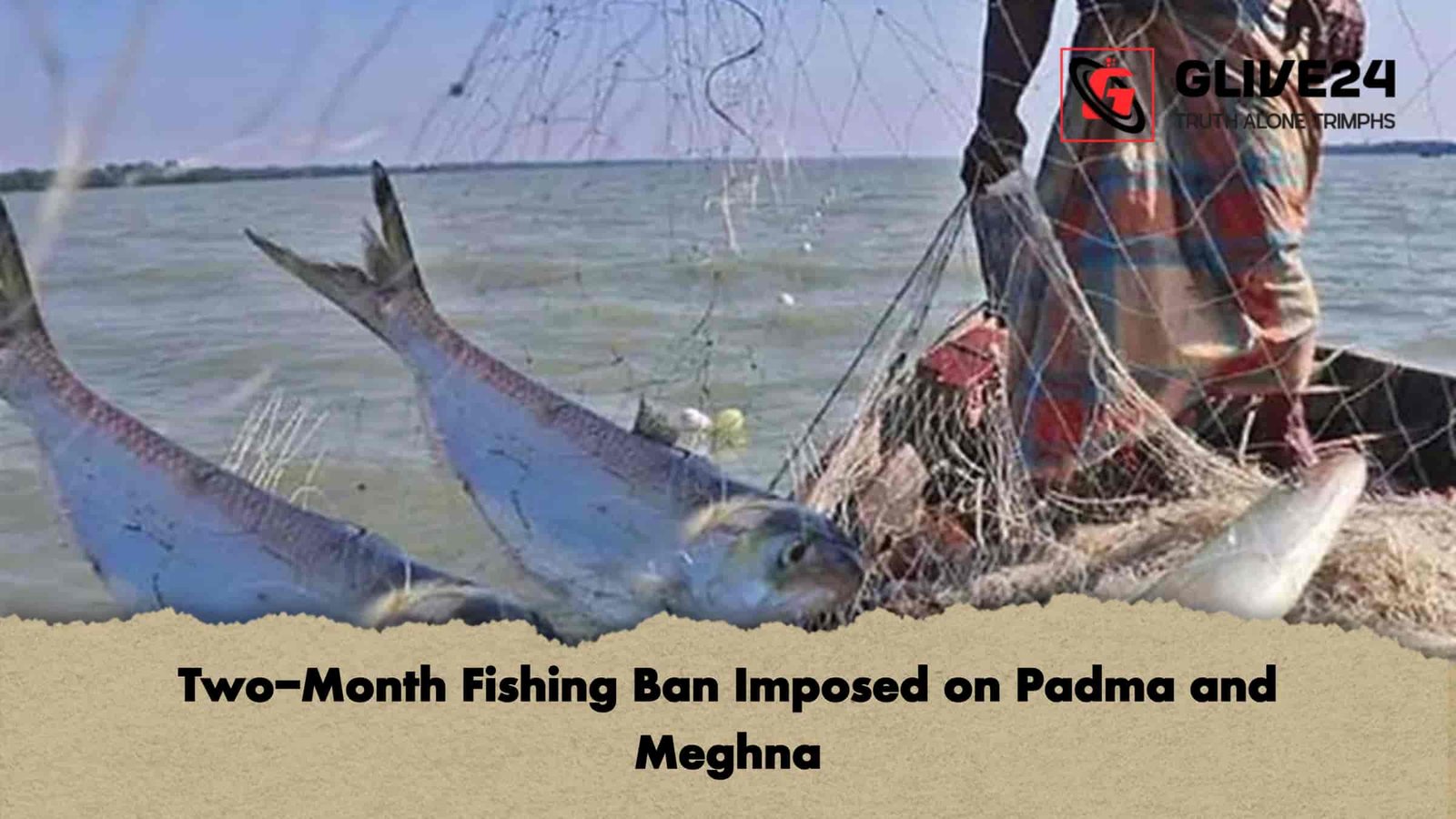
The Chandpur district administration has announced a comprehensive two-month ban on all forms of fishing in the Padma and Meghna rivers, effective from midnight Saturday. The measure aims primarily at protecting juvenile Hilsa fish, locally known as jātka, while simultaneously promoting sustainable fisheries and increasing overall fish production in the region.
During the ban period, any fishing, catching, buying, selling, transporting, or storing of fish within the designated river areas is strictly prohibited. Authorities have emphasised that violators will face severe legal consequences under the fisheries law.
Areas Under Ban
The ban has been enforced across specific river stretches in the Chandpur district, covering multiple upazilas as follows:
| Upazila / Region | Prohibited Stretch | Length (km) | Restricted Activities |
|---|---|---|---|
| Matlab Uttar | Shatnal to Amirabad Bazar | 30 | Net setting, fishing, buying/selling, storage, transportation |
| Haimchar | Char Verbi to river boundary | 70 | Net setting, fishing, buying/selling, storage, transportation |
All ice plants within the affected areas will remain closed throughout the two months to prevent the storage of illegally caught fish. To support local fishermen during this period, the government has arranged rice distribution under the Vulnerable Group Feeding (VGF) programme. Each registered fisherman will receive a total of 160 kilograms of rice in four instalments. Currently, Chandpur has approximately 39,400 registered fishermen.
Penalties and Legal Enforcement
Violating the fishing ban carries stringent consequences, including imprisonment ranging from one to two years, a fine of up to five thousand taka, or both. Authorities have confirmed that both punishments may be imposed concurrently for offenders.
Officials’ Statements
Chandpur District Fisheries Officer, Mohammad Fakhrul Islam, stated, “All fishing activities in the Padma and Meghna rivers have been suspended for two months to conserve juvenile Hilsa. VGF rice distribution has already commenced, and all measures are being taken to prevent unlawful fishing.”
Dr. Mohammad Anisur Rahman, a Hilsa researcher at the Bangladesh Fisheries Research Institute, emphasised, “Administrative oversight alone is insufficient. Without ensuring the financial security of fishermen, the long-term benefits of this ban cannot be realised.”
Superintendent of Police, Syed Moshfiqur Rahman, added, “From 1 March to 30 April, regular patrolling will be conducted. Awareness campaigns and strict monitoring will prevent violations and protect young Hilsa. Offenders will face strict action under the fisheries law.”
The two-month fishing moratorium is being hailed as a critical step for sustainable Hilsa conservation and the long-term management of Bangladesh’s river ecosystems. It represents a strategic balance between preserving the environment and safeguarding the livelihoods of local fishing communities.