
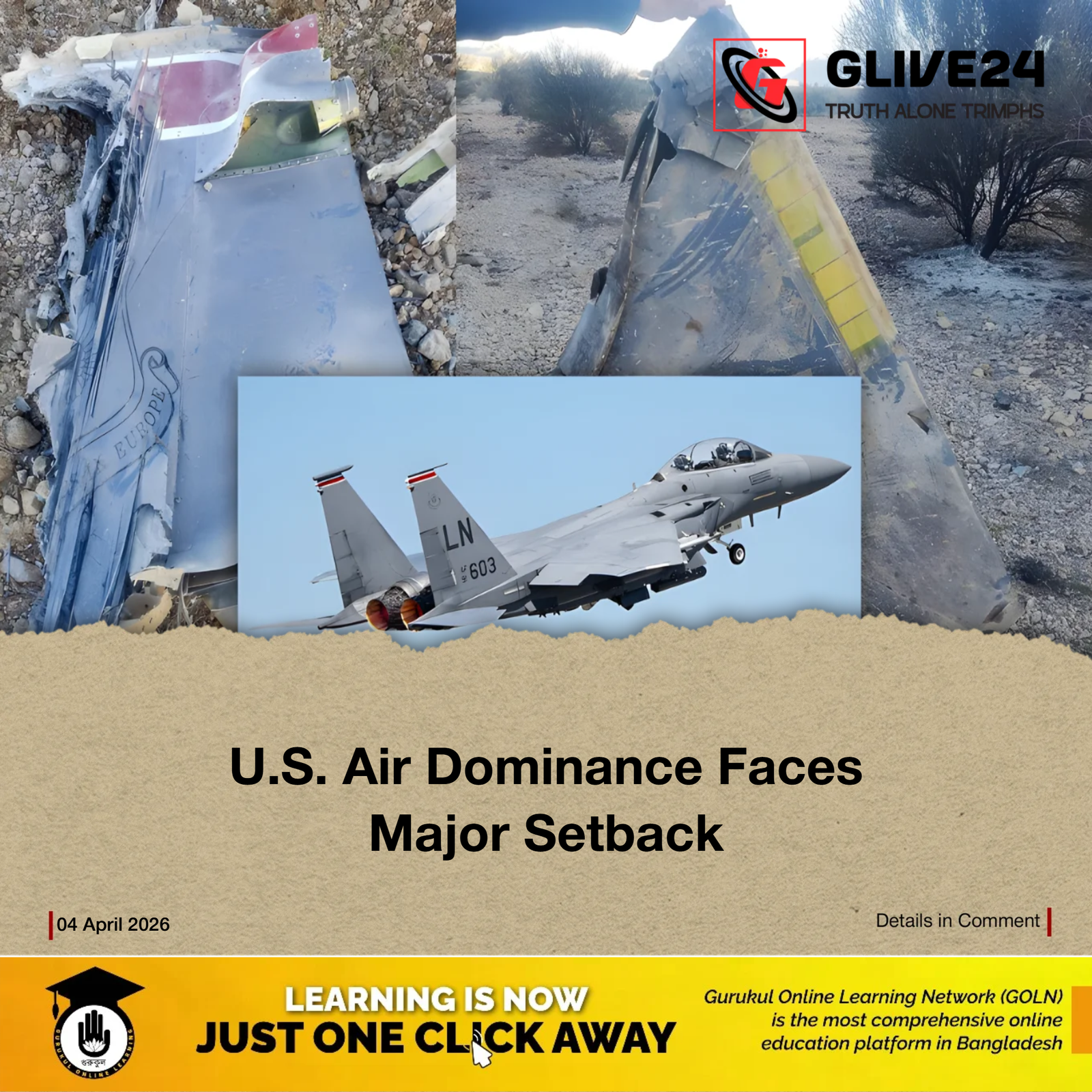
The ongoing conflict between the United States and Iran has increasingly strained U.S. air power, with mounting losses of military aircraft raising serious strategic questions. According to the latest international reports and defence analyses, at least 16 U.S. aircraft have been confirmed destroyed or downed since the beginning of the hostilities. When including damaged planes, the total number could approach or even exceed 20.
Reports from Reuters, The Washington Post, The Guardian, and Business Insider on 3 April indicate that the U.S. has suffered significant new setbacks in recent clashes. Notably, an F-15E Strike Eagle was confirmed downed over Iranian territory for the first time. Reuters cited U.S. officials stating that one of the two crew members was rescued, while the other remains missing.
On the same day, an A-10 Thunderbolt II attack aircraft was also lost. According to The Washington Post, a rescue helicopter dispatched to recover the crew came under attack, highlighting the increasing operational risks for U.S. forces in the theatre.
Analyses suggest that the most severe losses have occurred in the drone fleet. Reports from NDTV and other defence-focused outlets indicate that more than 10 MQ-9 Reaper drones—primarily used for surveillance and precision strikes—have been downed. Some analysts suggest that the actual number may be even higher, reflecting the vulnerability of slower, predictable drone flight patterns to Iran’s layered air defence systems.
Conventional manned aircraft have also been affected. The Washington Post notes that several F-15-class fighters have been lost, some to enemy action and others due to “friendly fire” incidents in Kuwait early in the conflict. Additionally, a KC-135 Stratotanker refuelling aircraft was destroyed in an accident, impacting the U.S. ability to sustain prolonged air operations.
Defence experts attribute these losses to Iran’s multi-layered defensive strategy, combining surface-to-air missile (SAM) systems, mobile air defence units, and electronic jamming technologies, effectively targeting drones and low-to-medium altitude aircraft.
The financial impact is substantial. Estimated unit costs include:
| Aircraft / Drone Type | Confirmed Losses | Approximate Unit Cost (USD) |
|---|---|---|
| MQ-9 Reaper Drone | 10+ | $30 million |
| F-15E Strike Eagle | 1+ | $80–100 million |
| A-10 Thunderbolt II | 1 | $20 million |
| KC-135 Stratotanker | 1 | Strategic asset, high value |
According to the Wall Street Journal, cumulative losses have already surpassed several billion dollars. Beyond the financial toll, the strategic implications are profound: large-scale drone losses hinder U.S. surveillance and intelligence-gathering capabilities, while the destruction of manned aircraft challenges its ability to maintain air superiority.
Overall, the conflict demonstrates that controlling the skies in Iran’s complex air defence environment is far more difficult than previously assumed. Despite technological advantages, the U.S. now faces the stark reality of a sophisticated adversary, necessitating adjustments in strategy, operational coordination, and risk management.
The evolving situation underscores a critical lesson for military planners: advanced air power alone does not guarantee dominance against a well-prepared, multi-layered defensive opponent.